


When a shower leaks, cracks or just looks worn out, a surface fix rarely lasts. We take it back to the framing and rebuild every layer: pan, membrane, tile, valve and glass.
Key takeaways
- Recurring grout cracks, hollow tiles, a soft floor or stains outside the shower usually mean water is already behind the tile.
- A real shower remodel goes to the studs so framing, the pan and the waterproofing can all be rebuilt as one system.
- The remodel is the cheapest time to replace the valve and add blocking for grab bars, a seat or glass.
- A tiled shower and a panel surround solve different problems; tile offers more design freedom, panels fewer seams.
Most showers don't fail all at once. First the grout in one corner darkens and won't come clean. Then the caulk at the bottom of the wall separates for the third time. Then a tile sounds hollow when you tap it, or a stain appears on the baseboard outside the shower. By the time you notice those signs, water has usually been finding its way behind the tile for a while. Shower remodeling done properly means removing the enclosure down to the framing, fixing whatever the water has damaged, and rebuilding the shower so that the waterproofing, not the tile, is doing the work of keeping water in.
In Suncoast homes built before waterproofing membranes became standard, it's common for shower tile to sit directly on drywall or greenboard, which is exactly the kind of shower that leaks quietly for years. This page is about remodeling an existing shower, whether that means a straight rebuild in the same footprint or a bigger, better shower in roughly the same place. If you're adding a shower where a tub used to be, see our tub-to-shower conversion page instead. Building a new open, low-entry shower? See walk-in shower installation.
Signs Your Shower Needs More Than a Cleaning
Some problems are cosmetic and respond well to deep cleaning or regrouting. Others mean the shower's structure has been compromised. Here's how we sort them out:
| What you see | Likely cause | Usual fix |
|---|---|---|
| Dingy, stained grout on otherwise solid tile | Surface soil, soap film, mildew | Professional tile and grout cleaning or regrouting |
| Grout cracking in the same spots repeatedly | Movement, or a substrate that flexes | Investigate; may need rebuild |
| Hollow-sounding or loose tiles | Bond failure, often from moisture behind the tile | Rebuild |
| Soft or spongy shower floor | Failed pan, rotted subfloor or mortar bed | Rebuild |
| Stains or swollen trim outside the shower | Water escaping the enclosure | Rebuild, plus repairs outside |
| Musty odor that never goes away | Wet materials behind the walls | Rebuild |
If you're seeing any of the last four, we'd recommend reading what to know about water damage behind shower walls before choosing a fix.
Tiled Shower or Panel Surround?
Not every shower replacement has to be tile. Here's how the two main options compare:
| Tiled shower | Acrylic or solid-surface panels | |
|---|---|---|
| Look | Any tile, pattern, niche or accent band | Smooth or tile-look sheets in limited styles |
| Seams | Grout joints to clean and maintain | Few seams, mostly at corners |
| Install time | Longer, with waterproofing, tile, grout and cure time | Usually shorter |
| Repairability | Individual tiles can be replaced | A damaged panel usually means replacing the panel |
| Custom features | Benches, niches and curbless entries are easy to build in | Limited to what the system offers |
Both need a sound, dry wall and a properly installed base behind them. Tile suits a custom shower you want to design; panels suit a simpler, lower-maintenance refresh.
What a Shower Remodel Involves
1. Tear-out to the studs
We remove tile, backer board, the old pan or mortar bed, and the curb, and the wall cavities behind them usually tell the story of every leak. Removing everything lets us see the framing and the slab or subfloor clearly.
2. Repairs to framing and subfloor
Any rotted studs, plates or subfloor are cut out and replaced. We also add solid blocking where you'll want it later: for grab bars, a fold-down seat, a glass panel, or a niche of a specific size. Blocking costs very little when the wall is open and a great deal once the wall is closed up.
3. Plumbing updates
This is the time to set a new shower valve at the height you want and add a handheld on a slide bar, a rain head, a diverter or separate volume controls. If the drain needs to shift, perhaps to center it in a larger floor, a slab home means cutting and trenching concrete. That's routine, but it should be planned. The guide on bathroom plumbing on a slab explains what's involved. Our article on shower valves covers the valve types.
4. New pan and waterproofing
The floor is rebuilt with a slope to the drain, the walls go on as cement or foam board, and a continuous waterproofing membrane ties floor, curb, walls and niches together. The details, including the flood test, are on our shower pans and waterproofing page.
5. Niches and benches
A niche or a bench is framed in at this stage and waterproofed with the rest of the shell. Our walk-in shower page explains how we build shower niches and benches so they don't leak.
6. Tile
With the shell waterproofed, we lay out and set the tile. That includes planning where cuts fall, aligning niches and accent bands, and choosing edge trim for every exposed edge. Our bathroom tile page goes into tile layout and materials for showers and walls.
7. Trim, glass and final details
Valve trim and heads go on, the drain grate is set, movement joints are sealed with the right sealant, and the enclosure is measured for glass. Custom glass is usually ordered after tile is finished, so the measurements are exact. See our glass shower doors page for enclosure options.
Same Footprint or Bigger Shower?
Many shower remodels keep the existing footprint. That's the simplest path: the drain stays, the walls stay, and the money goes into materials and waterproofing. But a remodel is also a chance to rethink the space:
- Stealing a few inches. Taking space from an adjacent linen closet or a too-wide vanity area can turn a cramped 32-inch shower into one you can actually turn around in.
- Lowering the curb. A lower curb or a curbless entry makes the shower easier to step into. Fully curbless designs take extra planning, especially on a slab. Our walk-in showers page covers those options.
- Moving the entry. Relocating the opening from the end to the side can make room for a bench or a fixed glass panel instead of a swinging door.
Choosing Materials That Hold Up Here
A Suncoast shower deals with constant humidity and, in many neighborhoods, hard water. A few practical choices help:
- Porcelain tile is dense and absorbs very little water, which makes it a dependable default for shower walls and floors. Natural stone is beautiful but needs sealing and gentler cleaners.
- Smaller tiles or mosaics on the floor give more grout joints for traction and conform to the slope better than large tiles.
- Grout choice matters. Cement grout with a sealer, or a premium grout designed for wet areas, behaves differently in cleaning and maintenance. The guide on grout types explains the trade-offs.
- Fixture finishes that hide water spots, like brushed or matte finishes, are more forgiving with hard water than polished chrome. A whole-house water purification system reduces the scale problem at its source.
Why the Hidden Work Is the Real Work
Two showers can look identical on the day they're finished. One is built to stay solid; the other is likely to show grout cracks and stains much sooner. The difference is all underneath: framing that doesn't flex, a pan that drains, a membrane with no gaps at the corners, niches that slope, and seams that are sealed rather than grouted where the surfaces move. Our guide article on why shower tile fails breaks down the most common failure points.
What Affects the Cost
- Hidden damage. Rotted framing or a failed subfloor found during tear-out has to be repaired.
- Size and layout changes. Enlarging the shower or moving the drain on a slab adds framing, concrete and plumbing work.
- Tile choices. Large-format tile, natural stone, mosaics and accent bands each change the labor.
- Valve and fixtures. A thermostatic valve, rain head or handheld on a slide bar adds parts and rough-in time.
- Glass. Framed, semi-frameless and frameless enclosures differ widely.
Our guide on bathroom remodel costs explains how these combine. If this is your only shower, our guide on using your bathroom during a remodel has practical ideas for the weeks it's out of service.
Our workers are fully licensed and insured, and we clean up every day so the rest of your home stays livable while the shower is under construction. If your shower is starting to show its age, we'd be glad to take a look and give you a free estimate. You can also see how a shower rebuild fits into a larger project on our main bathroom remodeling page.
Weighing a rebuild against another round of patching? Our comparison of remodeling vs. repairing a bathroom can help, and so can our overview of hiring a professional remodeler versus managing the trades yourself.
Related Bathroom Services
What Clients Say
“My house was replumbed last year due to cast iron pipes. Today's Home Service did an awesome job remodeling both bathrooms. I have more updates and maintenance in mind for my home. It gives me peace of mind to have found a company I can trust to help me with everything.”
— Helen Downs
“Today's Home Services with Shaun and his crew, he is very knowledgeable about tile and marble and your construction needs. From day one his crew was very polite and professional. They treated us and our home like more than just customers. If you're considering remodeling your home, I definitely would recommend them. They are definitely a five star company.”
— Michael Wojcik
Bathroom Remodeling Near You
We remodel bathrooms throughout four Gulf Coast counties. Find the page for your community:
Learn More Before You Start
Shower Remodeling FAQs
Can you remodel my shower without touching the rest of the bathroom?
Do I need to replace the shower valve?
My grout keeps cracking and the corner is stained. Is that a remodel or a repair?
How long am I without a shower?
Keep Exploring
-
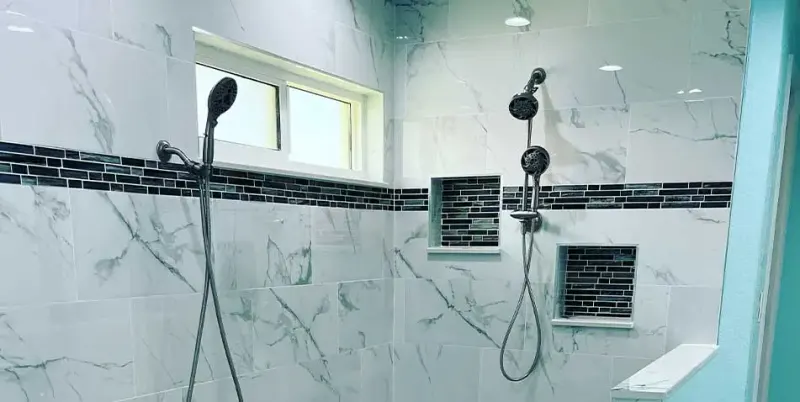
Bathroom Remodeling in Bradenton, Sarasota & the Suncoast
From a tired hall bath to a complete primary-suite rebuild, we plan, demo, waterproof, tile and finish bathrooms across Manatee, Sarasota, Charlotte and south Hillsborough counties,…
-
 Bathroom Service
Shower Pan Replacement and Waterproofing
Tile and grout are the part of a shower you see, but they aren't what keeps water in. That job belongs to the pan and the…
-
 Bathroom Service
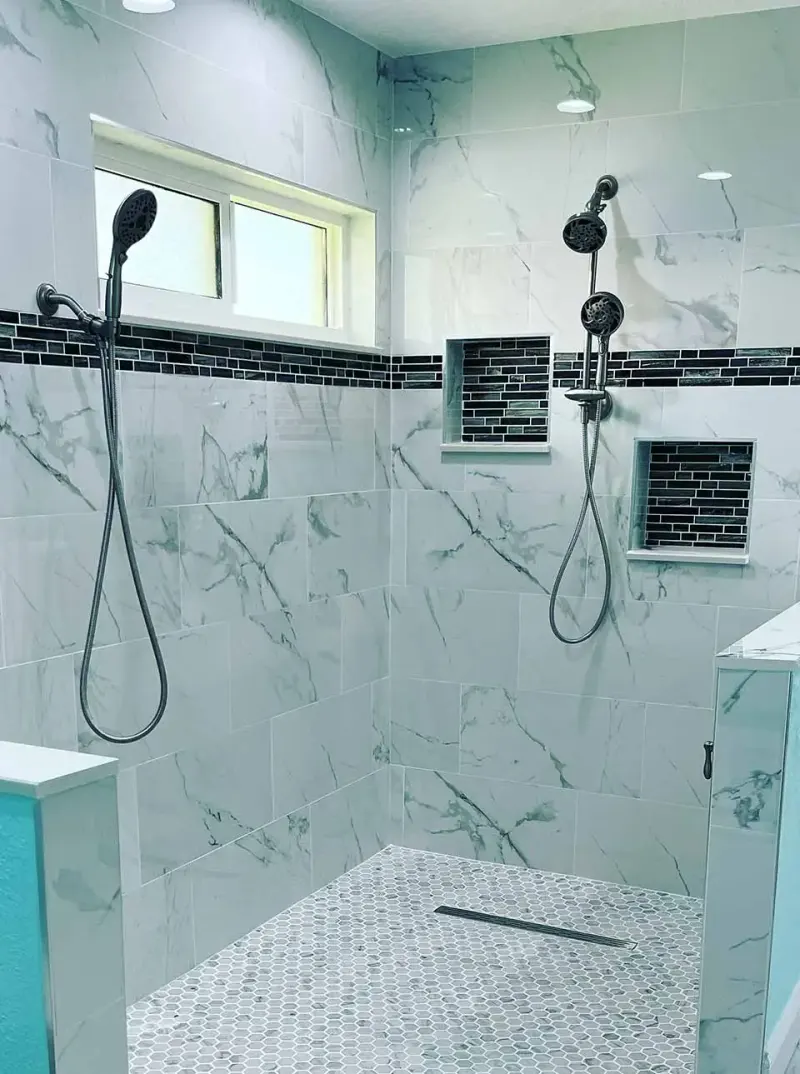
Walk-In Shower Installation
A walk-in shower should be easy to enter, comfortable to stand in and simple to keep clean. We design and build curbed, low-threshold and curbless walk-in…
-
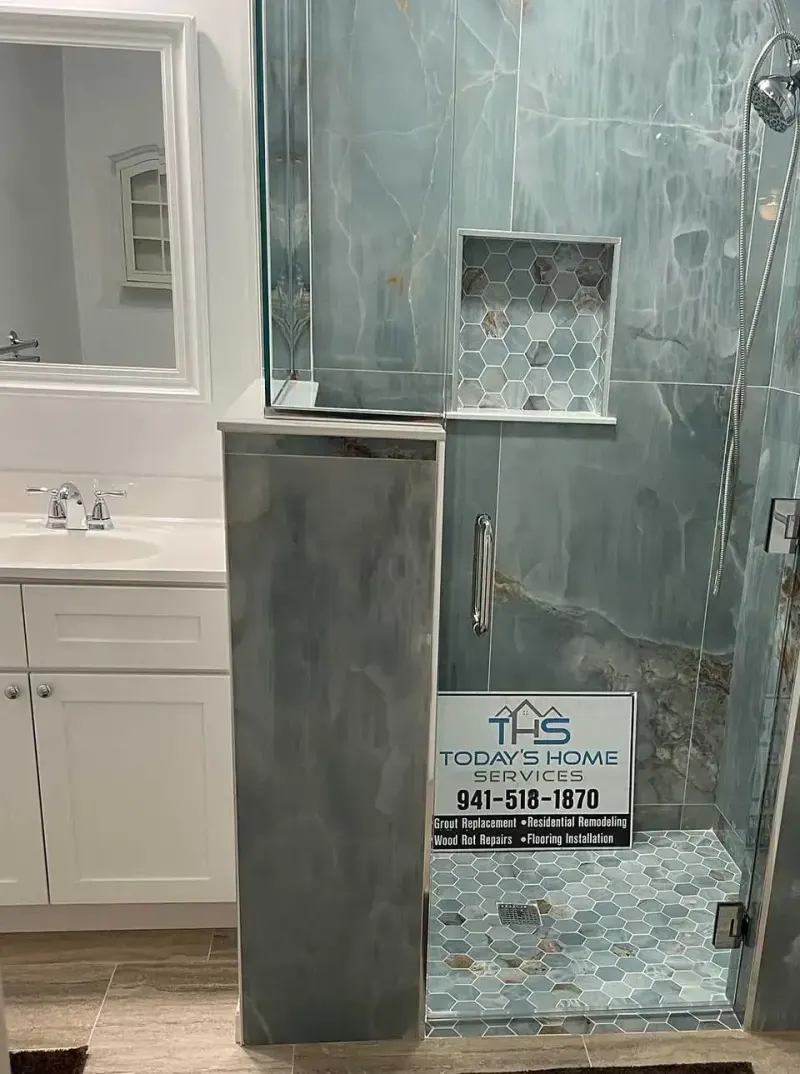 Why
Why Shower Tile Fails (and What It Tells You)
Shower tile rarely fails because the tile itself was bad. It fails because of what's behind and beneath it: the bond, the backer, the pan and…
-
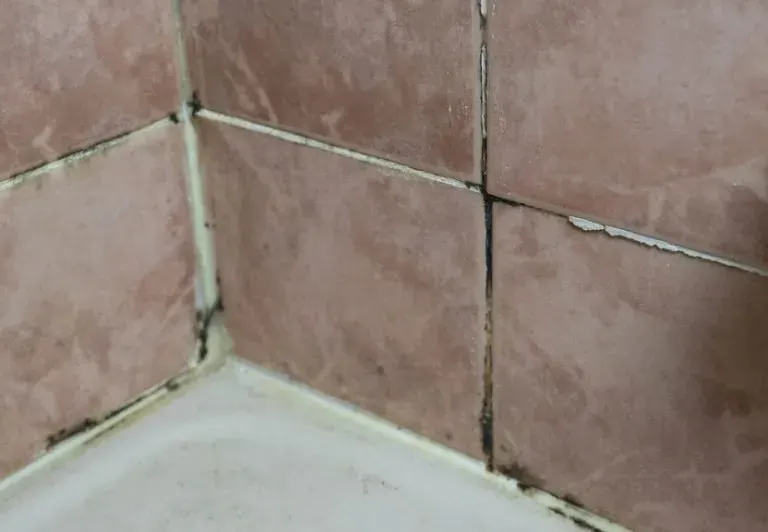 Questions
Water Damage Behind Shower Walls: Signs and Next Steps
Loose tile, cracked or darkened grout, peeling paint on the other side of the wall and a musty smell are classic warning signs. Once you suspect…
-
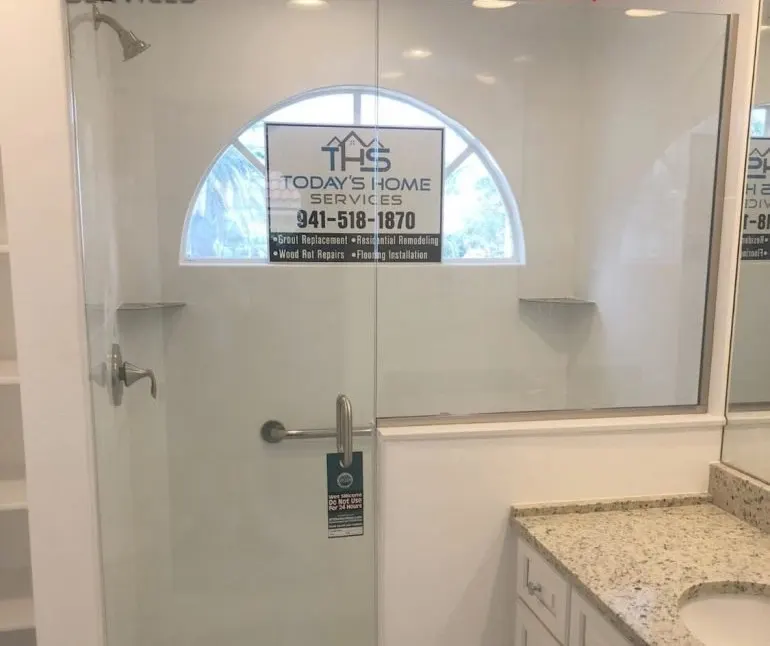 Bathroom Service
Glass Shower Doors & Enclosures
The right glass keeps water in the shower and puts your new tile on display. We plan, measure and install frameless, semi-frameless and framed enclosures fitted…
-
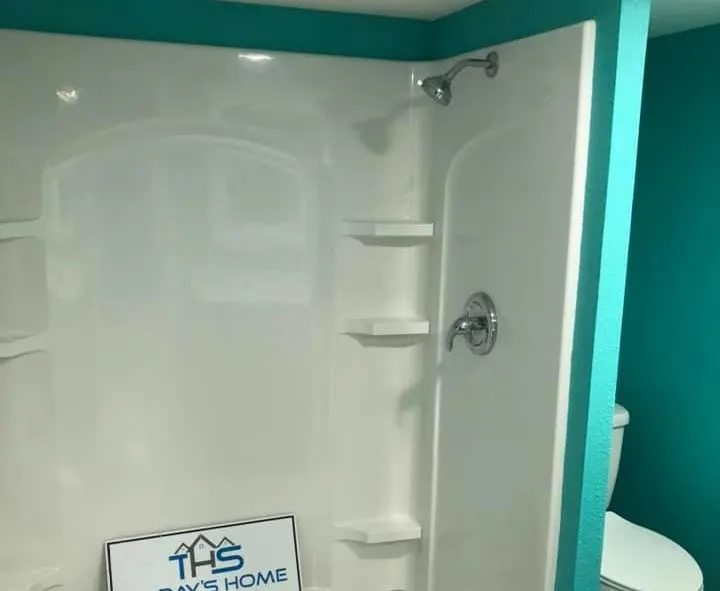 Bathroom Service
Tub to Shower Conversion
That tub you step over every morning and haven't filled in years can become a roomy, low-entry shower. Here's what changes behind the walls and under…