

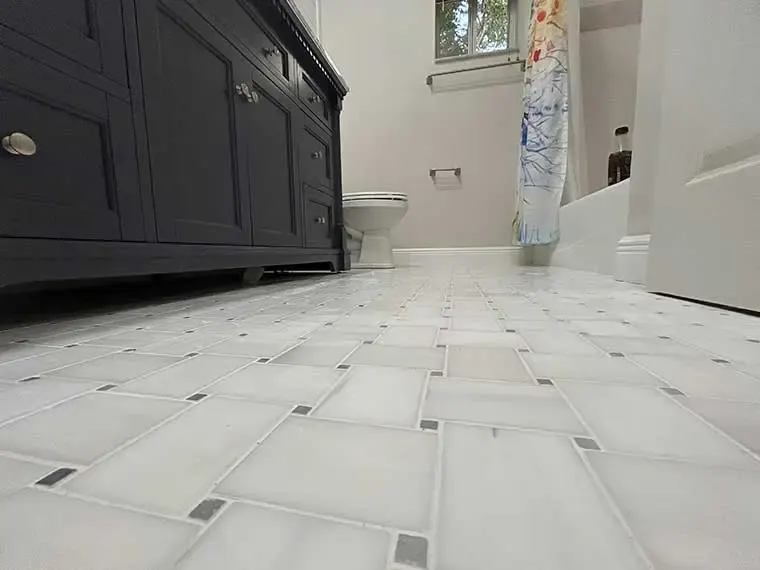
A bathroom floor takes splashes, steam, dropped bottles and daily traffic. We replace it with tile or waterproof vinyl laid over a flat, sound base, with tidy transitions and the toilet reset on a fresh seal.
Key takeaways
- Porcelain tile handles standing water best; luxury vinyl is warmer and quieter but needs careful seams at tubs and toilets.
- Most bathroom floor problems trace back to prep: a slab that isn't flat or a subfloor softened by an old toilet leak.
- The toilet always comes out so the new floor runs underneath, and the flange height is checked before it's reset.
- In flood-prone homes, tile set in mortar on a slab and non-wood baseboard recover better after water exposure.
Bathroom floors are small, but they're surprisingly demanding. Water lands on them from the shower, the sink and the toilet; humidity stays high; and the room has more obstacles to work around per square foot than any other in the house. Bathroom flooring installation at Today's Home Services is built around those realities: the right material, a properly prepared base, clean edges at every fixture, and a toilet that goes back down solid.
This page is specifically about bathroom floors. For flooring throughout the rest of the house, including vinyl plank, wood and epoxy, see our main flooring installation service. For shower walls and tub surrounds, see bathroom tile.
Signs It's Time for a New Bathroom Floor
- Tiles sound hollow when tapped, or cracks run across several tiles.
- The floor feels soft or springy near the toilet or tub.
- Grout is missing or stained dark along the tub and shower.
- Vinyl edges are lifting, or seams have opened and trapped water.
- The toilet rocks, or there's staining around its base.
- The floor is simply dated and you're updating the vanity or shower anyway.
Choosing a Bathroom Floor
| Porcelain or ceramic tile | Luxury vinyl (plank or tile) | Natural stone | |
|---|---|---|---|
| Water resistance | Excellent; tile itself is unaffected by water | Many products are waterproof; seams and perimeter need attention | Good when sealed; some stones absorb water and stain |
| Feel underfoot | Hard and cool | Softer, warmer and quieter | Hard and cool; honed finishes grip better than polished |
| Durability | Very high; resists scratching | Good; can dent or scratch more easily | High, but softer stones like marble can etch from acidic cleaners |
| Installation | Mortar, cure time, grout | Faster; often floating or glued | Mortar and grout, plus sealing |
| Looks | Unlimited, including stone, wood-look and patterned | Wood, stone and tile looks | Each piece is unique |
| Repairs | Individual tiles can be replaced | Planks can be replaced, depending on the system | Individual tiles can be replaced; matching can be harder |
Tile remains the traditional choice for bathrooms because it shrugs off water and suits any style. Natural stone looks rich but asks more of you in sealing and gentle cleaning. Sheet vinyl is another budget-friendly, nearly seamless option for a bathroom you plan to replace again soon. Luxury vinyl is a good choice when you want warmth underfoot, a quieter floor, or a continuous wood look flowing in from the hallway. Our guide on bathroom flooring materials covers more options, and bathroom floor tile ideas is a good place for inspiration.
Tile size and traction
Large-format tiles mean fewer grout lines and a cleaner look, and they make a small bathroom feel larger. Smaller tiles and mosaics offer more grip because of the extra grout joints. Whatever size you choose, ask about the tile's slip resistance for wet areas, especially for bathrooms used by children or older adults.
How We Prepare a Slab or Subfloor for a New Bathroom Floor
A new floor is only as good as what's under it, which is why floor preparation often takes as much time as the installation itself.
Slab floors
Suncoast homes are commonly built on concrete slabs. Slabs are strong but rarely flat. They have humps, dips, old adhesive and sometimes cracks. Before tile goes down, we scrape and clean the slab, grind high spots, fill low areas, and treat cracks with an appropriate membrane so slab movement doesn't telegraph through the tile. For vinyl, the slab must be smooth and flat as well, because every bump will show through the thin material.
Raised and upstairs floors
In condos, second-story bathrooms and homes on raised foundations, the floor is built on wood framing and plywood or OSB subfloor. A toilet that's leaked for years often leaves soft, delaminated subfloor around the flange. We cut out damaged sections, replace them, add support where joists need it, and install a cement backer board or uncoupling membrane suited to tile. Our guide on why bathroom floors feel soft explains the common causes.
Flatness for large tile
The bigger the tile, the less tolerance there's for an uneven floor. A floor that's fine for small tile can produce visible lippage with large-format porcelain. Our guide on why large-format tile needs a flat floor explains why we spend real time leveling before we set anything.
Working Around Fixtures
The toilet
The toilet comes out, and the new floor runs under it. Then we check the closet flange height relative to the finished floor, since a new tile floor can leave an old flange too low. A flange extender or spacer may be needed. Then we replace the seal and reset the toilet so it sits firm. If you've been thinking about a new toilet anyway, see our toilet replacement page.
The vanity
If the vanity is being replaced, it's usually best to install the floor first so it runs underneath. If you're keeping the vanity, we cut the flooring neatly to it and finish the toe kick. Keep in mind that a thicker new floor raises the effective counter height slightly and can tighten the space under a toe kick.
The tub and shower
At the tub, the floor stops cleanly at the apron with a sealant joint. At a shower curb or curbless entry, the floor tile is planned along with the shower floor so the transition looks deliberate.
Bathroom Flooring for Flood-Prone Coastal Homes
Many Suncoast neighborhoods sit in flood zones, and plenty of homes were reworked after storms like Charley in 2004 and Ian in 2022. If your bathroom has flooded before, or might again, water-tolerant materials are worth prioritizing. Porcelain tile set in mortar on a slab can often be cleaned and dried after water exposure, while materials that rely on wood-based underlayment or adhesives may not recover as well. Pair the floor with tile or PVC baseboard instead of MDF, and the room is better prepared for the next storm season. If you're rebuilding after storm damage, ask us how these choices fit your home. Homes in FEMA special flood hazard areas can also face extra review for larger improvements, so it's worth checking before you plan.
Transitions to Other Rooms
Where the bathroom floor meets the hallway or bedroom, the two floors are rarely the same height. A tile floor over a membrane may sit higher than the adjacent vinyl or carpet. We choose a threshold, a reducer or a flush transition profile so the change is smooth underfoot and doesn't become a trip edge. If you want a continuous floor through several rooms, we can coordinate the bathroom with our vinyl plank flooring installation for the rest of the house.
How a Bathroom Floor Replacement Goes
- Remove the toilet and, if being replaced, the vanity.
- Remove the old floor down to slab or subfloor.
- Repair subfloor, level the slab, and install backer board or membrane as needed.
- Lay out the floor so cuts are balanced, typically centered on the doorway or the main sightline.
- Install tile or vinyl, then grout and seal as appropriate.
- Set baseboard or shoe moulding, transitions and the toilet.
After the New Floor Goes In
Use a pH-neutral cleaner, wipe up standing water, and keep a mat outside the shower. Seal cement grout as recommended. If grout eventually gets dingy, our tile and grout cleaning service can bring it back.
What Affects the Cost of a New Bathroom Floor
No two bathroom floors cost the same, even at the same size. The main drivers are:
- Slab leveling. Grinding humps and filling dips takes time, and large-format tile needs more of it.
- Subfloor repair. Rotted plywood around a leaking toilet or tub has to be cut out and replaced.
- Material and pattern. Natural stone, mosaics, and herringbone or diagonal layouts take more labor than a straight lay of vinyl or porcelain.
- Toilet flange work. A new floor can leave the old flange too low, which means an extender or a flange repair.
- Transitions and trim. Matching heights at the doorway and replacing baseboard add small but real costs.
Our guide on bathroom remodel costs shows how flooring fits into a larger budget. New bathroom floors are often one stage of a larger bathroom remodel, and we're glad to look at just the floor or the whole room and tell you plainly what your subfloor needs.
Related Bathroom Services
What Clients Say
“My house was replumbed last year due to cast iron pipes. Today's Home Service did an awesome job remodeling both bathrooms. I have more updates and maintenance in mind for my home. It gives me peace of mind to have found a company I can trust to help me with everything.”
— Helen Downs
“Today's Home Services with Shaun and his crew, he is very knowledgeable about tile and marble and your construction needs. From day one his crew was very polite and professional. They treated us and our home like more than just customers. If you're considering remodeling your home, I definitely would recommend them. They are definitely a five star company.”
— Michael Wojcik
Bathroom Remodeling Near You
We remodel bathrooms throughout four Gulf Coast counties. Find the page for your community:
Learn More Before You Start
Bathroom Flooring FAQs
Is tile or luxury vinyl better for a bathroom floor?
Can you tile over my existing bathroom floor?
How long does a bathroom floor replacement take?
Why does my bathroom floor feel soft near the toilet?
Keep Exploring
-
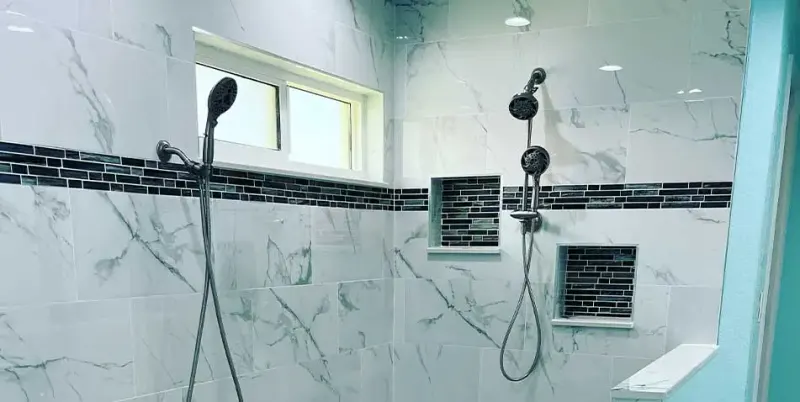
Bathroom Remodeling in Bradenton, Sarasota & the Suncoast
From a tired hall bath to a complete primary-suite rebuild, we plan, demo, waterproof, tile and finish bathrooms across Manatee, Sarasota, Charlotte and south Hillsborough counties,…
-
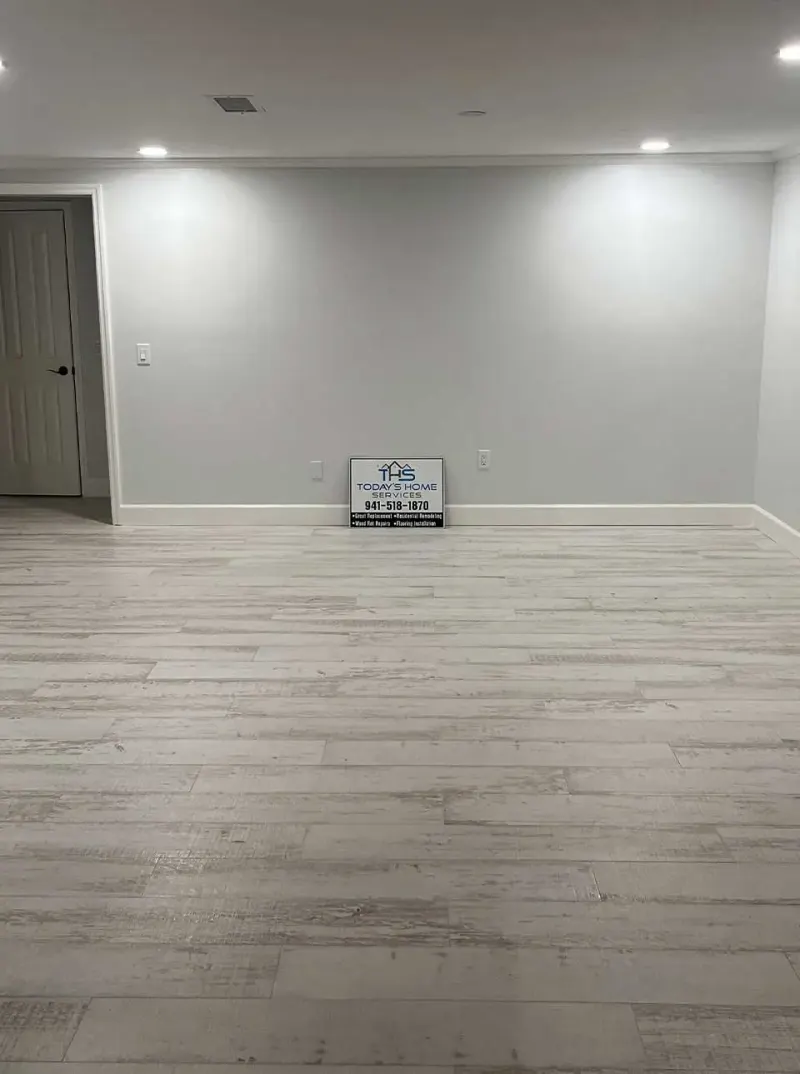
Flooring Installation
Tile, luxury vinyl plank, wood or epoxy: each one shines in some rooms and struggles in others. We help you match the floor to the room,…
-
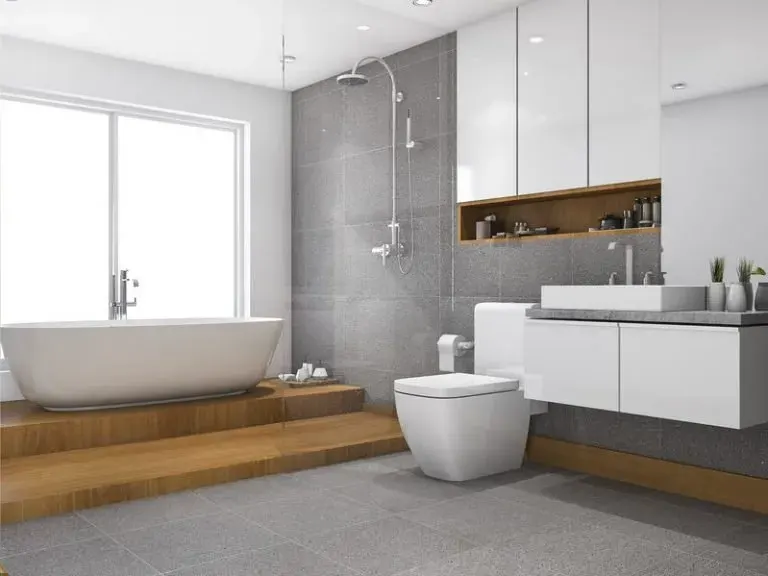 Understanding
Bathroom Flooring Materials Compared
A bathroom floor gets splashed, dripped on and walked across barefoot. The right material balances water resistance, grip, comfort and looks, and the labels on the…
-
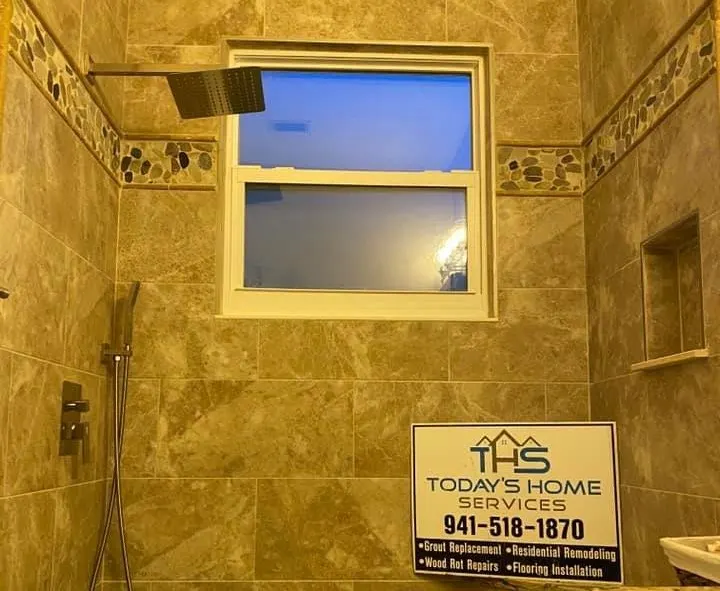 Ideas
Bathroom Floor Tile Ideas Sorted by What You Need
The right bathroom floor depends less on trends than on who uses the room and how. Start with the problem you want the floor to solve,…
-
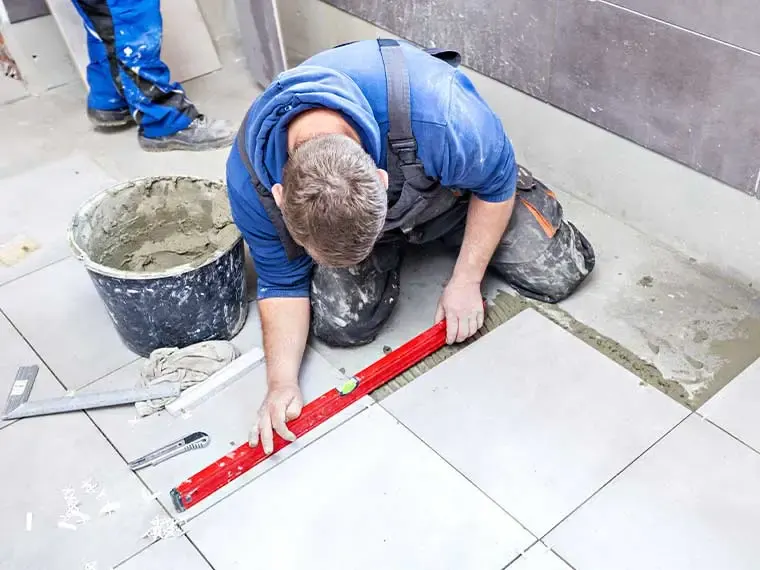 Why
Why Large-Format Tile Needs a Flat Floor
Big tiles look calm and seamless, but they're unforgiving. A dip that a 12-inch tile would ride over becomes an uneven edge you can see and…
-
 Bathroom Service
Toilet Replacement and Relocation
A toilet looks like the simplest fixture in the room, but the parts you never see (the flange, the seal and the floor under it) decide…