

The right bathroom floor depends less on trends than on who uses the room and how. Start with the problem you want the floor to solve, then pick a look, size and finish that fits it.
Key takeaways
- Slip resistance is measured wet; a DCOF of 0.42 or higher is the commonly cited minimum for level interior floors walked on when wet.
- Mid-tone grout and variegated stone-look porcelain hide sand, hair and hard-water residue far better than solid white or black.
- Large tiles make a small room feel bigger but need a flat slab, which often means leveling first.
- Pattern, tile size and the condition of the old floor drive the cost more than the tile itself.
Floors take more abuse than any other surface in a bathroom: wet feet, dropped bottles, cleaning chemicals, and in many Gulf Coast homes, sand tracked in from the beach or pool. These bathroom floor tile ideas are organized around the job you need the floor to do, because a guest powder room and a busy family bath have very different priorities.
Most Manatee and Sarasota County homes are built on a concrete slab, so floor tile usually goes directly over it, which is good news: slabs are stiff and don't flex like wood framing. The catch is that older slabs are rarely perfectly flat, and some have cracks that need treatment before tile goes down.
If you want a floor that feels safe underfoot
Matte porcelain in a mid-size format
A 12x12 or 12x24 matte porcelain balances grip and easy cleaning. Porcelain is dense and absorbs very little water, and a matte surface offers more traction than a polished one. "Matte" varies by manufacturer, though, so ask for the wet slip rating instead of judging by touch in the showroom.
How to read a slip rating
Slip resistance on tile is usually reported as DCOF (dynamic coefficient of friction), and it's measured on a wet surface. Under the ANSI A326.3 standard, a DCOF of 0.42 or higher is the commonly cited minimum for level interior floors that will be walked on when wet. That's a baseline, not a guarantee: soap, oils and a sloped shower floor all change real-world grip. Our explainer on bathroom tile types covers the other ratings on a spec sheet.
Mosaics in the wet zones only
Use a small hexagon or 2x2 mosaic just in front of the shower and tub, with larger tile elsewhere. The extra grout joints add traction where water lands most. Plan the change in tile size so it looks intentional, often framed by a border or aligned with the vanity edge.
If you want a floor that hides everyday mess
Variegated stone-look porcelain
Tiles with natural variation, like a travertine or limestone look, disguise water spots, hair and sand far better than solid colors. Very busy patterns can clash with a patterned shower wall, so pair one busy surface with one calm one.
Mid-tone grout
Neither stark white nor black. Light grout shows dirt in traffic paths, and dark grout shows soap and mineral residue. A warm gray or greige grout is forgiving in a hard-water home, and a stain-resistant formula helps further; see grout types.
If you want a small bathroom to look larger
Large-format tile on the diagonal or straight
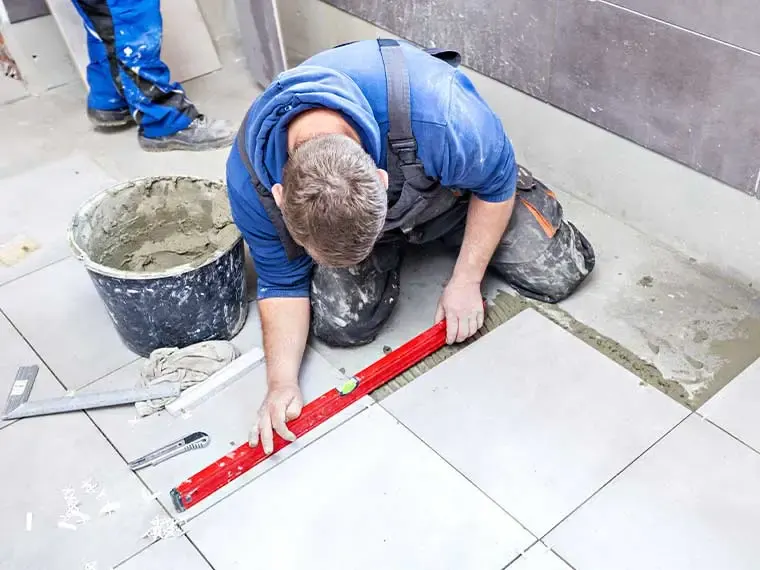
Fewer, larger tiles mean fewer lines, and the floor reads as one surface. A diagonal layout can also lengthen the view in a narrow room. The trade-off is that large tiles need a flat substrate. Our article on why large-format tile needs a flat floor explains why leveling the slab is often part of the job.
Same tile from floor into the shower
Carrying one tile continuously into a curbless or low-curb shower erases the visual boundary. It works especially well in a small hall bath, as long as the shower portion is rated for wet use; our shower tile ideas cover the linear-drain version.
If you want warmth and character
Wood-look porcelain planks
The look of wood with none of the swelling. Run planks along the longest wall to stretch the room, and keep the offset limited (no more than about a third of the plank length is a common guideline for long tiles) to reduce edge lippage.
Patterned encaustic-look tile
Graphic cement-tile looks, now available in porcelain, give a powder room or kids' bath real personality. Pattern fatigue is the risk, so keep walls and vanity simple and let the floor stay the star.
Herringbone or chevron
Rectangular tiles laid in a zigzag look lovely in wood-look or marble-look porcelain. Expect more cutting, more waste and more labor than a straight lay.
Matching the floor to the rest of the room
The floor ties the bathroom together, so it should relate to the shower tile and vanity without copying them exactly. Some pairings that work:
- A calm floor under a busy shower. If your shower wall has a herringbone or patterned tile, choose a quiet, solid-look floor.
- A patterned floor under plain walls. The reverse works in powder rooms and kids' baths, where the floor can carry all the personality.
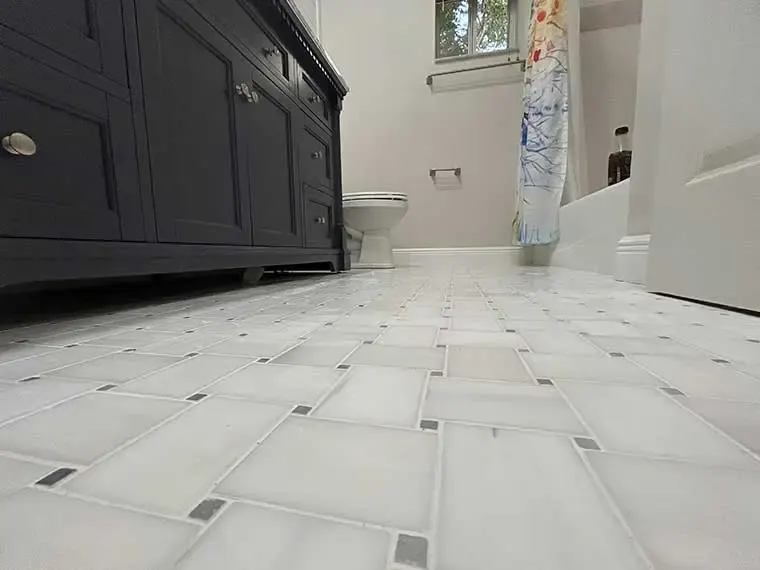
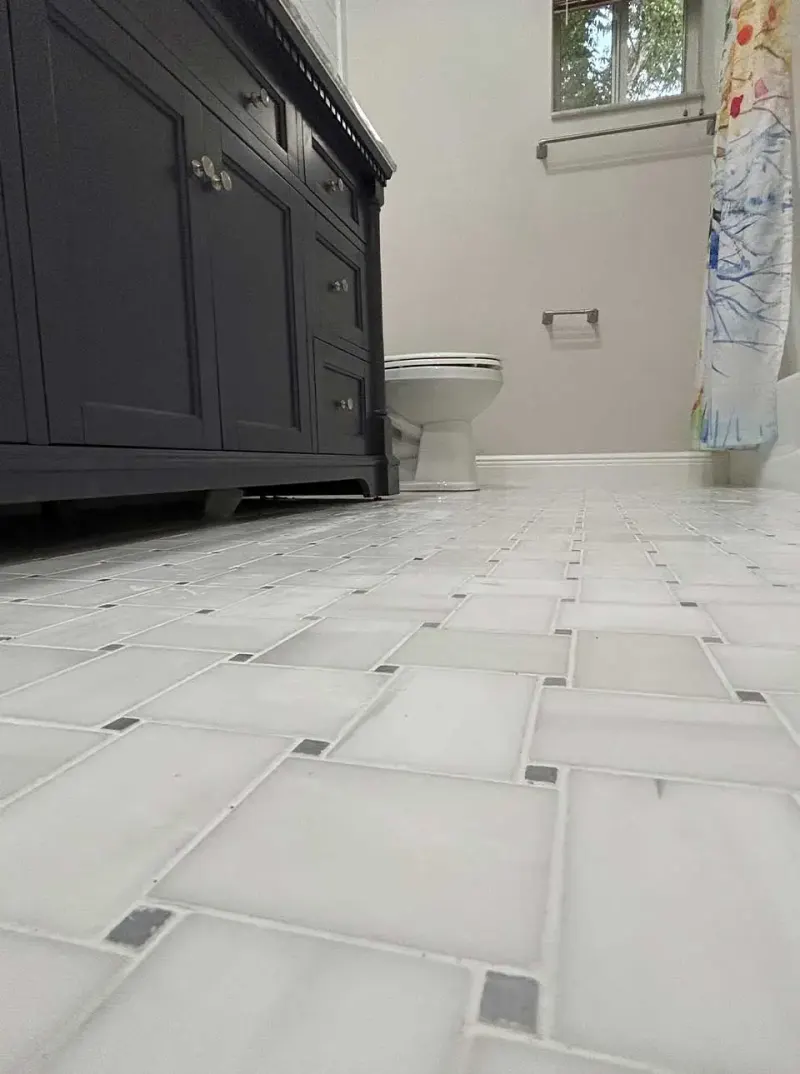
- Contrast with the vanity. A dark navy or charcoal vanity sits beautifully on a light stone-look floor, while a light oak vanity looks crisp on a deeper slate-tone tile.
- Continuity with the hallway. In open plans, choosing a bathroom tile that complements the flooring outside the door, rather than clashing with it, makes the house feel more cohesive.
If you can't decide, bring the vanity door sample, a piece of the shower tile and two floor candidates into the room together. The right combination is usually obvious within a minute.
Comparing common floor tile choices
| Option | Look | Grip when wet | Hides dirt | Installation demand |
|---|---|---|---|---|
| Matte porcelain 12x24 | Clean, versatile | Good | Moderate | Moderate |
| Large-format 24x48 | Seamless, modern | Varies by finish | Moderate | High (flatness critical) |
| Wood-look planks | Warm, natural | Good in matte | Good | Moderate to high |
| Hex or penny mosaic | Vintage, playful | Very good | Moderate | Moderate |
| Patterned porcelain | Bold, graphic | Good in matte | Good | Moderate |
| Polished marble | Luxurious | Poor | Low | High, plus sealing |
Practical details that matter as much as the look
- Plan the toilet flange. A new floor that's thicker than the old one raises the floor around the toilet. The flange may need an extender or replacement so the toilet seals properly.
- Watch the doorway transition. Height changes between the bathroom and a hallway with vinyl plank or carpet need a proper threshold, not a tripping edge.
- Check for soft spots and cracks. A floor that flexes or sounds hollow is a warning sign. Our article on why bathroom floors feel soft covers the usual causes.
- Consider condo underlayment. Many condo associations require a sound-reducing underlayment under hard flooring. Check before you order tile, and see our notes on remodeling a condo bathroom.
- Think about who uses the room. For older adults, pair a matte, well-rated floor with grab bars and a step-free shower; our accessible bathroom page covers the full plan.
What drives the cost of a new bathroom floor
Two floors with the same tile can price very differently. The main drivers:
- Demolition. Removing old tile bonded to a slab is slower than pulling up vinyl.
- Slab preparation. Leveling high and low spots and treating cracks before tile goes down.
- Tile size and pattern. Diagonal, herringbone and chevron layouts mean more cuts and more waste than a straight lay.
- Transitions. Doorway thresholds and height changes to adjoining floors.
- Toilet and vanity reset. Pulling and resetting fixtures, plus a flange extender if needed.
Our article on what drives bathroom remodel costs puts the floor in the context of the whole project.
Tip: Lay three or four loose tiles on your current floor and leave them there for a few days. You'll see them in morning light, under evening lamps and with real-world dust, which tells you more than any sample board.
Next steps
If you're torn between tile and other options like luxury vinyl, our overview of bathroom flooring materials compares them side by side. And if you're hoping to save demolition by going over the old floor, read whether you can tile over existing tile first. When you're ready, our bathroom flooring installation crew will check your slab and price the floor you have in mind.
More Ideas Articles
Frequently Asked Questions
What size floor tile makes a small bathroom look bigger?
Is wood-look tile a good idea in a bathroom?
Does the toilet have to come out to tile the floor?
What is the safest bathroom floor tile for older adults?
Keep Exploring
-
 Bathroom Service
Bathroom Flooring Installation
A bathroom floor takes splashes, steam, dropped bottles and daily traffic. We replace it with tile or waterproof vinyl laid over a flat, sound base, with…
-
 Understanding
Bathroom Flooring Materials Compared
A bathroom floor gets splashed, dripped on and walked across barefoot. The right material balances water resistance, grip, comfort and looks, and the labels on the…
-
 Why
Why Large-Format Tile Needs a Flat Floor
Big tiles look calm and seamless, but they're unforgiving. A dip that a 12-inch tile would ride over becomes an uneven edge you can see and…
-
 Questions
Can You Tile Over Existing Tile?
Technically yes, in limited situations. On a flat, well-bonded floor or backsplash, an overlay can work. Inside a shower, or anywhere the old tile is loose,…
-
 Why
Why Bathroom Floors Feel Soft
A floor that gives, creaks or sounds hollow is telling you something about what's underneath. What it means depends a lot on whether your bathroom sits…
-
Tile Installation
Good tile work is mostly invisible: flat floors, straight lines, tight even grout joints and no hollow spots. We spend the time on layout and surface…