


Twelve ways to tile a shower, each with the reason it earns its place and the practical catch: grout lines to clean, layout demands, slip resistance or how it ages under hard water.
Key takeaways
- Large-format porcelain means the least grout to scrub, but it needs very flat walls and careful handling.
- Shower floors need small tiles or a linear drain so the tile can follow the slope, plus a wet slip-resistance rating.
- Running tile to the ceiling protects the upper wall from steam in a humid Florida bathroom.
- Two or three tiles per shower is usually plenty; decide where each one stops before installation.
Shower walls are the largest tiled surface in most bathrooms, so the tile you pick sets the tone for the whole room. These twelve shower tile ideas run from timeless to bold. Each comes with its fine print, because the tile that photographs beautifully isn't always the one you want to scrub every weekend.
Before the list, one reminder: tile is the finish, not the protection. The waterproofing behind it does the real work, and no tile choice makes up for a poor membrane. If that's news to you, read why shower tile fails before choosing a pattern.
All twelve at a glance
| Idea | Cleaning effort | Labor intensity | Good fit for |
|---|---|---|---|
| 1. Stacked subway | Moderate | Moderate | Small and classic bathrooms |
| 2. Large-format porcelain | Low | High | Modern, low-maintenance showers |
| 3. Zellige-style handmade tile | Higher | Moderate | Character and texture |
| 4. Herringbone feature wall | Moderate | High | A single focal point |
| 5. Vertical mosaic strip | Moderate | Moderate | A small dose of a pricier tile |
| 6. Tile to the ceiling | Low | Moderate | Steamy showers, low ceilings |
| 7. Niche wrapped in floor tile | Moderate | Moderate | Tying walls and floor together |
| 8. Metal edge profiles | Low | Low | Porcelain without bullnose |
| 9. Pebble floor | Higher | Moderate | Grip and natural texture |
| 10. 2x2 matte mosaic | Moderate | Moderate | Safe, practical floors |
| 11. Hex or penny tile | Moderate | Moderate | Vintage, coastal or cottage looks |
| 12. Matching wall and floor, linear drain | Low | High | Seamless, spa-style showers |
Wall tile ideas
1. Subway tile, but stacked vertically
Classic 3x6 or 4x12 subway tile laid in a vertical stack instead of the usual brick offset. It's a familiar, affordable material that suddenly looks current, and the vertical lines make a low ceiling feel taller.
Fine print: stacked patterns show every out-of-plumb wall. The substrate needs to be straight, and the installer needs to be patient.
2. Large-format porcelain slabs
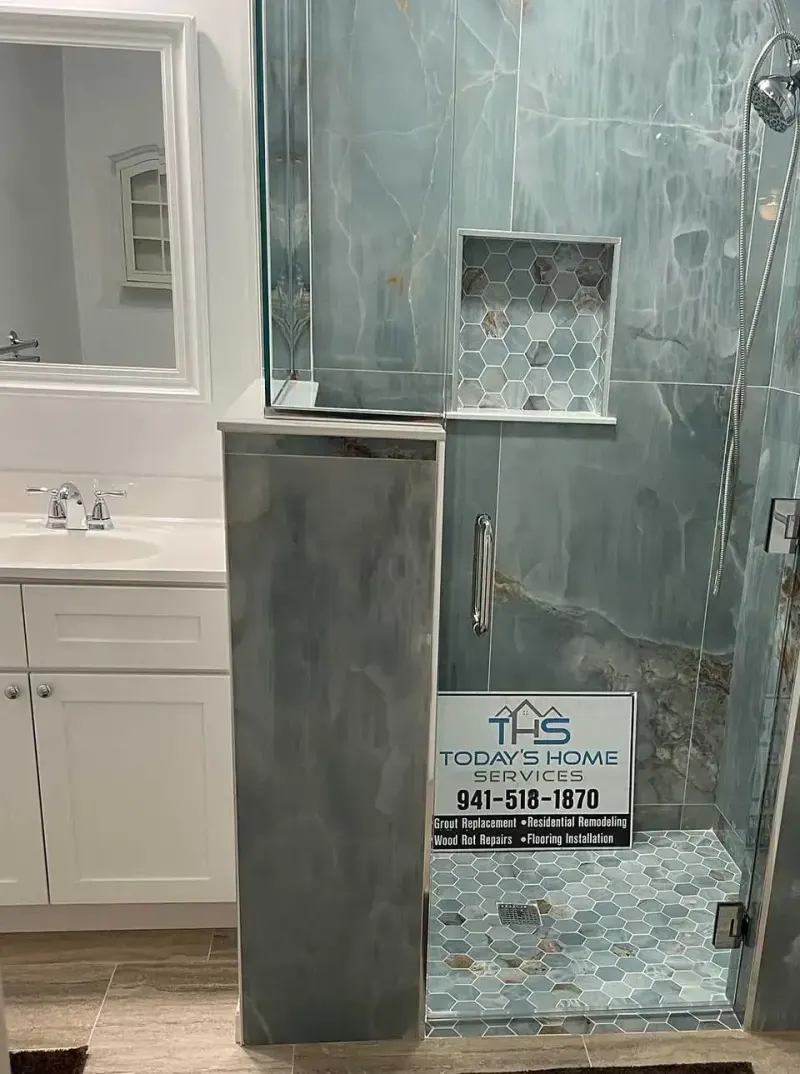
Tiles of 24x48 or larger, often in a marble or concrete look, leave very few grout lines, so there's less scrubbing and the shower reads as clean and calm.
Fine print: big tiles demand flat walls and careful handling. They're heavy, and lippage (one edge sitting proud of the next) is obvious. See why large-format tile needs a flat surface.
3. Zellige-style handmade tile
Glazed tiles with irregular edges and color variation bring warmth and texture that machine-made tile can't match.
Fine print: the uneven surfaces create wider, irregular grout joints that take more care to clean. Porcelain look-alikes offer some of the charm with less maintenance.
4. Herringbone on the back wall
A herringbone pattern on the wall you see first, with plain tile on the sides, draws the eye without overwhelming a small shower.
Fine print: herringbone means more cuts and more labor, so it earns its keep as a focal point rather than everywhere.
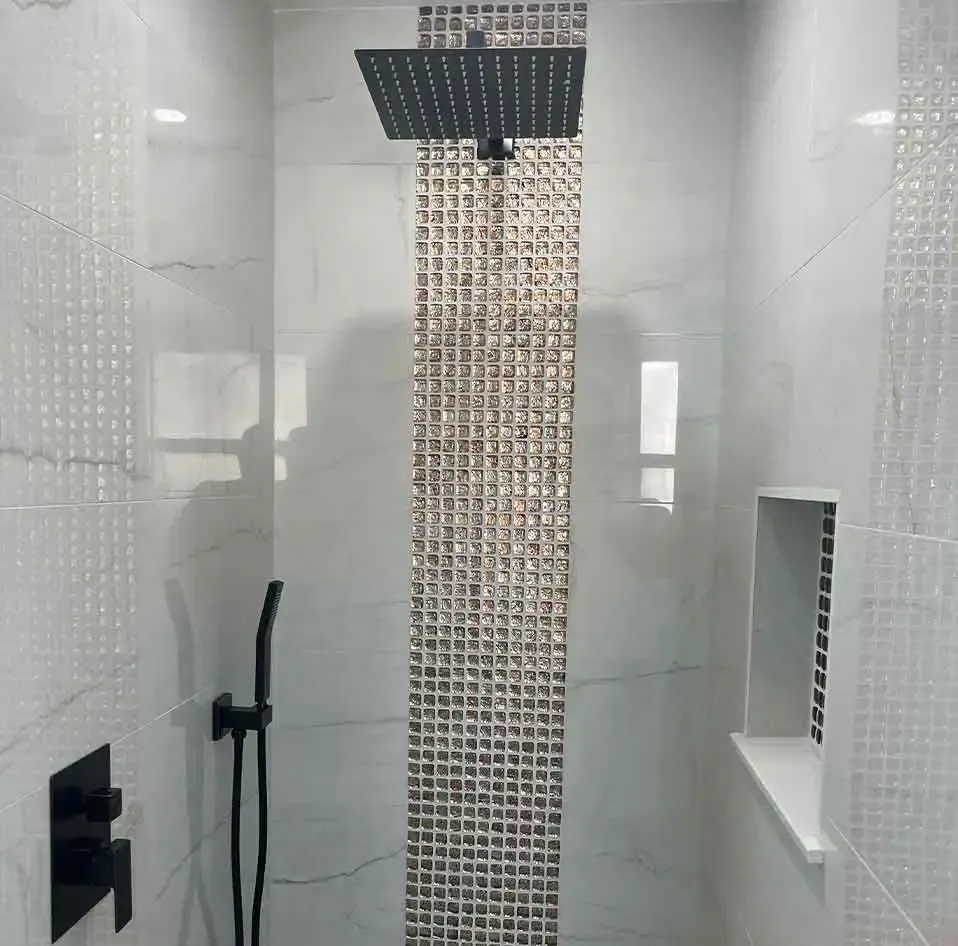
5. A vertical mosaic accent strip
A narrow column of glass or stone mosaic running floor to ceiling, often aligned with the shower valve or niche, adds sparkle and draws the eye up using only a small amount of a pricier tile.
Fine print: the strip has to line up with fixtures, so plan its position before the valve is roughed in.
6. Tile to the ceiling
Running wall tile all the way up instead of stopping at six or seven feet looks finished and protects the upper wall from steam. Painted drywall above the tile often blisters or grows mildew in a humid Florida bathroom.
Fine print: more tile and more labor, but it's an upgrade that keeps paying off, because the upper wall never needs repainting.
Niche and trim ideas
7. A niche wrapped in the floor tile
Lining the inside of the niche with the same mosaic used on the shower floor ties the floor and walls together and gives the niche a deliberate, built-in look.
Fine print: the bottom of the niche should pitch slightly forward so water doesn't pool. Bathroom storage ideas covers where niches fit best.
8. Metal edge profiles instead of bullnose
Many modern porcelain tiles don't come with matching bullnose. Slim brushed or matte metal trim on outside corners and niche edges gives a crisp edge instead.
Fine print: choose a finish that stands up to humidity. Stainless or coated aluminum profiles are common choices near the coast.
Shower floor tile ideas
These are about the shower pan itself, where slope, drain and grip matter most. For the main bathroom floor, see bathroom floor tile ideas.
9. Pebble or river-rock mosaic
Flat-cut pebbles on mesh sheets follow the slope to a center drain easily and give excellent grip.
Fine print: lots of grout, which means more cleaning and sealing. Some people find the texture uncomfortable for long showers.
10. 2x2 matte porcelain mosaic
Small square tiles in a matte finish add traction through their many grout joints and bend easily to a sloped pan.
Fine print: pick a grout color close to the tile so the grid doesn't look busy.
11. Hexagon or penny tile
Small hexes or round penny tiles suit a vintage or playful shower floor and pair well with subway walls.
Fine print: like all mosaics, it relies on good grout. A stain-resistant grout is worth considering, and our guide to grout types explains the options.
12. Matching wall and floor with a linear drain
Large floor tile that matches the walls is possible because a linear drain allows a single-direction slope. The shower almost disappears into the room.
Fine print: large floor tile in a shower must have adequate wet slip resistance. Ask to see the product's rating rather than assuming.
Choosing tile size for shower walls vs. floors
| Surface | Typical tile sizes | Why |
|---|---|---|
| Shower walls | Subway up to large-format panels | Walls are flat and vertical, so size is a style and flatness question |
| Floor with a center drain | 2x2 mosaics to small hex or penny | Small tiles follow the four-way slope to the drain |
| Floor with a linear drain | Up to about 12x24, if rated for wet slip resistance | A one-direction slope lets larger tiles lie flat |
Mixing tiles without making a mess
Two or three tiles per shower is usually plenty: one for the walls, one for the floor and perhaps one accent. A few rules of thumb help combinations hang together:
- Vary the scale. Pair a large wall tile with a small floor mosaic so the patterns don't compete.
- Repeat one color. Let the accent strip pick up the floor color, or the niche lining echo the wall grout.
- Keep the transitions clean. Decide where each tile stops before installation, ideally at an inside corner or a metal edge, never in the middle of an open wall.
- Match the grout to the mood. A grout that blends makes the tile read as a surface. A contrasting grout makes the pattern the star, and shows every imperfection in spacing.
Tip: Ask for a full sheet or two of your shortlisted tiles and look at them in your bathroom, under your own lighting, wet and dry. Tile can shift noticeably in color between the showroom and a sunny Gulf Coast bathroom.
Choosing with the long term in mind
If you're unsure which material suits a shower, our explainer on bathroom tile types compares porcelain, ceramic, glass and stone. When you have a direction, our bathroom tile installation crew can lay out the pattern with you before a single tile is set, and if the whole enclosure is due, shower remodeling covers the pan, walls and glass together.
More Ideas Articles
Frequently Asked Questions
What is the easiest shower tile to keep clean?
Can I use the same tile on the shower floor and walls?
How high should shower tile go?
Keep Exploring
-
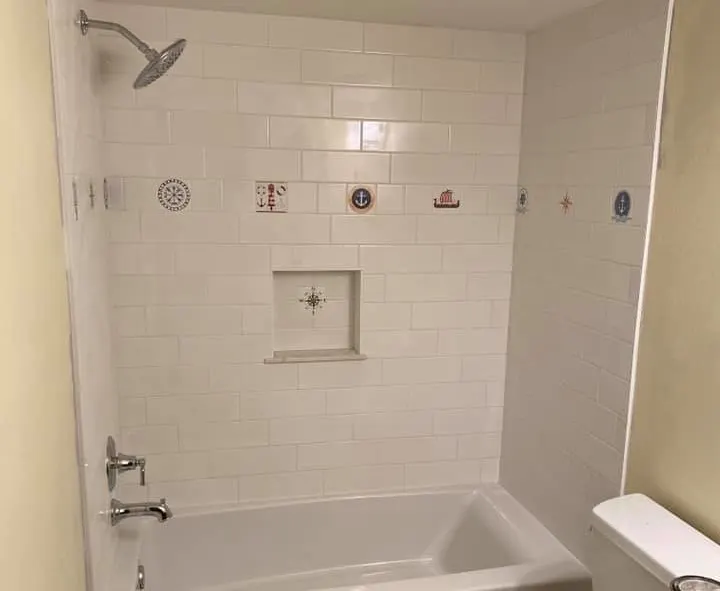 Bathroom Service
Bathroom Wall & Shower Tile Installation
Good tile looks effortless because the hard thinking happened before the first piece went up. We plan every wall, edge and niche so your shower and…
-
 Understanding
Bathroom Tile Types and Where Each One Belongs
Tile is sold by look, but it should be chosen by behavior. How much water a tile absorbs, how hard its surface is and how it…
-
 Understanding
Grout Types: Choosing the Right Grout for a Bathroom
Grout fills the gaps, locks tile edges together and takes most of the daily abuse in a shower. Choosing the right kind depends on joint width,…
-
 Why
Why Shower Tile Fails (and What It Tells You)
Shower tile rarely fails because the tile itself was bad. It fails because of what's behind and beneath it: the bond, the backer, the pan and…
-
 Bathroom Service
Shower Remodeling
When a shower leaks, cracks or just looks worn out, a surface fix rarely lasts. We take it back to the framing and rebuild every layer:…
-
 Ideas
Bathroom Floor Tile Ideas Sorted by What You Need
The right bathroom floor depends less on trends than on who uses the room and how. Start with the problem you want the floor to solve,…