


In a Gulf Coast bathroom, light and air aren't finishing touches. One decides whether you can see your face in the mirror; the other decides whether your grout and ceiling stay free of mildew.
Key takeaways
- A fan only protects the room if it's ducted all the way outdoors, sized for the room and quiet enough that people actually run it.
- The HVI rule of thumb of about 1 CFM per square foot works for small baths; long duct runs and tall ceilings change the math.
- Mirror lighting at face height on both sides beats a single overhead bar for shaving and makeup.
- Lights in or over the shower must be rated for that location, and new wiring is done by a licensed electrician.
Walk into almost any older Florida bathroom and you can diagnose it from the ceiling: a single fixture over the mirror casting shadows under your eyes, and a noisy fan that hums but leaves the mirror fogged. Bathroom exhaust fan installation and new lighting fix both at once, and the best time to do it's while the ceiling and walls are open during a remodel. Today's Home Services plans both as part of the room, so the fan actually clears steam and the lights let you see what you're doing.
Why Ventilation Comes First in Florida
Our air already carries a lot of moisture before anyone turns on the shower. Add a hot shower, a closed door and an undersized fan, and that humid air settles onto the coolest surfaces it can find: the mirror, the ceiling paint, the grout, the back of the toilet tank and the drywall behind the vanity. Over months, that becomes peeling paint, mildew along the ceiling line and grout that never looks clean. Our article on why bathrooms get mold in Florida explains the full picture.
A properly working exhaust system protects everything else you have invested in, including new tile, a new vanity and new paint.
Signs it's time for a new bathroom fan
- The mirror stays fogged long after you shower.
- Dark spotting appears on the ceiling near the tub or shower.
- The fan is loud but a tissue held to the grille barely moves.
- Paint is blistering or peeling above the shower.
- You can't find where the duct actually ends.
Exhaust Fans: Sizing, Venting and Controls
Sizing
A widely used rule of thumb, based on HVI guidance, is roughly 1 CFM of airflow per square foot for a small bathroom with a standard ceiling. A 7-by-10 bathroom, for example, works out to about 70 CFM by that rule. Larger primary baths, tall or vaulted ceilings and enclosed toilet rooms need a different approach, sometimes a second fan. Our guide to bathroom exhaust fan sizing goes deeper into the calculation.
| Bathroom size | Floor area | Rough fan size by the 1 CFM rule |
|---|---|---|
| 5 x 8 hall bath | About 40 sq ft | Fan at the common minimum size, often 50 CFM |
| 7 x 10 bath | About 70 sq ft | About 70 CFM |
| Larger primary bath | Over about 100 sq ft | Calculated differently; see the sizing guide |
These are typical starting points for standard ceilings, not code requirements. Check local code and the fan maker's guidance for your room.
Small baths are the hardest to keep dry, because the same amount of steam fills less air. If you're working with a compact room, our small bathroom remodeling page covers how ventilation fits into a tight layout.
Rated airflow assumes a short, smooth duct. Long runs, sharp bends and crushed flex duct cut real performance, so we look at the route as carefully as the fan.
Venting outdoors
The fan should be ducted all the way to the exterior through a roof or wall cap with a backdraft damper, not into the attic, a soffit cavity or an open joist bay. Check local code, which typically requires outdoor termination. We use rigid or semi-rigid duct where we can, keep runs as short and straight as the framing allows, and seal the joints. In coastal areas, a durable exterior cap that can stand up to wind and salt air is worth choosing.
Quiet and controls
- Quieter fans get used. Low sone ratings matter, because people switch off a fan that sounds like a hair dryer.
- Humidity-sensing fans turn on when moisture rises and shut off once it drops.
- Timer switches let you keep the fan running after you leave.
- Fan and light combinations work in small rooms but can tie the fan to the light switch; separate controls are often more useful.
Tip: Leave a small gap under the bathroom door, or make sure the room can draw replacement air from the house. A fan can't pull air out of a sealed room, and many interior bathroom doors fit tightly over new flooring.
Layered Lighting That Works
Good bathroom lighting is built in layers, each with a job.
Task lighting at the mirror
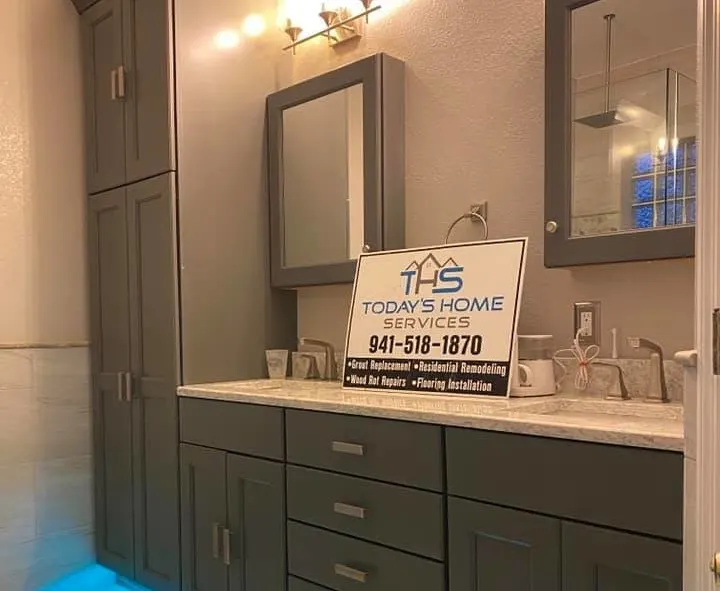
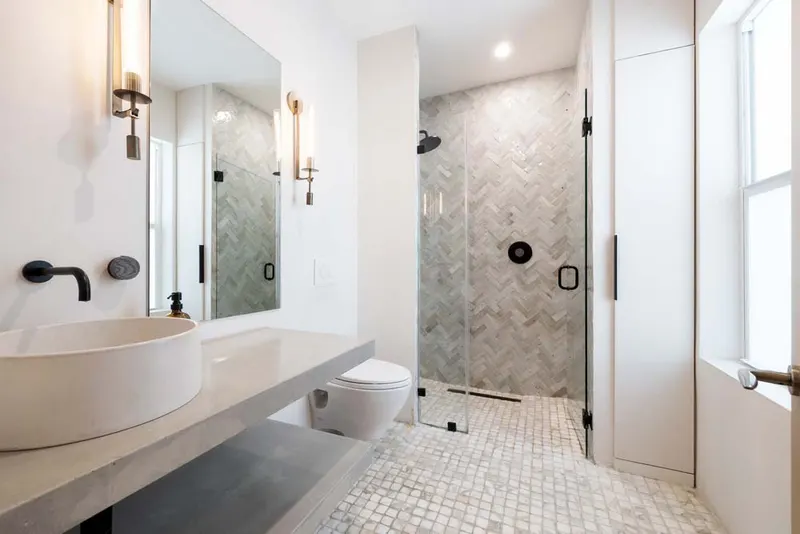
A single fixture overhead throws shadows down your face. Side lighting at about face height, either sconces on both sides of the mirror or a lighted mirror, gives even light for shaving and makeup. Above-mirror bars work best when they're wide enough to span most of the mirror. In a primary bath with a double vanity, each sink should get its own task light.
Ambient light
General ceiling lighting fills the room so you aren't relying on the mirror lights alone. Recessed fixtures spaced evenly or a flush-mount fixture rated for damp locations are common choices. Dimmers are useful for late-night trips and a relaxed bath.
Shower and tub lighting
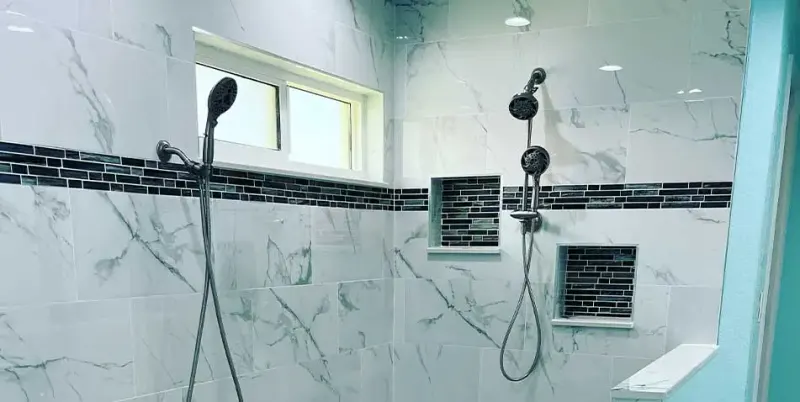
A dark shower is a common complaint. Fixtures in or directly over a shower must be rated for that location, typically wet-rated, and many require GFCI protection. A sealed recessed trim over the shower or tub makes the space usable and makes cleaning easier because you can see the corners.
Accent and night lighting
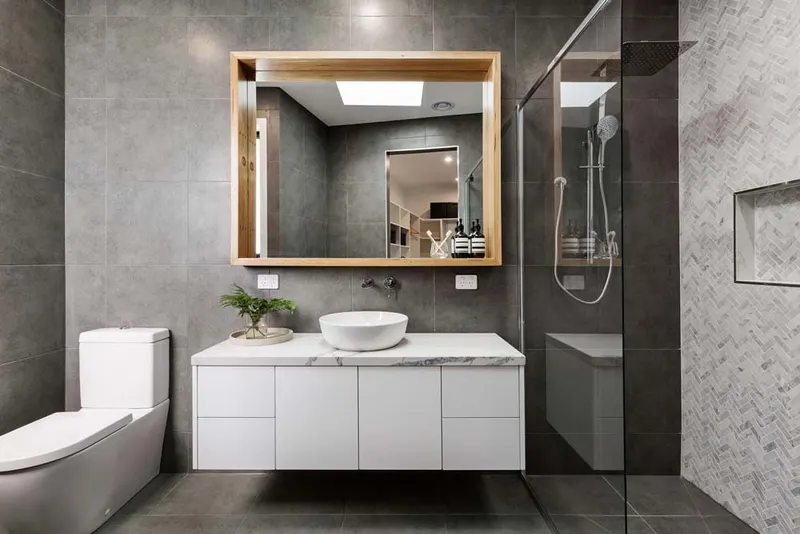
LED strips under a floating vanity, lit niches or toe-kick lights add a soft glow at night without waking anyone with the overhead lights. They're especially helpful in an accessible bathroom where a clear path matters. For more styling ideas, see our bathroom lighting ideas.
Color and brightness
Choose LED fixtures with a warm-to-neutral color temperature and good color rendering so skin tones and tile colors look natural. Keeping the same color temperature across every fixture in the room prevents the mixed, patchy look of mismatched bulbs.
Electrical Safety and Permits
Bathroom receptacles typically require GFCI protection, and wet-location fixtures have their own rules. New circuits, relocated fixtures and added fans commonly need a permit and inspection; check local code and, in a condo, your association's rules. Where new wiring or circuits are needed, that work is done by a licensed electrician as part of your project, and we coordinate the schedule and inspections. We explain what your project involves during the consultation, and we plan the wiring around the room's final layout rather than wherever the old box happened to be.
How This Fits Into Your Remodel
Lighting and ventilation are easiest to change when the ceiling and walls are open. That's why we sequence them before tile and paint:
- Plan fan location over or near the shower and confirm the duct route to the outside.
- Lay out task, ambient, shower and accent lighting around the final vanity, mirror and shower positions.
- Rough in duct and blocking while the walls are open, with the electrician running any new wiring and boxes.
- Install fixtures, fan grille and controls after finishes go in.
- Test airflow, switching and GFCI protection before we clean up.
Coordinating lights with built-ins matters too. A recessed medicine cabinet from our bathroom storage work can affect where sconces land, so we plan them together.
What Affects the Cost
Fan and lighting work can be a quick swap or part of a bigger rebuild. The main factors are:
- Duct route. A short run straight through the roof is simple; a long run, a new roof or wall cap, or a duct that currently ends in the attic adds work.
- Ceiling access. Attic space above the bath makes installation easier than a flat roof or a second-floor bathroom.
- Electrical changes. New circuits, added switches and relocated boxes need a licensed electrician and often a permit.
- Fixture choices. Humidity-sensing fans, lighted mirrors, shower-rated recessed trims and LED strips vary widely.
- Patching and paint. Moving a fan or light means drywall repair and repainting the ceiling.
See our guide on what a bathroom remodel costs for how these fit into a full project.
If your bathroom always feels damp or dim, ask us for a free estimate. We'll find out where your fan really vents, check what the room needs, and recommend lighting that suits how you use the space, as part of a full bathroom remodel or a targeted upgrade.
Related Bathroom Services
What Clients Say
“My house was replumbed last year due to cast iron pipes. Today's Home Service did an awesome job remodeling both bathrooms. I have more updates and maintenance in mind for my home. It gives me peace of mind to have found a company I can trust to help me with everything.”
— Helen Downs
“Today's Home Services with Shaun and his crew, he is very knowledgeable about tile and marble and your construction needs. From day one his crew was very polite and professional. They treated us and our home like more than just customers. If you're considering remodeling your home, I definitely would recommend them. They are definitely a five star company.”
— Michael Wojcik
Bathroom Remodeling Near You
We remodel bathrooms throughout four Gulf Coast counties. Find the page for your community:
Learn More Before You Start
Lighting & Ventilation FAQs
Can you replace just my bathroom fan without a remodel?
Do I need a permit to add a fan or light?
What kind of light can go inside the shower?
Should my fan run longer after I shower?
Keep Exploring
-
Bathroom Remodeling in Bradenton, Sarasota & the Suncoast
From a tired hall bath to a complete primary-suite rebuild, we plan, demo, waterproof, tile and finish bathrooms across Manatee, Sarasota, Charlotte and south Hillsborough counties,…
-
 Understanding
Bathroom Exhaust Fan Sizing: How Much Air You Need
In a humid climate, the exhaust fan is the bathroom's most underrated part. Sizing it right, ducting it correctly and running it long enough decide whether…
-
 Why
Why Bathrooms Get Mold in Florida
Mold needs moisture, a surface to feed on and time. A Florida bathroom supplies all three generously, and a few common building shortcuts make it far…
-
 Ideas
Bathroom Lighting Ideas That Actually Flatter
Good bathroom light shows your face without shadows, makes the room feel calm at night and keeps the shower safe. Here's how to get all three…
-
 Bathroom Service
Bathroom Storage and Built-Ins
Most bathrooms aren't short on space so much as short on places to put things. Built-in storage turns the wall cavities, corners and the space above…
-
 Bathroom Service
Master Bathroom Remodeling
A primary suite bathroom has to serve two people on two schedules and still feel like a retreat at the end of the day. Getting there's…