


The short answer
It depends far more on scope than on room size. Whether the layout changes, how the shower is built, your tile and fixture choices, and what's found behind the walls set the price. That's why we don't publish price ranges: a free on-site visit and written estimate gives you a number based on your actual bathroom.
Key takeaways
- Keeping the toilet, vanity and shower where they are is the biggest single way to control cost.
- A tiled shower is usually the most labor-intensive part of the room.
- Allowances are placeholders, so ask what each one assumes and make selections early.
- When two estimates differ widely, the gap is often explained by what one of them left out.
Two bathrooms of the same size can end up far apart once you account for what moves, what's behind the walls and what you choose to put back. This page shows exactly what pushes the number up or down, so the estimate you receive makes sense and you can compare contractors on equal terms.
The five things that drive cost most
1. How much changes
Keeping the toilet, vanity and shower where they are is the biggest money-saver in any bathroom. As soon as a drain moves, especially on a concrete slab, the project picks up slab cutting, trenching, new pipe, inspection and concrete patching. Moving walls or enlarging the room adds framing, electrical and drywall work. Our article on moving a toilet or shower drain explains what that involves.
2. The shower
A tiled shower is usually the most labor-intensive part of the room. Backer board, a waterproofing membrane, a sloped pan, niches, benches, tile layout and glass all add steps. A prefabricated surround or a tub swap involves fewer of them.
3. Tile choices and layout
Labor varies with tile size and pattern. Large-format porcelain needs a very flat substrate and careful handling; small mosaics take many more cuts; herringbone and chevron layouts take longer than a straight stack. The bathroom tile types guide covers how each material behaves.
4. Fixtures and finishes
Vanities, tops, faucets, valves, glass and lighting range from stock items to custom pieces. Two bathrooms with identical labor can end up far apart purely on selections.
5. Hidden conditions
Older Gulf Coast homes can hide soft subfloors, rotted sill plates behind tubs or deteriorating cast iron drains. Fixing those isn't optional if you want the new bathroom to last, and it's the main reason estimates change after demolition.
Where does your bathroom fall?
Without prices, you can still place your own project. For each row, decide which column describes your bathroom. The more answers land on the right, the higher your estimate is likely to be.
| Question | Points to lower cost | Points to higher cost |
|---|---|---|
| Does the layout change? | Everything stays put | Drains or walls move |
| What kind of shower? | Prefab surround or tub swap | Custom tiled shower with niches, bench and glass |
| Tile size and pattern? | Standard sizes, straight layout | Large-format, mosaics or herringbone |
| Fixture level? | Stock vanity and standard trim | Custom vanity, stone top, designer fixtures |
| Home age and condition? | Newer home, no history of leaks | Older home, soft spots or past leaks |
| Building rules? | Single-family home | Condo with approval, insurance and work-hour limits |
Scope tiers: what each level typically includes
Rather than price brackets, it helps to think in tiers of work. Each tier adds labor and trades compared to the one above it.
| Tier | Typical work | Main cost drivers |
|---|---|---|
| Refresh | Paint, mirror, lighting, hardware, faucet, toilet | Fixture selections |
| Renovation | New vanity and top, flooring, regrouting or a tub swap, layout stays | Materials, floor prep, any rot found |
| Full remodel | Room taken to studs, new shower system, all new finishes, layout stays | Shower build, tile labor, waterproofing |
| Remodel with layout change | Drains or walls moved, new circuits, possible slab work | Plumbing relocation, slab trenching, permits |
The difference between a renovation and a remodel is explained in more detail in bathroom renovation vs. remodel.
Understanding allowances
Many estimates include allowances, placeholder amounts for items you haven't picked yet. They let a contractor price the job before every choice is made, but they're also where budgets quietly drift.
- Ask what each allowance assumes. A tile allowance that covers basic ceramic won't cover a handmade zellige.
- Ask whether the allowance covers only the material, or material plus any extra labor that a premium choice might require.
- Make your selections early. The sooner allowances become real line items, the more predictable your total.
Tip: If you already know you want a specific vanity or tile, tell the estimator. Pricing the real item from the start removes the guesswork that allowances introduce.
How to read a bathroom remodeling estimate
A clear estimate should let you answer these questions without calling anyone:
- What's being removed and disposed of? Demolition and haul-away should be visible, not assumed.
- What goes behind the tile? Look for the backer board and waterproofing system named specifically. "Prep walls" is vague; "cement board with a liquid or sheet membrane" isn't.
- What plumbing is included? New valve, new drain, supply line replacement, shutoffs.
- What electrical is included? GFCI protection, fan replacement or ducting, new lighting circuits.
- What finishes are included versus allowed for? Separate firm items from allowances.
- Who handles permits and inspections?
- How are unforeseen conditions handled? Ideally through a written change order you approve first.
- What does cleanup look like? Daily and final.
If two estimates differ widely, line them up against this list. Often the gap is explained by what one of them left out.
Ways to control what you spend
- Keep the layout. It's the single most effective budget decision.
- Spend on what's behind the wall and save on what's easy to swap later, such as mirrors, lighting and hardware.
- Consider phasing. Some bathrooms can be remodeled in stages, as long as the order is planned so nothing gets torn out twice.
- Pick standard sizes for vanities, tubs and glass where you can.
- Be decisive. Changes after work starts cost more than changes on paper.
For a compact hall bath, our small bathroom remodeling page shows how a tight footprint changes the priorities.
What a free estimate includes
A useful estimate starts with a visit, not a phone call. Ours includes a look at the room and what we can check without demolition, a conversation about how you use the bathroom, options at more than one tier where that makes sense, and a written scope that separates firm items from allowances and explains how any change orders would work. You can review it at your own pace. When you want a figure for your own space, a free estimate for bathroom remodeling is the place to begin.
More Questions Articles
Frequently Asked Questions
Why won't you publish a price list for bathroom remodels?
Does a tub-to-shower conversion cost more than a tub replacement?
Is a prefab shower surround cheaper than tile?
Do permits add to the cost?
Keep Exploring
-
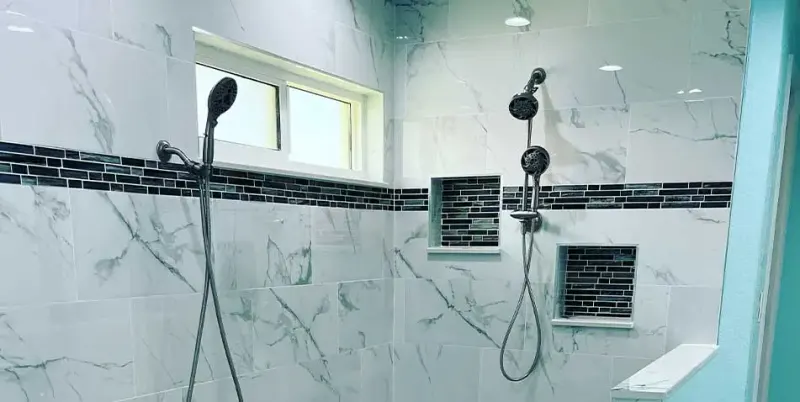
Bathroom Remodeling in Bradenton, Sarasota & the Suncoast
From a tired hall bath to a complete primary-suite rebuild, we plan, demo, waterproof, tile and finish bathrooms across Manatee, Sarasota, Charlotte and south Hillsborough counties,…
-
 Why
Why Bathroom Remodel Estimates Change After Demolition
An estimate is written from what a contractor can see. Demolition reveals what nobody could see. How that gap is handled, on paper and in conversation,…
-
 Questions
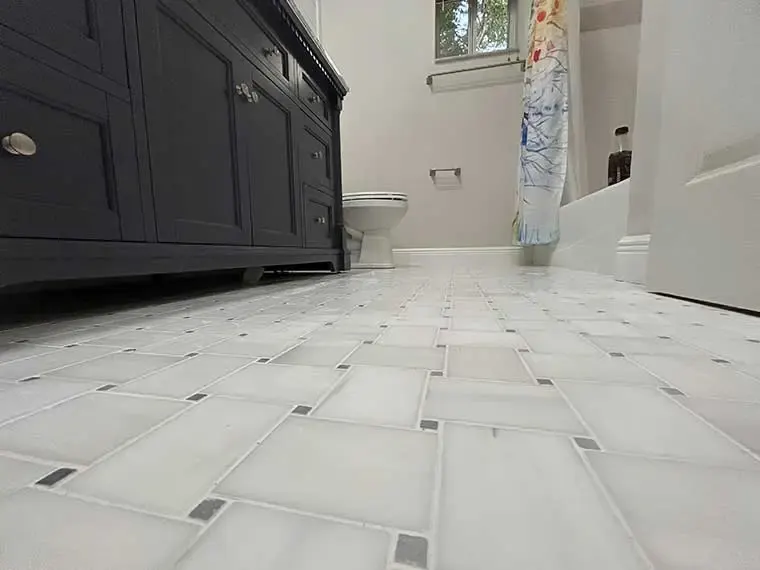
Bathroom Renovation vs. Remodel
We use the words deliberately. A renovation improves the bathroom you have through select upgrades. A remodel transforms it, rethinking the layout, fixtures, lighting and finishes…
-
 Questions
Can a Bathroom Be Remodeled in Stages?
Yes. Bathroom work can be done in stages to fit your budget and schedule. The key is planning the whole room first, then doing the work…
-
 Bathroom Service
Small Bathroom Remodeling
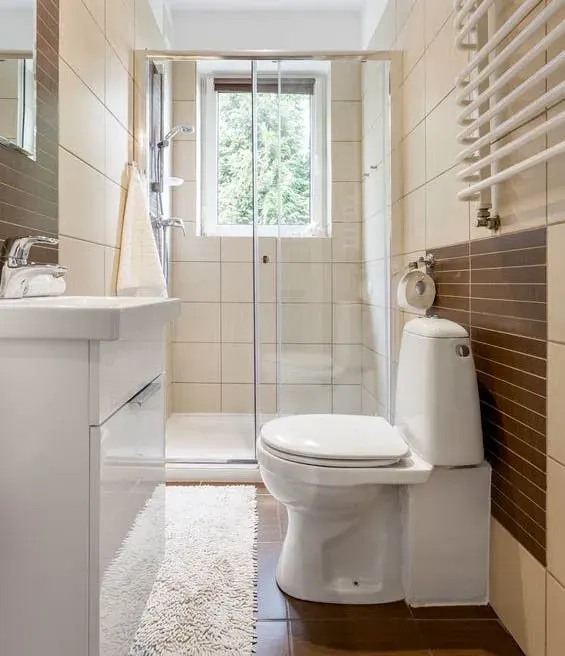
In a hall, guest or condo bath, a few inches decide whether the door clears the toilet and whether two people can pass at the sink.…
-
 Understanding
Bathroom Tile Types and Where Each One Belongs
Tile is sold by look, but it should be chosen by behavior. How much water a tile absorbs, how hard its surface is and how it…