


Tile is sold by look, but it should be chosen by behavior. How much water a tile absorbs, how hard its surface is and how it is made decide whether it belongs on a shower floor, a wall or nowhere near the bathroom.
Key takeaways
- Porcelain absorbs 0.5 percent of its weight in water or less, which is why it suits showers and floors.
- PEI rates glaze wear; PEI 3 or higher is usually plenty for a bathroom floor.
- Slip resistance is measured wet as DCOF, and 0.42 is the commonly cited minimum for level interior floors walked on wet.
- Marble and other calcium-based stones etch from acids and show hard-water film, so they need more care than porcelain.
Walk into any tile showroom and the samples are grouped by color and style. That's useful for design, but it hides the more important question: how will this tile behave in a wet room for the next twenty years? Bathroom tile types differ in density, water absorption, surface hardness and how they react to cleaners and hard water. Those differences matter far more on a shower floor than on a backsplash.
This article sorts the main families, explains the three ratings worth knowing and ends with a placement chart you can use while shopping.
Three ratings worth understanding
Water absorption
Tile is classified by how much water its body soaks up, expressed as a percentage of its weight. Lower is denser.
- Impervious: 0.5 percent or less. This is where porcelain sits.
- Vitreous: more than 0.5 up to 3 percent, still quite dense.
- Semi-vitreous: more than 3 up to 7 percent.
- Non-vitreous: more than 7 percent. Many wall-only ceramics fall here.
These classes come from the ANSI A137.1 tile standard.
Why it matters: a dense tile resists staining, holds up better in constantly wet areas and is less likely to be damaged by moisture moving through it.
PEI rating
The PEI scale rates how well a glazed surface resists wear from foot traffic, usually from 1 to 5.
| PEI class | Typical use |
|---|---|
| 1 | Walls only |
| 2 | Walls and very light foot traffic |
| 3 | Most residential floors, including bathrooms |
| 4–5 | Heavy residential and commercial traffic |
Bathrooms see bare feet and slippers, not boots, so a PEI 3 or higher is usually plenty for a floor. PEI doesn't apply to unglazed through-body porcelain in the same way, because there's no glaze to wear through.
Slip resistance (DCOF)
For floors, slip resistance is the rating that affects safety. It's usually listed as DCOF (dynamic coefficient of friction) and measured on a wet surface. Under the ANSI A326.3 standard, a DCOF of 0.42 or higher is the commonly cited minimum for level interior floors expected to be walked on when wet. Shower floors benefit from more grip than that number alone suggests, which is why mosaics and textured finishes are the usual choice there. Our bathroom floor tile ideas apply this to real layouts.
The main tile families
Porcelain
Made from fine, dense clay fired at high temperatures, porcelain is the workhorse of modern bathrooms and the material most of our tile installation work involves. It is low-absorption, hard, and comes in nearly any look: marble, concrete, wood plank, terrazzo, solid color. Large-format panels are porcelain almost by definition.
Good fit: shower walls and floors, bathroom floors, wet areas of every kind. Trade-off: it is hard to cut and very large pieces need a flat substrate, which we cover in why large-format tile needs a flat floor.
Ceramic
Ceramic uses a coarser clay body with a glaze on top. It is lighter, softer and easier to cut, and glazed ceramic subway tile is a classic for good reason. Many ceramics are rated for walls only.
Good fit: shower and tub surround walls, wainscot, accent walls. Trade-off: check the rating before using one on a floor.
Natural stone
Marble, travertine, limestone, slate and granite are quarried, cut and finished. Every piece varies, which is the appeal. Stone is more porous than porcelain and usually needs sealing. Calcium-based stones like marble and travertine etch from acids, including some bathroom cleaners.
Good fit: feature walls, vanity areas, floors where you accept routine care. Trade-off: more maintenance, and Gulf Coast hard water leaves mineral film that is tricky to remove without harming the finish.
Glass
Glass tile is non-porous and reflects light, making it a favorite for accent strips and backsplashes. It shows thinset through its back, so installers use white setting material and careful troweling. Many glass tiles aren't rated for floors because they can be slick and scratch. Because glass is non-porous, the bond and the waterproofing behind it have to be right, and some manufacturers specify particular setting materials.
Good fit: accent bands, niches, feature walls. Trade-off: fussy installation, usually walls only.
Mosaic
Mosaic describes size, not material. Small tiles, usually mounted on mesh sheets, can be porcelain, ceramic, stone or glass. On a shower floor, the many grout joints add grip and let the tile follow the slope toward the drain.
Good fit: shower floors, niche backs, accent bands. Trade-off: more grout to clean and maintain.
Large-format porcelain panels
Panels and thin slabs, from 24x48 up to sizes that cover a whole shower wall, cut grout lines to almost nothing. They need very flat walls, special handling and often two or more installers to set each piece, so labor and site access matter.
Good fit: shower walls, feature walls, modern bathrooms. Trade-off: demanding prep and handling.
Cement (encaustic) tile
Cement tile is pressed rather than fired, with the pattern made from colored cement. It's porous, needs sealing before and after grouting, and can stain or etch. Porcelain look-alikes copy the patterns with much less upkeep.
Good fit: powder room floors and accent walls away from heavy water. Trade-off: ongoing sealing, and a poor choice for shower floors.
Placement chart
| Location | Porcelain | Ceramic | Natural stone | Glass | Mosaic |
|---|---|---|---|---|---|
| Shower floor | Yes (textured) | Only if rated | With sealing and care | Rarely | Excellent |
| Shower walls | Yes | Yes | With sealing | Yes | Yes |
| Bathroom floor | Yes | If PEI 3+ | Yes, with care | No | Yes |
For floor options beyond tile, such as vinyl plank, see bathroom flooring materials. | Tub surround | Yes | Yes | With sealing | Accents | Accents | | Backsplash/wainscot | Yes | Yes | Yes | Yes | Yes |
Tip: Ask for the spec sheet, not just the sample board. Absorption, PEI and DCOF are usually listed there, and they tell you more than the showroom label.
Surface finish changes everything
The same porcelain body can be sold with very different faces, and the finish matters as much as the material in a wet room.
- Matte and textured finishes give bare feet more grip and hide water spots. They are the usual choice for shower floors and main bathroom floors.
- Honed finishes on stone are smoothed but not shiny, a middle ground between grip and polish.
- Polished and high-gloss finishes bounce light around a small room and look crisp on walls, but they show every mineral spot and can be slippery when wet.
A practical pattern is to use gloss or polish on vertical surfaces and keep anything you stand on matte or textured.
A word on rectified edges
Rectified tile is ground after firing so its edges are sharp and sizes are consistent. That allows tighter grout joints, but it also shows any unevenness in the wall or floor. Non-rectified tile has softer, slightly rounded edges and usually needs a wider joint. Your choice here ties directly to grout type and joint width.
Putting it together
Many bathrooms end up mixing families: textured porcelain or a mosaic on the shower floor, larger porcelain or glazed ceramic on the walls, a glass or stone accent in the niche. For design direction, browse our shower tile ideas and bathroom floor tile ideas. When you have samples in hand, our bathroom tile installation team can help confirm each product suits the spot you have in mind.
Terms like PEI rating, rectified edge and through-body porcelain are defined in our bathroom remodeling glossary.
More Understanding Articles
Frequently Asked Questions
How can I tell porcelain from ceramic at the store?
Can wall tile be used on a bathroom floor?
Is porcelain worth it over ceramic for shower walls?
Does tile thickness matter?
Keep Exploring
-
 Bathroom Service
Bathroom Wall & Shower Tile Installation
Good tile looks effortless because the hard thinking happened before the first piece went up. We plan every wall, edge and niche so your shower and…
-
Tile Installation
Good tile work is mostly invisible: flat floors, straight lines, tight even grout joints and no hollow spots. We spend the time on layout and surface…
-
 Ideas
12 Shower Tile Ideas, With the Fine Print
Twelve ways to tile a shower, each with the reason it earns its place and the practical catch: grout lines to clean, layout demands, slip resistance…
-
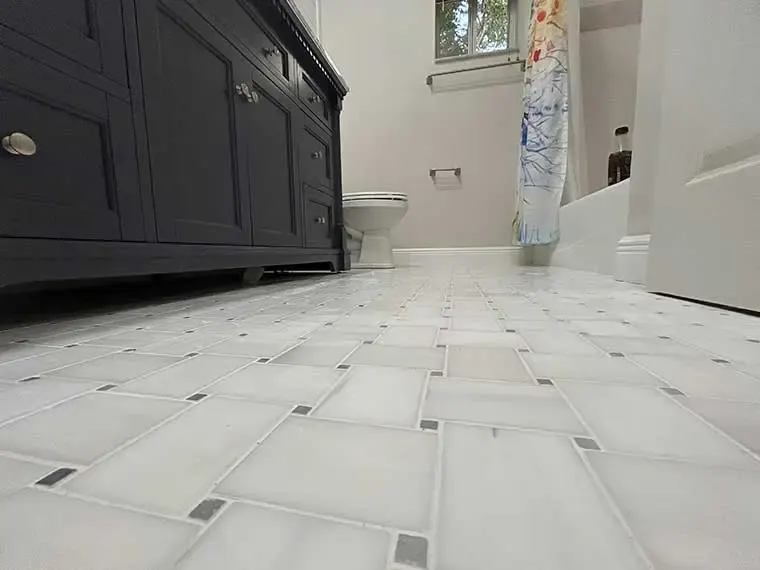 Ideas
Bathroom Floor Tile Ideas Sorted by What You Need
The right bathroom floor depends less on trends than on who uses the room and how. Start with the problem you want the floor to solve,…
-
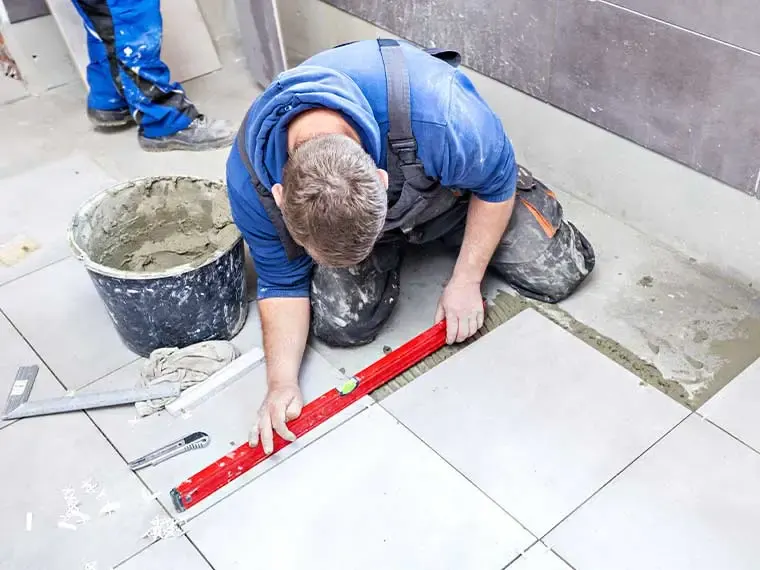 Why
Why Large-Format Tile Needs a Flat Floor
Big tiles look calm and seamless, but they're unforgiving. A dip that a 12-inch tile would ride over becomes an uneven edge you can see and…