

A bathroom floor gets splashed, dripped on and walked across barefoot. The right material balances water resistance, grip, comfort and looks, and the labels on the box don't always mean what they seem to.
Key takeaways
- "Waterproof" describes the material, not the floor; water can still reach the slab through grout, seams and edges.
- Porcelain tile handles water best; rigid-core vinyl is warmer and softer but depends on sealed seams and perimeter.
- Laminate and engineered wood suit powder rooms at most, not full baths with a tub or shower.
- Many condo associations require a sound-reducing underlayment under hard flooring.
Kitchen floors deal with spills. Bathroom floors deal with water as a routine: drips from a towel, splashes over a tub edge, condensation, and the occasional toilet overflow. Bathroom flooring materials have to handle all of that while still being comfortable underfoot and safe when wet. This guide starts with a common misunderstanding, then grades each material on the qualities that matter most in a bathroom.
Waterproof vs. water-resistant: what the labels mean
Product labels use two terms that sound similar but are not.
- Water-resistant means the material can handle surface water for a while without damage if it is wiped up. Water left long enough, or water that gets into seams, can cause problems.
- Waterproof usually refers to the material itself: a porcelain tile or a rigid vinyl plank will not swell or break down when wet.
Here is the catch: a waterproof material does not make a waterproof floor. Water can still pass through grout joints, plank seams and perimeter gaps to the subfloor below. In a home on a concrete slab, that is less of a structural worry than over a wood subfloor, but it can still lead to odors, mold under the flooring or damage to nearby walls and trim. That is why installation details matter as much as product choice.
The materials, graded
| Material | Water tolerance | Slip resistance | Comfort and warmth | Durability | Upkeep |
|---|---|---|---|---|---|
| Porcelain tile | Excellent (material) | Good to excellent with matte/textured finish | Hard, cool | Very high | Grout care |
| Ceramic tile | Very good if floor-rated | Varies by finish | Hard, cool | High | Grout care |
| Natural stone | Good with sealing | Honed/tumbled better than polished | Hard, cool | High; marble etches | Sealing, gentle cleaners |
| Luxury vinyl (rigid core) | Plank won't swell; seams are the weak point | Good | Softer, warmer | Good; can dent | Easy |
| Sheet vinyl | Very good, few or no seams | Good | Softer, warmer | Moderate; can tear | Easy |
| Laminate | Surface resists splashes; core swells if water reaches seams | Fair to good | Warmer | Moderate | Easy, but wipe spills fast |
| Engineered wood | Poor for standing water | Fair | Warm | Moderate; can cup | Careful cleaning |
Porcelain tile
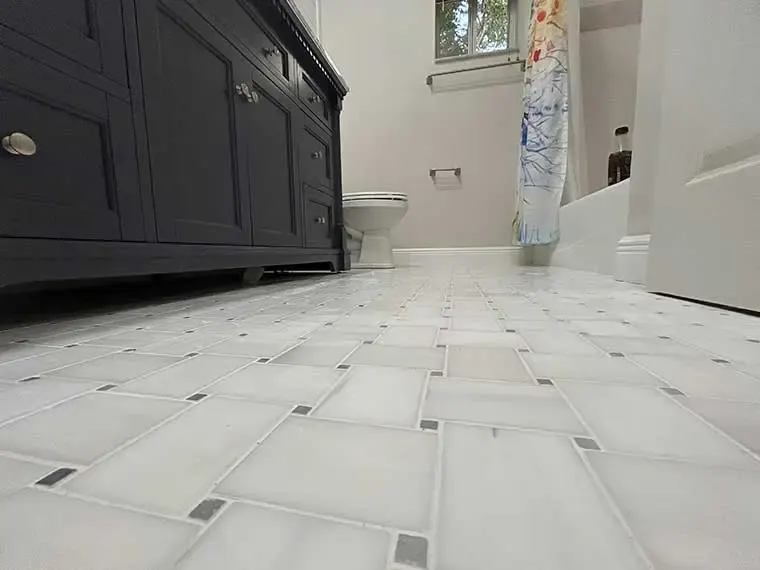
A go-to choice in Florida bathrooms because it's dense, low-absorption, handles water and humidity with ease and comes in looks from concrete to wood plank. It's what most of our tile installation work uses, and like all tile it depends on grout care. Large-format porcelain means fewer grout lines but demands a flat floor; textured or matte finishes give the grip a bathroom needs. Our bathroom tile types explainer goes deeper on ratings.
Ceramic tile
Lighter and easier to cut than porcelain, and often more budget-friendly. Check that the product is rated for floors; some glazes are made for walls only.
Natural stone
Marble, travertine and slate bring natural variation but need sealing and gentle cleaners; the stone section of bathroom tile types covers the details.
Luxury vinyl plank and tile
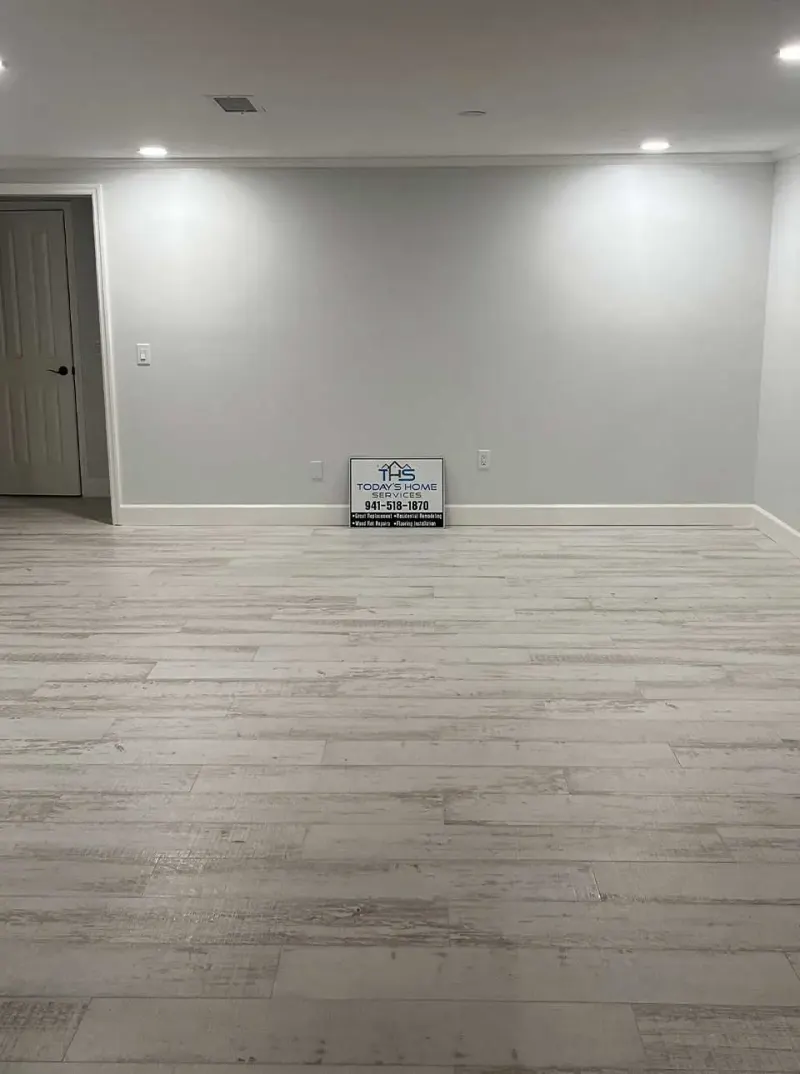
Rigid-core vinyl products click together over a pad or underlayment. They are warmer and softer than tile, quieter, and quick to install. In a bathroom, the key concerns are seams, expansion gaps at the walls and the edge around the tub or shower. A sealed perimeter with a quality flexible sealant helps keep surface water from reaching the edges. Our vinyl plank flooring installation page covers how we handle these details.
Sheet vinyl
Sold in wide rolls, sheet vinyl can often cover a small bathroom in a single piece, so there are few or no seams for water to find. Modern versions look far better than older patterns. It is soft underfoot and economical, though it can be torn by sharp objects and shows subfloor imperfections.
Laminate
Laminate is a photo layer over a wood-fiber core. Products marketed as "water-resistant laminate" have better surface coatings and tighter joints, but the core still swells if water sits in the seams long enough. A powder room is about the limit; a full bath with a tub or shower is a poor match.
Engineered wood
A real wood veneer over a plywood-style core. It's more stable than solid hardwood but still a wood surface, so standing water and constant humidity can cup it. If you want wood in a half bath, see our wood flooring installation page; for a full bath, wood-look porcelain is the safer route.
Comfort considerations
Tile is cold in winter mornings, even in Florida. Options that help:
- Electric radiant floor heat under tile, installed during the remodel with its own GFCI-protected circuit
- a washable bath rug in front of the vanity and shower
- a vinyl product in rooms where barefoot comfort is the priority
Underneath matters: substrate and flatness
Every flooring material is only as good as what sits beneath it. Tile needs a stiff, flat substrate to avoid cracking; vinyl needs a smooth surface so imperfections do not telegraph through. On slabs, that may mean grinding high spots or applying a self-leveling compound. Over wood framing, a floor that flexes or feels spongy usually points to a deeper problem, covered in why bathroom floors feel soft.
In condos, there's one more layer to think about: many associations require a sound-reducing underlayment under tile or vinyl so footsteps don't carry to the unit below. Check the rules before choosing a floor; our answer on remodeling a condo bathroom covers the approval side.
Tip: When a toilet is reset on a new floor, the flange height needs to suit the new finished floor. A flange that ends up below the tile surface is a common source of slow leaks around the base.
Choosing by bathroom type
- Primary bath with walk-in shower: porcelain tile throughout, often with a matching or complementary mosaic in the shower.
- Hall bath used by kids: textured porcelain or rigid-core vinyl for grip and forgiveness.
- Powder room: the widest choice, including stone or vinyl that matches adjacent rooms.
- Accessible bathroom: slip-resistant tile with flush transitions and no thresholds.
Transitions and thresholds
Where the bathroom floor meets the hallway, heights rarely match exactly. Tile over backer can sit higher than adjacent vinyl or wood. A properly chosen transition strip or a beveled threshold keeps the step smooth and safe. In accessible bathrooms, the goal is no lip at all, which may require planning heights of both floors together.
For design inspiration, browse our bathroom floor tile ideas. When you're comparing materials for your own room, our bathroom flooring installation team can bring samples and check your subfloor during a free estimate.
More Understanding Articles
Frequently Asked Questions
Is luxury vinyl plank a good choice for a bathroom?
What is the most slip-resistant bathroom floor?
Can I put wood flooring in a bathroom?
Should the floor tile go under the vanity?
Keep Exploring
-
 Bathroom Service
Bathroom Flooring Installation
A bathroom floor takes splashes, steam, dropped bottles and daily traffic. We replace it with tile or waterproof vinyl laid over a flat, sound base, with…
-
Vinyl Plank Flooring Installation
Luxury vinyl plank gives you a wood look that handles spills, pets and Florida humidity. The difference between a floor that feels solid and one that…
-
 Ideas
Bathroom Floor Tile Ideas Sorted by What You Need
The right bathroom floor depends less on trends than on who uses the room and how. Start with the problem you want the floor to solve,…
-
 Why
Why Bathroom Floors Feel Soft
A floor that gives, creaks or sounds hollow is telling you something about what's underneath. What it means depends a lot on whether your bathroom sits…
-
Flooring Installation
Tile, luxury vinyl plank, wood or epoxy: each one shines in some rooms and struggles in others. We help you match the floor to the room,…