

The short answer
A renovation upgrades the bathroom you have, such as a new vanity, fixtures, flooring or lighting, while the layout and plumbing stay put. A remodel transforms the room: the layout, shower, fixtures, lighting and finishes are redesigned together, usually down to the studs. If the layout works, renovate; if it doesn't, remodel.
Key takeaways
- Ask whether the layout works: if it does, a renovation may be all you need.
- A shower with hollow tile or signs of water damage usually pushes the project toward a remodel.
- Describing your goals instead of using a label gets you estimates you can actually compare.
People use "renovation" and "remodel" interchangeably, but at Today's Home Services they mean different things. A bathroom renovation improves the room through select upgrades, such as new fixtures, added storage or small layout tweaks, while keeping its basic shape. A bathroom remodel is a complete transformation, where the layout, fixtures, lighting and finishes are all reconsidered together.
Knowing which one you need helps you set a realistic scope, budget and schedule, and makes conversations with any contractor clearer.
How the two differ
Think of a renovation as making your current bathroom work better and look newer. You keep what's working and replace what's not. The toilet stays where it is, the shower stays where it is, and the improvements target specific frustrations: a vanity with no drawers, outdated fixtures, worn flooring, dim lighting.
A remodel starts from a different question: if you could design this bathroom from scratch, what would it be? The answer might be a walk-in shower where the tub was, a double vanity, a relocated toilet, new lighting on every wall and an entirely new palette of tile. Every surface and system is on the table.
Side by side
| Renovation | Remodel | |
|---|---|---|
| Goal | Improve and refresh the existing room | Transform the room as a whole |
| Layout | Kept, or adjusted slightly | Open to change |
| Plumbing | Usually stays in place | May move, including slab work |
| Typical work | Vanity, faucet, toilet, mirror, lighting, flooring, storage, regrouting | All of the above plus shower rebuild, wall changes, new circuits |
| Disruption | Lower; parts of the room may stay usable | Higher; room out of service for most of the project |
| Design process | Choose replacements | Design the whole space |
| Hidden conditions | Some exposure | Full exposure, walls and floors opened |
What a renovation often looks like
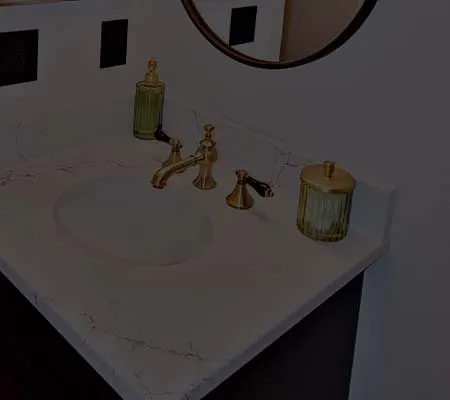
- Replacing a dated vanity with one that has drawers and a quartz top
- Swapping the faucet, shower trim and accessories to a matching finish
- New flooring and baseboard
- Better lighting and a quieter exhaust fan
- Adding a medicine cabinet or shelving for storage
- Regrouting tile that's still sound, or replacing a tub in the same alcove
A renovation suits homeowners whose bathroom layout works fine but whose finishes and fixtures have aged. Our bathroom vanities service is a common starting point.
What a remodel often looks like
- Removing everything down to the studs and slab
- Converting a tub to a walk-in shower or adding a curbless entry
- Moving the toilet or vanity to improve flow
- Building a new waterproofed shower with niches and a bench
- New electrical for lighting, outlets with GFCI protection and fan
- New tile throughout, new trim, new paint
Remodels fit bathrooms with failing showers, awkward layouts or needs that have changed, such as planning to age in place. A master bathroom remodel is the classic example.
How to tell which you need
Ask yourself these questions:
- Does the layout work? If yes, a renovation may be enough. If the toilet is cramped, the door hits the vanity or the shower is in the wrong place, you're likely looking at a remodel.
- Is the shower sound? Hollow tile, crumbling grout or signs of water damage behind the shower walls usually mean the wet area needs a rebuild, which pushes toward a remodel.
- Are you frustrated by finishes or by function? Finishes point to a renovation; function points to a remodel.
- How long will you stay? A long horizon makes a full remodel more worthwhile.
- What's your budget? Our article on what drives bathroom remodel cost explains how scope translates into price.
Tip: Make two lists before your consultation: "things that annoy me" and "things I wish I had." If the second list is longer, you're probably thinking about a remodel.
Two typical scenarios
These are illustrations, not specific projects, but they show how the same kind of house can call for very different scopes.
Picture a 1980s hall bath in Venice. The tub-shower combination is sound, the tile is a dated almond color but tight, and the vanity is a builder-grade cabinet with a cultured marble top. Nobody wants to move anything. This is a renovation: new vanity and quartz top, new faucet and shower trim, regrouting or a tile refresh where sound, new flooring, better light and a properly vented fan.
Now picture a primary bath in a Port Charlotte block home. The original tub is rarely used, the shower tile sounds hollow near the valve, the toilet sits in a cramped corner and the room has a single overhead light. This is a remodel: the tub comes out for a walk-in shower, the wet area is rebuilt with proper waterproofing, the toilet may shift to meet clearances, and lighting is redesigned.
Same region, similar homes, very different scopes.
There's a middle ground
Not every project fits neatly in one box. A common in-between approach keeps the layout but replaces the shower, vanity and floor, essentially a full update without moving plumbing. Another is doing a remodel in phases. We explain how to sequence that in can a bathroom be remodeled in stages?
Which adds more value?
Neither label adds value on its own. A renovation that fixes dated finishes in a sound bathroom can make a home show better for a modest scope, while a remodel makes sense when the shower is failing or the layout doesn't work, problems a buyer's inspector may find anyway. Our answer on whether a bathroom remodel adds value covers what tends to matter to buyers.
Why the distinction matters
Using the right word helps everyone align. If you ask three contractors for a "remodel" and one quotes new fixtures while another quotes a gut job, the prices won't be comparable. Describing what you want in terms of goals ("keep the layout, replace the shower and vanity") gives you estimates you can actually compare.
It also shapes expectations. A renovation might leave part of the bathroom usable during work; a remodel generally won't. The advantages of bathroom remodeling are substantial, but so is the commitment.
Whichever you choose
Both approaches can produce a bathroom you love. What matters is matching the scope to the room and to your plans. If you're weighing a focused renovation against a full bathroom remodel, we'll look at the space with you, talk through both options and put our recommendation in a free written estimate.
More Questions Articles
Frequently Asked Questions
Is a bathroom renovation cheaper than a remodel?
Is a bathroom refresh the same as a renovation?
Can a renovation turn into a remodel?
Do I need a permit for a renovation?
Keep Exploring
-
Bathroom Remodeling in Bradenton, Sarasota & the Suncoast
From a tired hall bath to a complete primary-suite rebuild, we plan, demo, waterproof, tile and finish bathrooms across Manatee, Sarasota, Charlotte and south Hillsborough counties,…
-
 Questions
Can a Bathroom Be Remodeled in Stages?
Yes. Bathroom work can be done in stages to fit your budget and schedule. The key is planning the whole room first, then doing the work…
-
 Questions
How Much Does a Bathroom Remodel Cost?
No single price fits every bathroom. Here's what actually moves the number up or down, how scope tiers differ, and how to read an estimate so…
-
 Bathroom Service
Bathroom Vanity Replacement & Installation
The vanity is the piece you use most and notice first. We replace worn, swollen or undersized vanities with cabinets and tops that fit the room,…
-
 Bathroom Service
Master Bathroom Remodeling
A primary suite bathroom has to serve two people on two schedules and still feel like a retreat at the end of the day. Getting there's…
-
 Blog
Advantages of Bathroom Remodeling Over Patching or Moving
When a bathroom stops working for you, there are three paths: keep patching, move to a different house, or remodel. Here is why remodeling often comes…