


The short answer
Go beyond price and start date. Ask how the shower will be waterproofed, how hidden damage and changes will be handled and documented, who will actually work in your home, whether permits are needed and who pulls them, and how you'll be kept informed. The answers tell you more about the finished bathroom than any portfolio photo.
Key takeaways
- 'What goes behind the tile?' is the most revealing technical question; a good answer names the backer and membrane.
- Any added work after demolition should come as a written change order you approve first.
- Watch how questions are answered: clear explanations and no pressure to sign are good signs.
Price and start date matter, but they say little about how the bathroom will hold up. The questions that do focus on how the shower will be waterproofed, how hidden damage and changes will be handled, and how the work will fit into your household. Below are the questions we'd want answered if we were hiring someone for our own homes, grouped by topic, with notes on what a solid answer usually sounds like.
About the company
1. Are your workers licensed and insured?
You want a clear yes, and for larger projects or condos, a certificate of insurance on request. Our workers are fully licensed and insured.
2. How long have you been doing bathroom work in this area?
Local experience matters. A remodeler who works across Manatee, Sarasota, Charlotte and south Hillsborough counties should know slab construction, hard water, older block homes and condo association routines. You can read about our company and how we work.
3. Who will actually be in my home?
Ask whether the people who quote the job are the people who do it, and who the lead on site will be. A consistent crew is easier to communicate with.
4. Can I see reviews and examples of similar projects?
Look for reviews that mention cleanup, communication and how problems were handled, not just the finished look. You can read ours on our reviews page.
About the work itself
5. What goes behind the tile in the shower?
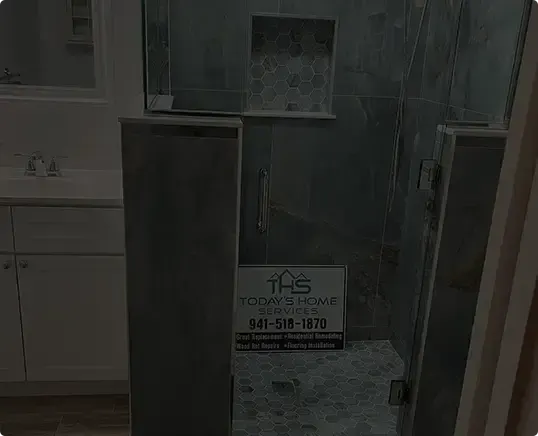
This is the most important technical question. A good answer names the backer board (cement board or foam board, not standard drywall) and a specific waterproofing membrane on walls and pan. Vague answers are a warning sign. Why waterproofing matters more than tile explains the reasoning.
6. How will the shower floor drain?
Listen for a sloped pan, typically about 1/4 inch per foot toward the drain, and attention to how the membrane ties into the drain.
7. Will the old tile come off, or go over?
In showers, removal should be the default. See can you tile over existing tile? for why.
8. Is a permit needed, and who gets it?
Work that moves plumbing, adds circuits or alters walls typically needs one from your City or County building department. Your contractor should know and handle it.
9. How do you handle the exhaust fan?
It should vent outside, not into the attic, and be sized for the room. A rule of thumb for small bathrooms is about 1 CFM per square foot; our guide to exhaust fan sizing explains the rest.
About money and changes
10. What's included in the estimate, and what's an allowance?
Ask which items are fixed and which are placeholders. Our article on what drives bathroom remodel cost explains how allowances work.
11. What happens if you find damage after demolition?
The answer you want: they stop, show you the problem, explain the options and put any added work in a written change order before proceeding. Our article on why estimates change after demolition explains what that should look like.
12. What's the payment schedule?
Payments should line up with progress and materials. Be cautious of large upfront amounts disconnected from any work.
About living with the project
13. How will you protect my home?
Floor coverings, dust containment and a clear path in and out. Ask how they handle daily cleanup.
14. What days and hours will you work?
Important for planning and essential in condos with restricted hours.
15. How will you keep me updated?
Phone, text, a daily check-in? Agree on it before work starts.
16. Which days will I be without a toilet or shower?
Especially important in a one-bathroom home. Our article on using your bathroom during a remodel has practical options.
About after the job
17. What does the final walkthrough include?
A good remodeler walks the room with you and notes any touch-ups.
18. How should I care for the new tile, grout and glass?
Hard water and humidity are constant here. Ask about sealing grout, safe cleaners and keeping glass clear.
19. What warranty or workmanship commitment do you provide, and is it in writing?
Ask what's covered, for how long and what the process is if something goes wrong. Manufacturer warranties on fixtures and waterproofing products are separate from the contractor's own commitment on labor, so ask about both and get the answer in writing.
20. Do you use subcontractors for plumbing or electrical, and are they licensed and insured?
Many remodels involve licensed trades for plumbing and electrical work. Ask who they are, whether they carry their own insurance and who coordinates their schedule.
21. What's the expected sequence, and where could it slip?
A clear answer walks through demolition, rough-in, inspections, waterproofing, tile and finish work, and points out the waits. See why bathroom remodels take time for the reasoning behind each pause.
Good answers and red flags
For the questions that matter most, here's what to listen for.
| Question | A good answer sounds like | Red flag |
|---|---|---|
| What goes behind the tile? | A named backer board and membrane system, plus a flood test | "We'll seal the grout" or no specifics |
| How will the floor drain? | A sloped pan tied into the drain, about 1/4 inch per foot | No mention of slope or how the membrane meets the drain |
| What if you find damage? | Stop, show you, explain options, written change order | "We'll deal with it" or price changes on the final invoice |
| Is a permit needed? | A clear yes or no for your scope, and who pulls it | "You don't need one" for plumbing or electrical changes |
| What's the payment schedule? | Payments tied to progress and materials | A large upfront payment before anything is scheduled |
| Who will be in my home? | A named lead and a consistent crew | Uncertainty about who shows up |
Tip: Bring this list printed out and write the answers down during each consultation. When estimates arrive a week later, your notes will make the comparison far easier than relying on memory.
Questions to ask yourself, too
The best consultations go both ways. Before anyone visits, it helps to know your own answers to a few things:
- What's the one problem you most want solved? A leaking shower, no storage, a tub you can no longer climb into.
- How long do you plan to stay in the home? It shapes how much you invest.
- Who uses this bathroom, and will that change? Kids growing up, a parent moving in, your own mobility over time.
- What's your comfortable budget range? Sharing it helps a remodeler suggest options that fit rather than guess.
- What timing works for your household? Holidays, visitors and seasonal travel all matter.
Contractors give better advice when they understand your goals, and you'll be better able to judge whether their recommendations match what you asked for.
Listen to how they answer
The content of an answer matters, but so does the manner. A contractor who explains clearly, admits uncertainty where it exists ("we won't know until the wall is open") and doesn't push you to sign is usually the one who communicates well during the job too. Our post on why to work with a professional bathroom remodeler and our list of factors to consider before remodeling cover related ground.
We welcome every one of these questions. If you'd like to ask them in person, schedule a free, no-pressure consultation for your bathroom remodeling project.
More Questions Articles
Frequently Asked Questions
How many estimates should I get for a bathroom remodel?
What's a red flag when talking to a remodeler?
Should I ask for photos of previous work?
Keep Exploring
-
Bathroom Remodeling in Bradenton, Sarasota & the Suncoast
From a tired hall bath to a complete primary-suite rebuild, we plan, demo, waterproof, tile and finish bathrooms across Manatee, Sarasota, Charlotte and south Hillsborough counties,…
-
 Blog
Why Work With a Professional Bathroom Remodeler
You can do it yourself, hire each trade yourself, or put one remodeler in charge. Here's how the three approaches compare on the parts of a…
-
 Questions
How Much Does a Bathroom Remodel Cost?
No single price fits every bathroom. Here's what actually moves the number up or down, how scope tiers differ, and how to read an estimate so…
-
 Why
Why Waterproofing Matters More Than the Tile You Pick
You'll spend hours choosing shower tile and minutes thinking about what goes behind it. That's backwards. Tile is the finish you see; the waterproofing layer is…
-
Today's Home Services Reviews
Here's what homeowners said after we finished their projects, in their own words.
-
 Blog
Factors to Consider Before Remodeling Your Bathroom
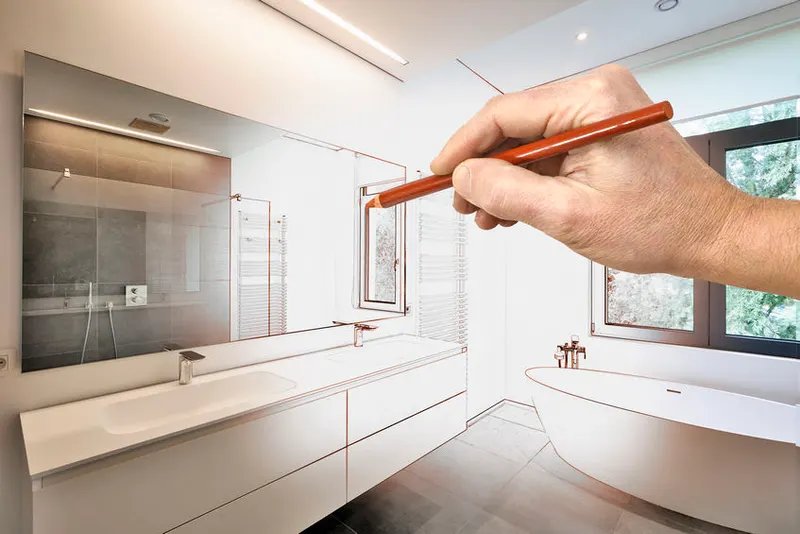
Before a single tile comes off the wall, a handful of decisions about money, timing, scope and style will shape how your bathroom project goes. Here's…