


The short answer
For most households where adults shower daily, yes: easier entry, a more open room and fewer places for grime to hide make a difference every morning. It's less worthwhile if it removes the only tub in a family home, or if the budget forces shortcuts on waterproofing, since a poorly built walk-in shower fails early.
Key takeaways
- The biggest gains are a safer entry, a room that feels larger and space for a bench, niche and handheld spray.
- Doorless designs need enough depth and the right head placement, or the bathroom floor gets wet.
- If the budget can't cover proper waterproofing, keeping the tub and replacing the surround well is the better choice.
"Worth it" depends on two things: who uses the bathroom, and how the shower is built. Here's how to think through both.
What you actually gain
Easier, safer entry
Stepping over a tub wall onto a wet surface is one of the more awkward movements in a bathroom. A low curb or curbless entry removes that step. Paired with a bench, a handheld spray and grab bars installed over solid blocking, a walk-in shower can be one of the most practical safety upgrades in a home.
A room that feels larger
Replacing a tub and curtain with clear glass lets your eye travel to the back wall. In a compact hall bath, that alone can make the room feel noticeably bigger, even though the footprint hasn't changed.
Room for features you'll use
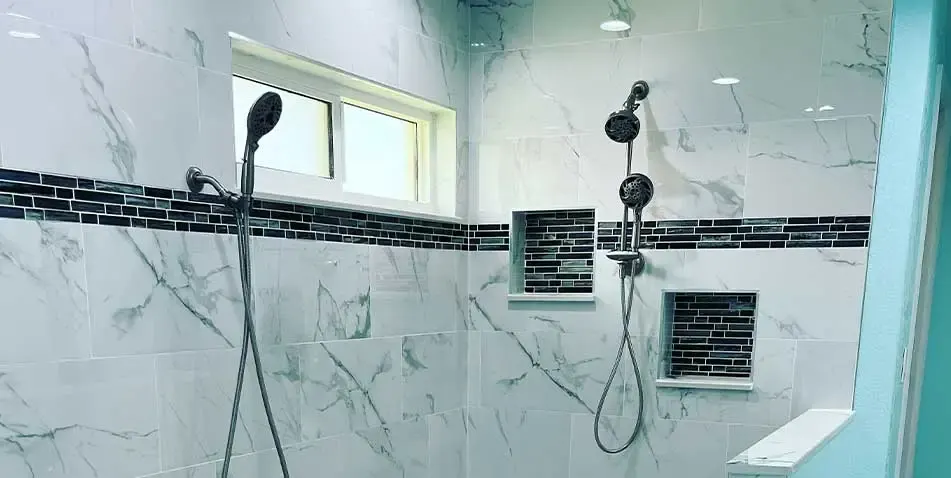
A walk-in shower can hold things a tub surround can't: a long niche, a bench or fold-down seat, a rain head plus a handheld on a slide bar, or a linear drain. Browse our walk-in shower ideas for layouts that work in real Gulf Coast bathrooms.
Simpler daily cleaning
No tub ledge, no curtain liner, fewer inside corners. With large tile and a good grout, a walk-in shower is often easier to wipe down than the tub-shower it replaced.
The trade-offs
You lose a tub
If it's the only one in the house, that matters to families and some buyers. We cover that trade-off in replace the tub or convert to a shower?.
It's a bigger build than a tub swap
A properly built walk-in shower, especially a tub-to-shower conversion, involves a sloped, waterproofed pan, a membrane on the walls, a new valve, tile and glass. If the drain has to move or the entry is curbless, a concrete slab may need cutting or recessing. That's more work than setting a new tub.
Splash needs planning
Doorless showers look great in photos. In practice they need enough depth and the right head placement, or the bathroom floor ends up wet. A short fixed panel in a shallow space is a common disappointment.
Glass needs upkeep
Across much of our region, hard water leaves spots and scale on glass quickly. A squeegee after each use or a protective coating keeps it clear. Our shower doors page covers the glass options.
Who benefits most
| Your situation | Is it worth it? |
|---|---|
| Adults who only shower, staying long term | Usually yes |
| Planning to age in place or caring for a parent | Strongly yes |
| Family with toddlers, only one tub in the house | Usually keep a tub somewhere |
| Primary suite with a separate tub | Yes, often the centerpiece |
| Selling soon in a family neighborhood | Depends on the rest of the house |
| 55+ community | Easy-entry showers tend to suit the buyer pool |
Curb or curbless?
A low curb is simpler to build on a slab and still far easier to step over than a tub wall. A curbless entry is fully flat, ideal for wheelchairs and walkers, but the floor has to be recessed or built up to keep the slope, which on a slab often means cutting concrete. Our article on why curbless showers take planning covers the technical side, and our accessible bathroom service plans for clearances such as a 60-inch turning circle where space allows.
Walk-in shower or walk-in tub?
Both remove the tall step of a standard tub, but they solve different problems. A walk-in tub has a watertight door and a seat, so you can bathe sitting down; the trade-off is that you sit inside while it fills and drains, and it needs a tub-sized space and enough hot water to fill it. A walk-in shower is quicker to use every day, works with a fold-down seat and handheld spray, and opens up the room visually. If bathing itself matters, for therapy or comfort, a walk-in tub may fit; if daily ease and safety are the goal, a walk-in shower usually serves better. Our guide to types of bathtubs covers walk-in models.
Tip: Stand in your current bathroom and mark the proposed shower outline on the floor with painter's tape. Walk in and out of it. You'll quickly sense whether the opening is wide enough and whether a bench would crowd the space.
When a walk-in shower isn't worth it
It isn't a good investment if the build is compromised. A walk-in shower set over drywall, with no proper membrane, or with a pan that doesn't drain correctly can look fine on day one and fail within a few years. Florida humidity and daily use find every weakness. If the budget is tight, it's wiser to keep the tub and replace the surround properly than to build a cheap walk-in shower.
It may also not be worth it in a guest bath that's rarely used, where a simple tub-shower update would serve visitors just as well.
How the build protects the investment
The parts of a walk-in shower that determine whether it lasts are the ones you never see:
- Sound framing and solid blocking where grab bars or glass will mount
- Cement board or foam board, never standard drywall, in the wet area
- A continuous waterproofing membrane on the walls and pan
- A floor sloped correctly toward the drain
- A pressure-balanced or thermostatic valve
- Glass sized and set after tile so it fits true
Our walk-in shower installation process is built around those steps.
So, is it worth it for you?
If you shower daily, plan to stay, and want a room that will still work for you in fifteen years, a walk-in shower is usually one of the most satisfying changes you can make to a bathroom. We're glad to measure your space and show you what fits during a free consultation, with no pressure either way.
More Questions Articles
Frequently Asked Questions
Does a walk-in shower have to be curbless?
Do walk-in showers get the rest of the bathroom wet?
Are walk-in showers hard to keep clean?
How big does a walk-in shower need to be?
Keep Exploring
-
 Bathroom Service
Walk-In Shower Installation
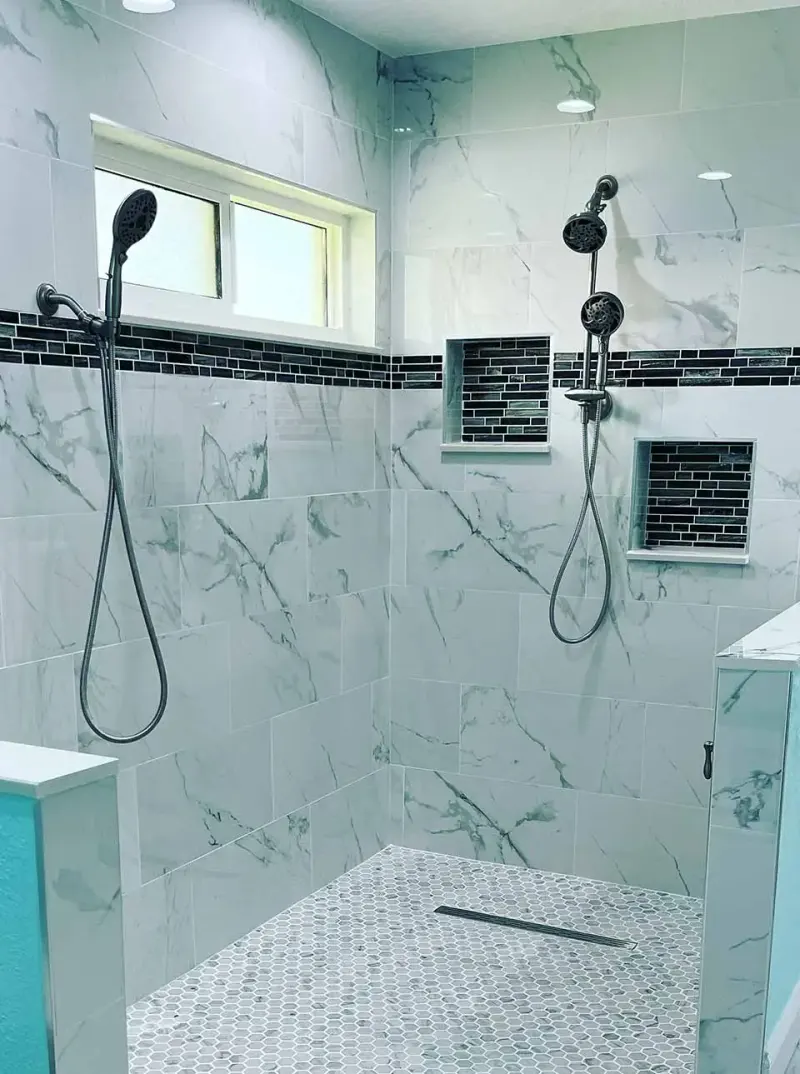
A walk-in shower should be easy to enter, comfortable to stand in and simple to keep clean. We design and build curbed, low-threshold and curbless walk-in…
-
 Ideas
Walk-In Shower Ideas, From Compact Baths to Primary Suites
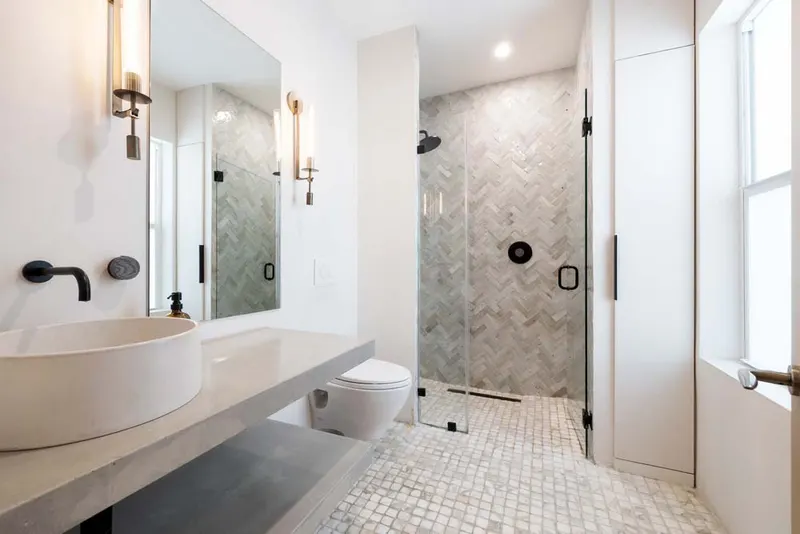
A walk-in shower can fit a five-foot hall bath or fill half of a primary suite. These ideas are sorted by how much room you have,…
-
 Why
Why Curbless Showers Take Careful Planning
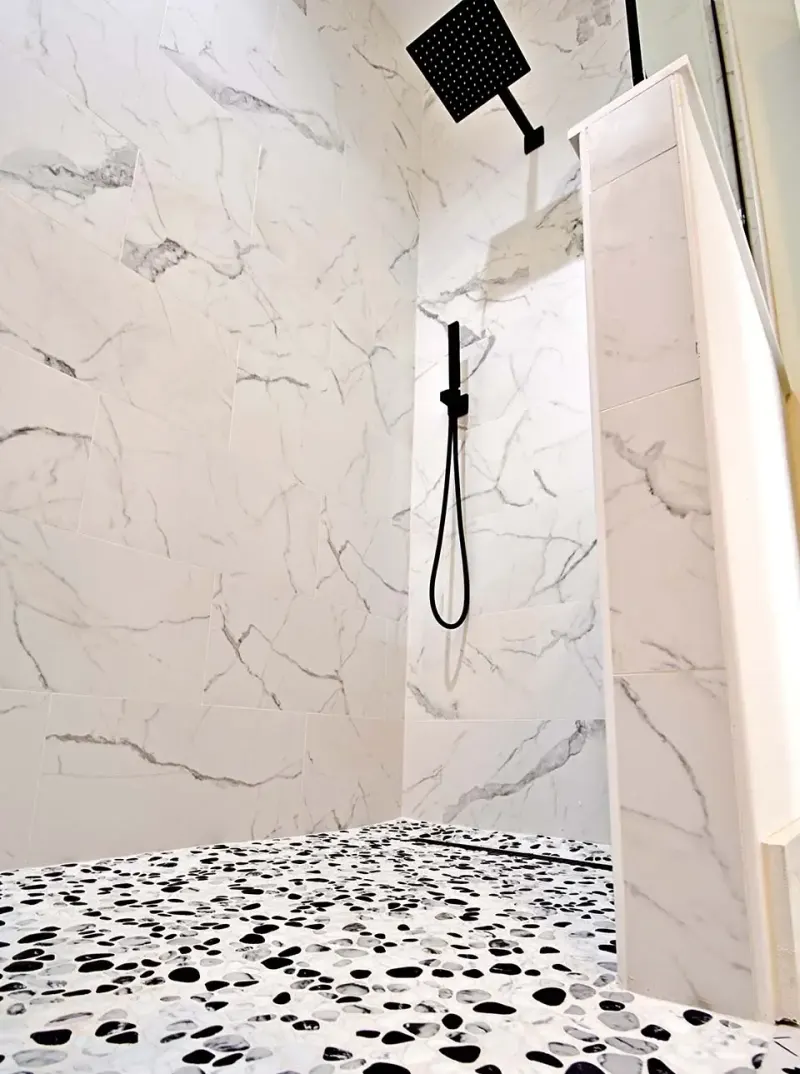
A curbless shower looks like the simplest thing in the room: floor that just continues into the shower. Getting water to stay where it belongs without…
-
 Questions
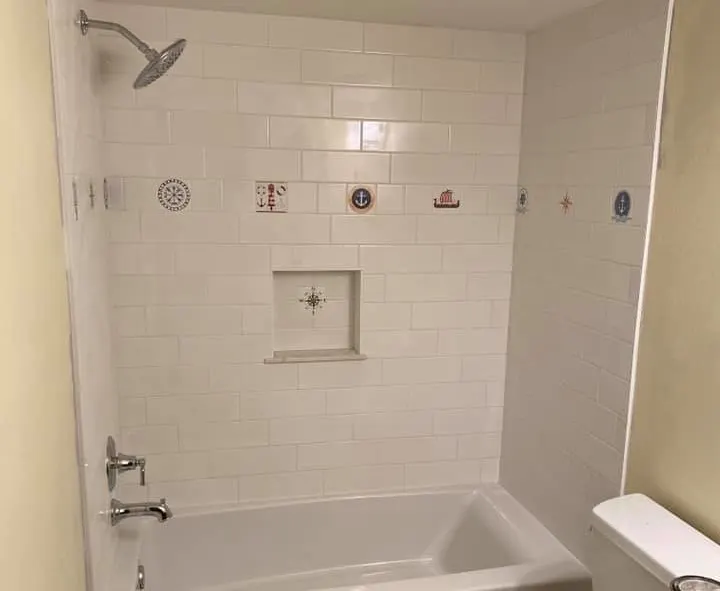
Replace the Tub or Convert to a Shower?
If nobody in the house takes baths and stepping over the tub wall is a chore, a conversion usually makes sense. If it's the home's only…
-
 Bathroom Service
Accessible & Aging-in-Place Bathroom Remodeling
Getting in and out of the shower and on and off the toilet are the moments that matter most. A well-planned accessible remodel makes them safer…
-
 Bathroom Service
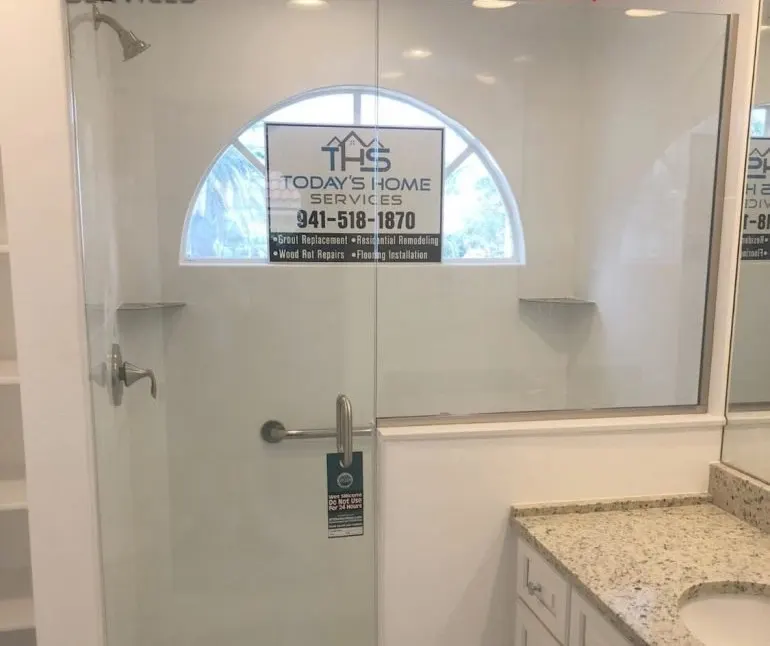
Glass Shower Doors & Enclosures
The right glass keeps water in the shower and puts your new tile on display. We plan, measure and install frameless, semi-frameless and framed enclosures fitted…