


The white crust on your shower head and the haze on your glass door are the same thing: minerals left behind when water evaporates. Over time they do more than look bad. They wear parts out.

Key takeaways
- Scale forms when water evaporates or heats up and leaves calcium and magnesium behind, so glass, valves and nozzles take the worst of it.
- The costliest damage is inside the shower valve, where scale stiffens cartridges and throws off temperature control.
- Mineral spots left too long can etch shower glass into a permanent haze.
- Squeegeeing and coatings protect glass; only treating the water protects valves, toilets and supply lines too.
If you've lived on the Gulf Coast for long, you've seen it: white spots on chrome, a cloudy shower door that never looks clean, a shower head with half its nozzles clogged. Many homes in this part of Florida deal with hard water and the mineral scale it leaves behind. To understand why hard water damages bathroom fixtures, it helps to follow what happens to a single drop of water after the shower turns off.
What scale is and how it forms
"Hard" water is water carrying dissolved minerals, mainly calcium and magnesium. While the water is moving through pipes, those minerals stay dissolved. When the water evaporates, sits warm in a fixture or is heated, the minerals come out of solution and stick to whatever surface they're on. The result is scale, a hard, chalky layer of mostly calcium carbonate.
Three things speed the process up in a bathroom:
- Evaporation. Every droplet left on glass or chrome leaves a tiny ring of minerals behind when it dries. Thousands of showers stack those rings into a visible film.
- Heat. Hot water drops minerals out of solution faster, so hot-water parts like valves and shower heads scale up quickly.
- Small openings. Aerators and spray nozzles have tiny passages that clog with very little buildup.
Where hard water does its damage
Shower glass
Glass suffers the most visibly. At first, mineral spots sit on top of the glass and can be cleaned off. Left long enough, the deposits and the cleaning cycle can etch the glass surface, leaving a permanent haze. That's why a frameless shower door that looked crystal clear at installation can look frosted a few years later. Many glass manufacturers offer protective coatings that make water bead and run off; our article on shower glass types covers those options.
Shower heads and handhelds
Scale narrows the nozzles until spray patterns become uneven or some jets stop entirely. Many modern heads have flexible rubber nozzles you can rub to break scale loose, but heavy buildup inside the head itself is harder to clear.
Valves and cartridges
Inside the shower valve is where the damage you can't see. Inside a shower valve, scale coats cartridges, seals and pressure-balancing components. The handle gets stiff, temperature control drifts, and eventually the valve drips or won't shut off fully. Older valves with discontinued parts may have to be replaced outright, which typically means opening the wall.
Faucet aerators and sink drains
Faucet aerators collect scale and debris, cutting flow and causing sputtering. Pop-up drain assemblies can scale up and stop sealing. Chrome and brushed finishes collect white spotting that's hard to clean without damaging the finish.
Toilets
Mineral rings form in the bowl, and scale builds up under the rim and in the siphon jet, which weakens the flush and is one reason a toilet replacement sometimes makes more sense than another round of repairs. In the tank, scale can keep fill valves and flappers from working properly, so the toilet runs or refills slowly.
Tile and grout
Hard water leaves a film on tile and can build up in grout lines, dulling the surface and making grout look dirty even after cleaning. Professional tile and grout cleaning can lift that film without harsh acids.
Why it gets worse over time
Scale is cumulative. Unlike soap scum, which can be wiped away, mineral layers bond to surfaces and to each other. Each new layer gives the next one something to grip. That's why a light film at year one becomes a stubborn crust at year five, and why cleaning tends to get more aggressive over time, which can damage finishes in turn.
Mechanical signs inside the bathroom
Spots on glass are obvious. The more useful warnings are the ones that show parts wearing: a shower that takes longer to settle at a steady temperature, a handle that needs more force than it used to, a shower head with jets that spray sideways, and a toilet that refills slowly or hisses after a flush. Any one of these can have other causes, but two or three together usually point to minerals. For household-wide signs such as dry skin, spotty dishes and stiff laundry, see our post on the signs of hard water issues.
Protecting a new bathroom from hard water
If you're investing in a remodel, it makes sense to protect it. A few approaches, from simplest to most effective:
| Approach | What it does | Limitation |
|---|---|---|
| Squeegee glass after every shower | Removes water before it can evaporate | Relies on daily habit |
| Protective coating on new glass | Helps water bead and run off | Doesn't stop scale on fixtures or valves |
| Choose finishes that hide spotting | Brushed or matte finishes show less | Scale still forms |
| Treat the water at the source | Reduces minerals reaching every fixture | An added system with its own maintenance |
Treating the water is the only approach that protects the parts you can't see, like valves, toilet components and supply lines, in addition to glass and chrome. Our water purification systems service includes whole-house filtration and hard-water treatment, including for homes in Bradenton, and what a whole-house water filter is explains how house-wide treatment works.
Tip: If you're replacing a shower valve or faucets during a remodel, it's a good time to address water treatment too. New fixtures last longer and look new longer when they're not fighting scale from day one.
A simple routine for a new bathroom
Scale is far easier to prevent than to remove. A routine that takes a few minutes a week keeps new fixtures looking new:
- After every shower: squeegee the glass and wipe the faucet handles dry.
- Weekly: wipe chrome and glass with a cleaner the manufacturer approves, and rinse the shower floor.
- Every few months: unscrew faucet aerators and soak them, and descale the shower head according to its instructions.
- Once a year: pay attention to how the shower valve feels and how quickly the water settles at temperature. A change is your early warning that the cartridge needs attention.
When to replace instead of clean
Cleaning makes sense for surface deposits. Replacement makes sense when glass is etched, when a valve cartridge is unavailable or the valve body is failing, or when fixture finishes have been worn through by years of scrubbing. Our sinks and faucets page covers fixture replacement, and we're glad to look at your bathroom and your water together and give you a free estimate on both.
More Why Articles
Frequently Asked Questions
Can hard water stains on shower glass be removed?
Why is my shower valve getting hard to turn?
Will a water softener or filter fix existing scale?
Does hard water affect toilets too?
Is vinegar safe for cleaning hard water off fixtures?
Does a water softener make shower glass stay clear?
Keep Exploring
-
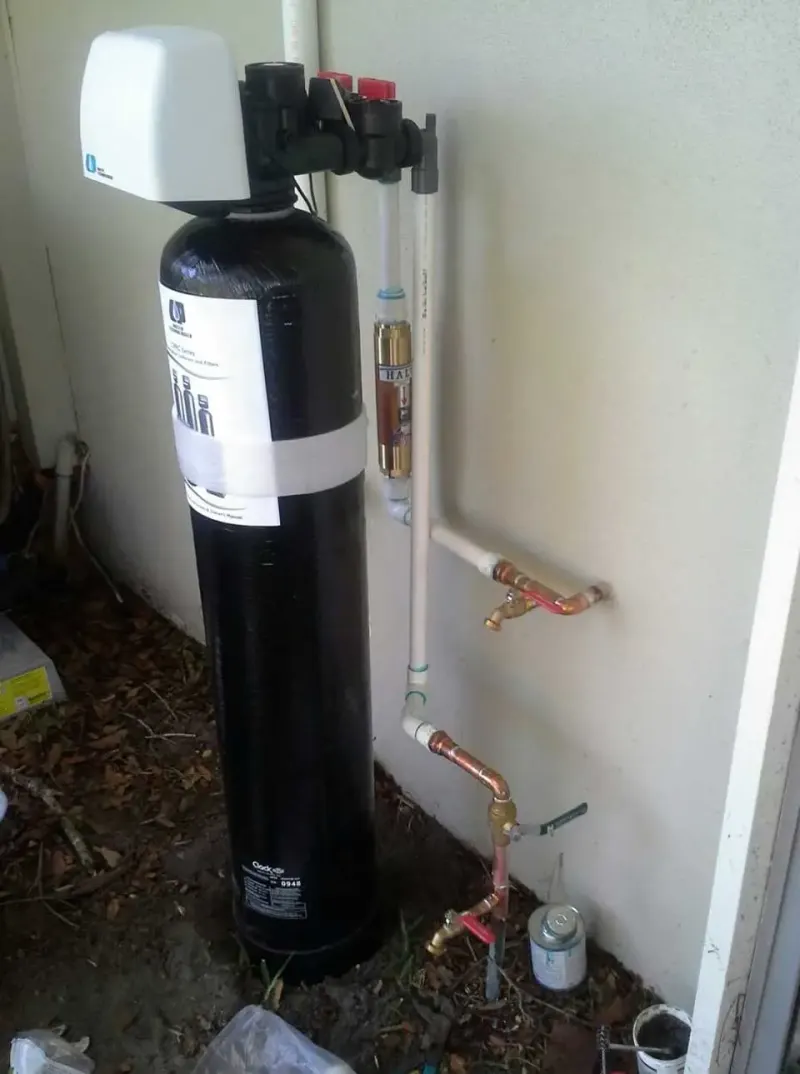
Water Purification Systems
Scale on your shower glass, spots on your dishes and water that tastes of chlorine all have fixes. We help you understand what's in your water,…
-
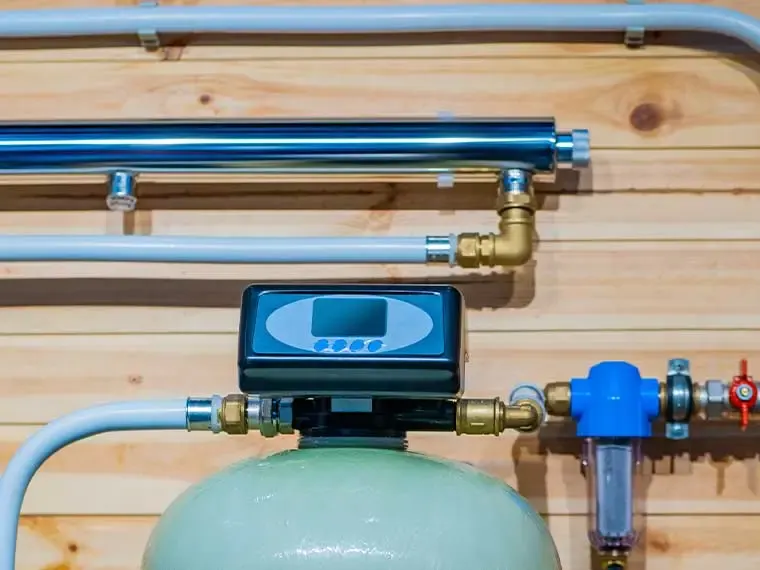 Blog
Signs of Hard Water Issues
Crusty faucets and cloudy glasses are classic clues, but not every water problem is hardness. Use this checklist to recognize true hard water symptoms, rule out…
-
 Blog
What Is a Whole House Water Filter?
A whole house water filter treats water once, where it enters your home, so every faucet, shower and appliance gets the benefit. Here's how these point-of-entry…
-
 Bathroom Service
Bathroom Sinks and Faucets
The sink and faucet are what you touch every morning and every night. Getting the basin, the faucet drilling and the finish to work together is…
-
 Understanding
Shower Glass Types: Enclosures, Glass and Hardware
A shower enclosure is three decisions stacked together: the frame style, the glass itself and the hardware holding it up. Understanding each one makes it much…