


The handle you touch is only the trim. The real shower valve lives inside the wall, controls temperature and safety, and has to be chosen before a single tile is set.
Key takeaways
- The valve body is plumbed into the wall before tile, so brand, type and height have to be settled at rough-in.
- Pressure-balance valves react to pressure swings; thermostatic valves hold a set temperature and allow separate volume control.
- Every extra outlet adds a valve or diverter and another penetration that must be sealed through the waterproofing.
- Codes commonly require anti-scald protection on shower valves, which is a strong reason to replace an old two-handle valve.
Ask homeowners to choose shower fixtures and they think about finish, matte black or brushed brass, and the size of the shower head. Remodelers think about something else first: the valve. Shower valves are the brass bodies hidden in the wall that mix hot and cold water, regulate temperature and send water to one or more outlets. Once the tile is on, changing that valve is a demolition project. That is why it is one of the earliest selections in a remodel.
Two parts: rough-in and trim
Every modern shower valve comes in two pieces.
- The rough-in valve (the valve body) is plumbed into the supply lines inside the wall during the rough-in phase, before backer board and waterproofing.
- The trim kit is the visible faceplate, handle and sometimes the cartridge, installed after tile.
The rough-in has a depth range. It must sit at a specific distance behind the finished tile surface, which depends on how thick the backer, waterproofing, setting material and tile will be. Set it too deep and the trim will not reach; too shallow and the faceplate will not sit flat. A good installer plans the wall build-up before setting the valve, and seals the valve penetration so water cannot get past the waterproofing.
Pressure-balance valves
A pressure-balance valve has a spool or diaphragm that senses the pressure of the hot and cold supplies. If cold pressure suddenly drops, say someone flushes a toilet, the valve reduces hot flow to keep the mix close to what you set.
How you use it: usually a single handle that turns on the water and sets temperature in one motion. Flow is often fixed at full when on.
Strengths: simple, widely available, compact, and it protects against sudden scalding swings.
Limits: it responds to pressure, not temperature, so it does not correct for a water heater running low. Most single-handle models do not let you adjust volume separately.
Thermostatic valves
A thermostatic valve uses a temperature-sensitive element, often wax-based, that expands and contracts to hold the outlet temperature you selected, adjusting the hot and cold mix as conditions change.
How you use it: typically one control sets temperature and a separate control or set of controls handles volume and which outlets run. You can leave the temperature dial at your favorite setting and simply turn the water on and off.
Strengths: very stable temperature, separate volume control, and the ability to run several outlets at once, such as a rain head and a handheld, when the plumbing is sized for it.
Limits: more complex to install, usually larger trim, and often more expensive. Hard water can affect cartridges over time, so access for service matters.
Side-by-side
| Pressure-balance | Thermostatic | |
|---|---|---|
| Senses | Pressure changes | Water temperature |
| Typical controls | One handle | Separate temperature and volume |
| Multiple outlets at once | Limited | Common, with proper design |
| Temperature stability | Good | Very good |
| Complexity | Lower | Higher |
| Good fit for | Hall baths, simple showers | Spa-style and multi-head showers |
Diverters and volume controls
When a shower has more than one outlet, something has to direct the water.
- Built-in diverters in some valves switch between outlets with a turn of the handle.
- Separate diverter valves add a second control that sends water to the shower head, handheld, body sprays or a tub spout, sometimes allowing two at once.
- Volume controls (or "volume control valves") set the flow to individual outlets in a thermostatic system.
- Tub spout diverters lift a knob on the spout to send water up to the shower head in a tub-shower combo. They disappear when a tub comes out in a tub-to-shower conversion.
Each added outlet means more rough-in valves and more holes through the shower waterproofing, all of which need to be planned and sealed.
Common shower setups
Use this table to compare quotes. Two bids for "a shower" can mean very different amounts of rough-in work.
| Setup | Valve arrangement | Rough-ins in the wall |
|---|---|---|
| Single shower head | One pressure-balance valve | Valve, head arm |
| Shower head plus tub spout | Pressure-balance valve with spout diverter | Valve, head arm, spout |
| Shower head plus handheld | Valve plus a 2- or 3-way diverter | Valve, diverter, head arm, handheld outlet and slide bar blocking |
| Rain head, handheld and body sprays | Thermostatic valve plus volume controls | Thermostatic valve, one control per outlet, every outlet's supply line |
Why the valve choice comes before tile
Putting all of this together, here is what must be known before the wall closes:
- Brand and valve family, so the trim you want will fit
- Pressure-balance or thermostatic
- Number of outlets and how they are controlled
- Valve height and position, including whether controls are reachable from outside the spray
- Rough-in depth based on the full wall build-up
- Where the shower head, handheld bar and any body sprays go
Tip: Place the controls where you can turn the water on without standing under the cold first blast. In a walk-in shower, an offset valve near the entry is a small detail you'll notice every morning. Our walk-in shower ideas show how it fits with the glass and bench.
The step-by-step remodel process shows where valve selection and rough-in fall in the sequence.
Signs your current valve is due for replacement
A remodel is the natural time to replace an old valve, but some symptoms show up well before then:
- temperature swings when another fixture runs
- a handle that drips after being turned off, even with a new cartridge
- stiff handles caused by mineral scale inside the cartridge
- a valve brand so old that replacement cartridges are hard to find
- no way to set a maximum temperature
- separate hot and cold handles with no anti-scald protection
Plumbing codes commonly require shower and tub-shower valves to be pressure-balance, thermostatic or combination type with an adjustable high-limit stop (the ASSE 1016 standard). Check local code. An old two-handle valve usually doesn't meet that, which makes it a strong candidate for replacement.
If the wall is coming open anyway, upgrading the valve body costs little extra effort compared with retrofitting it later.
Accessibility and safety notes
Anti-scald protection matters most in homes with young children, which is why our kids' and hall bathroom ideas list it as a must. For aging in place, a single-lever valve is easier for hands with limited grip, and controls placed near the entry let someone adjust water from a seated position. A handheld on a slide bar adds flexibility. Our accessible bathroom remodeling page covers grab bars, curbless entries and other features that pair with the right valve.
Planning your shower
If you dream of a rain head plus a handheld, our spa bathroom ideas show how a thermostatic system fits in. For straightforward updates, a quality pressure-balance valve serves many families well for years. Our shower remodeling and walk-in shower teams can help you choose the valve and layout together, so the details are settled before the first tile goes up. Bring the setup table above to your free estimate and we'll mark which row fits your shower.
More Understanding Articles
Frequently Asked Questions
Can I change my shower trim without changing the valve?
Why does my shower turn hot when someone flushes a toilet?
What height should a shower valve be installed at?
What is a valve's anti-scald limit stop?
Keep Exploring
-
 Bathroom Service
Shower Remodeling
When a shower leaks, cracks or just looks worn out, a surface fix rarely lasts. We take it back to the framing and rebuild every layer:…
-
 Bathroom Service
Walk-In Shower Installation
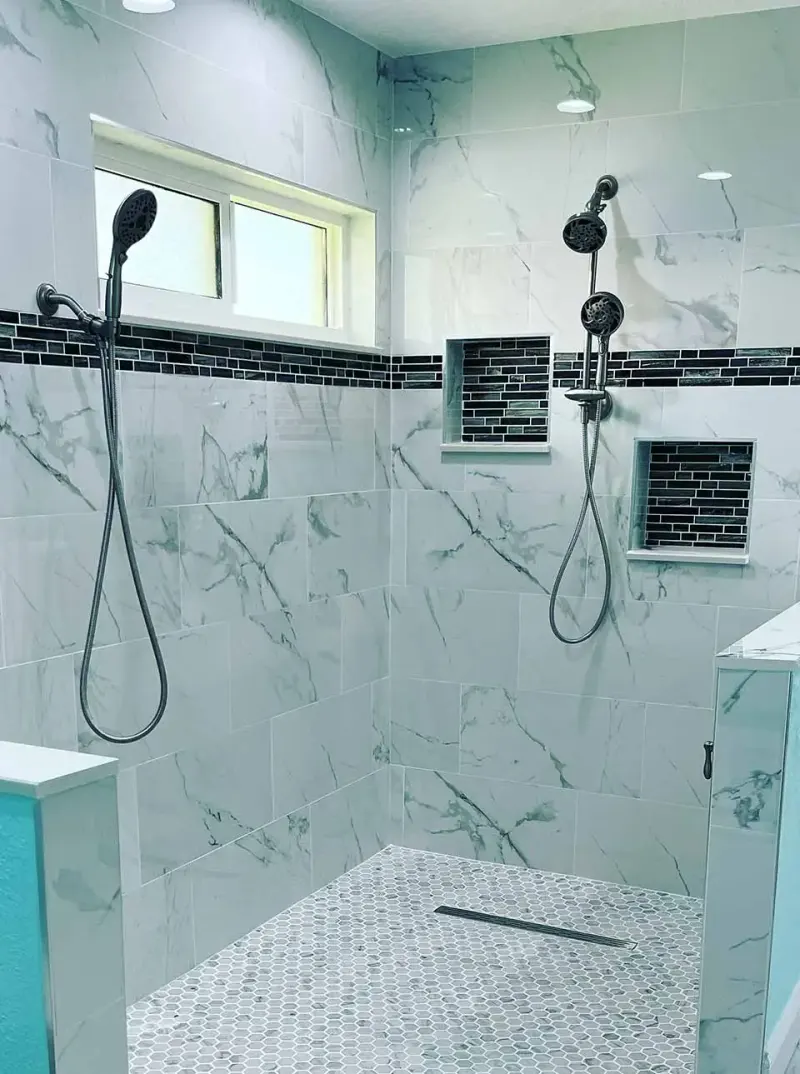
A walk-in shower should be easy to enter, comfortable to stand in and simple to keep clean. We design and build curbed, low-threshold and curbless walk-in…
-
 Ideas
Spa Bathroom Ideas for Everyday Calm
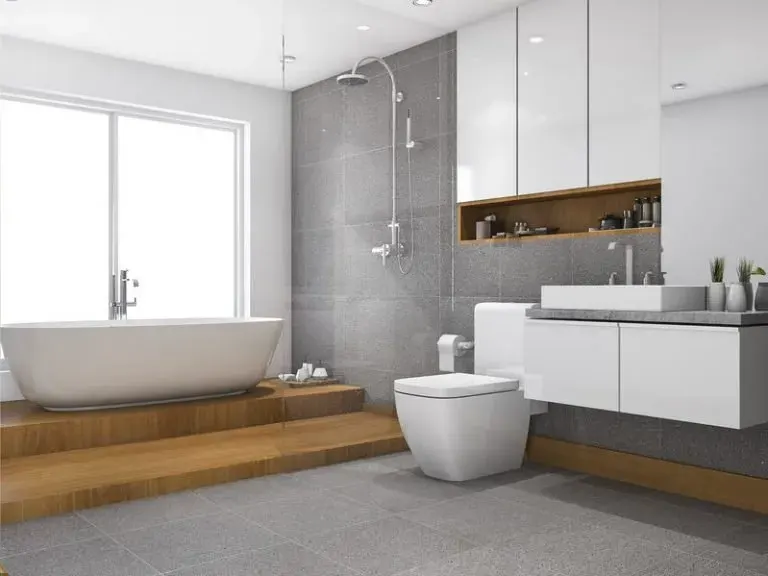
A spa bathroom isn't defined by a long feature list. It's how the room makes you feel at the end of a long day. These ideas…
-
 Bathroom Service
Accessible & Aging-in-Place Bathroom Remodeling
Getting in and out of the shower and on and off the toilet are the moments that matter most. A well-planned accessible remodel makes them safer…
-
 Understanding
The Bathroom Remodel Process, Step by Step
A full bathroom remodel moves through a predictable chain of phases, and each one depends on the last. Here's what happens at every stage, who handles…