


The short answer
Convert if nobody in the house takes baths and stepping over the tub wall has become a chore or a risk. Replace the tub if it's the home's only one and young children, regular bathers or likely family buyers are in the picture. In a multi-bath home, converting the primary bath and keeping a hall tub covers both.
Key takeaways
- Count the baths actually taken in the last month before deciding anything.
- Whether this is the home's only tub flips more decisions than any other factor.
- On a slab, a conversion usually means moving the drain and cutting concrete, so it's the larger scope.
- A refreshed tub-shower combo with a deeper tub and a glass panel is a real third option.
Most people already lean one way before they ask. The framework below is meant to test that instinct against the details that tend to get overlooked.
Start with five questions
Answer these before you look at a single tile sample.
1. Who uses this bathroom, and how?
Count actual baths taken in the last month. If the answer is zero, the tub is mostly a tall shower floor. If someone soaks every night, a conversion takes away something they value daily.
2. Is this the only tub in the house?
This is the question that flips the most decisions. Converting the primary bath while keeping a tub in the hall bath is very different from removing the only one.
3. How will mobility change over the next ten years?
Stepping over a tub wall gets harder with age, injury or surgery. A low-threshold shower with solid blocking for grab bars can let you stay in the home longer. If you're planning to age in place, that may outweigh everything else.
4. How long will you stay?
If you're selling soon, think about the likely buyer. If you're staying for the long term, design for yourself.
5. What does the plumbing allow?
A tub drain usually sits at one end of the alcove. A shower drain may need to move and almost always needs a larger pan built around it. On a concrete slab, moving the drain means cutting the slab. That isn't a reason to avoid converting, but it's a scope and budget factor.
A side-by-side look
| Consideration | Replace the tub | Convert to a shower |
|---|---|---|
| Bathing small children | Easy | Harder; handheld spray helps |
| Getting in and out | Step over the tub wall | Low curb or curbless entry |
| Cleaning | Tub plus surround | Walls, floor and glass |
| Feel of the room | Traditional | More open, especially with clear glass |
| Plumbing changes | Often minimal | Drain and pan rebuild, possible slab work |
| Resale appeal | Families with kids | Older buyers, primary-suite upgrades |
| Scope | Generally smaller | Generally larger |
Neither column is universally better. The right answer depends on the weight you give each row.
When keeping a tub is the smarter move
| Situation | Why a tub may still be the right call |
|---|---|
| It's the home's only tub and families are a likely buyer pool | Some buyers look for at least one |
| Young children live in the house | Bathing small kids is much easier in a tub |
| Someone genuinely soaks for comfort or therapy | A shower can't replace that |
| Pets get bathed at home | A tub contains water and a nervous dog better |
| The room is large enough for both | A separate tub and shower keeps every option open |
| The tub itself is the problem, not the format | Chipped enamel, a cracked fiberglass floor or an overflow leak call for a straight bathtub replacement |
When converting makes more sense
- No one has taken a bath in years.
- Getting over the tub wall is becoming risky, for you or a parent living with you.
- The bathroom feels cramped and a glass-enclosed shower would open it up.
- There's another tub elsewhere in the house.
- You want features a tub can't offer, such as a bench, a long niche or a handheld on a slide bar.
These are the same reasons tub-to-shower conversions have become so popular along the Gulf Coast, particularly in communities where many owners are planning ahead for later years.
Tip: If you're torn, convert the primary bathroom and keep the tub in the hall bath. It's a common compromise, and it covers both daily comfort and resale.
A third path: upgrade the tub-shower combo
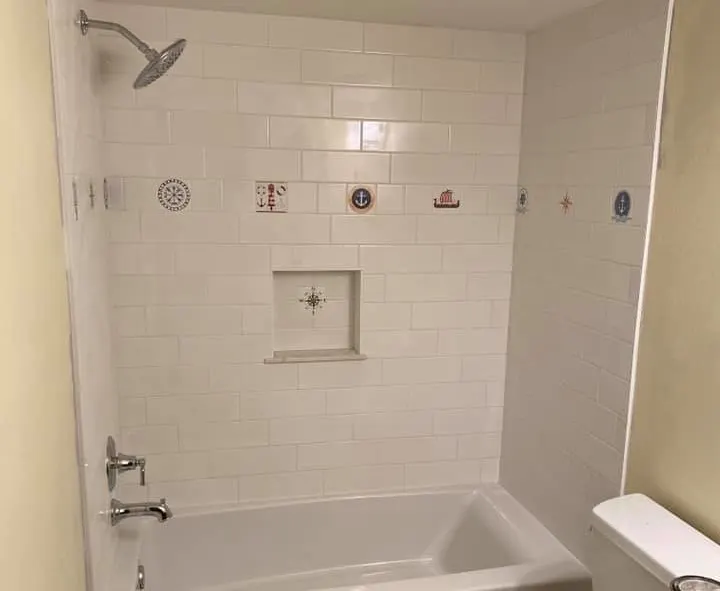
You don't have to choose between an old tub and no tub. A refreshed combination can solve most complaints while keeping a place to bathe: a deeper soaking tub in the same alcove, a fully tiled surround built over proper waterproofing, a fixed glass panel or slider instead of a curtain, a handheld spray on a slide bar and a recessed niche. It's a smaller scope than a conversion because the drain usually stays put.
If the real issue is getting in and out, a walk-in tub is another option, with a door and built-in seat; it suits people who still want to bathe but can't manage the step. Our types of bathtubs guide compares walk-in models with standard tubs.
Gulf Coast factors that tip the balance
A few local conditions are worth adding to your list.
Age of the tub alcove. In older block homes, an original tub alcove may have had years to develop slow leaks at the drain or surround, so plan for possible framing or slab-edge repairs once it's exposed, whichever direction you choose.
Hard water. Mineral scale builds up fast on tubs, glass and grout across much of the region. A shower with clear glass needs regular squeegeeing or a protective coating to stay clear. A tub with a curtain hides scale better but traps humidity. Neither is maintenance-free; they just need different habits.
Humidity. A large enclosed tub-shower combination with a curtain can hold moisture against the walls. Whatever you choose, pair it with a properly sized exhaust fan that vents outside, not into the attic.
Community demographics. In a 55+ community such as Sun City Center, easy-entry showers tend to suit the buyer pool. In a newer family subdivision in Parrish or Riverview, a hall-bath tub tends to suit families with young kids. Know your neighborhood.
What a conversion actually involves
So there are no surprises, a typical conversion includes removing the tub and surrounding tile, inspecting the framing and subfloor for old water damage, reworking the drain, building and waterproofing a sloped shower pan, installing new backer board and a membrane on the walls, new valve and trim, tile, and glass. Details are on our tub-to-shower conversion service page.
If you go that route, it's also worth reading is a walk-in shower worth it? for the trade-offs between curbed and curbless designs.
Still undecided?
That's normal. During a free consultation we look at the alcove, the drain, the rest of the house and how you use the room, then lay out both options in writing so you can compare them side by side.
More Questions Articles
Frequently Asked Questions
Will removing my only bathtub hurt resale?
Is a tub-to-shower conversion more work than a tub replacement?
Can I have a tub and a shower in the same space?
What size shower can fit where my tub was?
Keep Exploring
-
 Bathroom Service
Tub to Shower Conversion
That tub you step over every morning and haven't filled in years can become a roomy, low-entry shower. Here's what changes behind the walls and under…
-
 Bathroom Service
Bathtub Replacement
Chipped enamel, a tub that's too shallow to soak in, or a dated color you can't paint over: replacing the tub fixes all of it. We…
-
 Why
Why Tub-to-Shower Conversions Are So Popular
Many tubs in Florida homes double as the place you stand to shower and the place you store shampoo bottles. Here's what's behind the shift toward…
-
 Understanding
Types of Bathtubs: Styles and Materials
Bathtubs are sorted two ways: by how they are installed and by what they are made of. Knowing both helps you find a tub that fits…
-
 Questions
Is a Walk-In Shower Worth It?
For most adults who shower daily, especially anyone planning to stay in their home as they age, a well-built walk-in shower is worth it. It isn't…