


Good bathroom light shows your face without shadows, makes the room feel calm at night and keeps the shower safe. Here's how to get all three by layering fixtures rather than relying on one ceiling light.
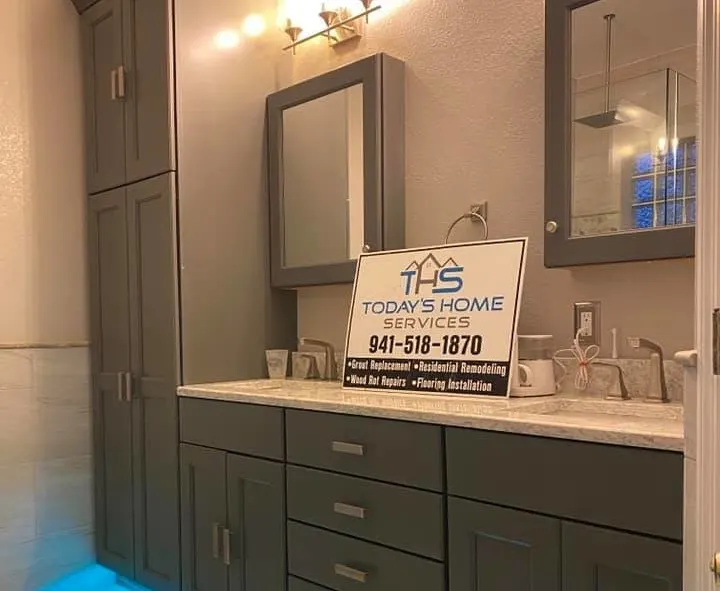
Key takeaways
- Sconces on both sides of the mirror, around face height, give the most even light for grooming.
- Put task, ambient and accent light on separate switches or dimmers so each can be used on its own.
- Anything in or near the shower must be wet-rated, and codes commonly keep hanging fixtures well clear of the tub and shower.
- Warm white (about 2700K to 3000K) with a high CRI flatters skin and keeps tile colors true.
Many builder-grade bathrooms got the same lighting plan: one fixture over the mirror, maybe a light in the fan, and that's it. It works in the sense that you can see, but it casts shadows under your eyes, leaves the shower dim and feels harsh at night. These bathroom lighting ideas fix that by building light in layers, each with its own job.
The three layers
- Task light for grooming at the mirror.
- Ambient light for general illumination and the shower.
- Accent and night light for mood, safety and showing off finishes.
Each layer should be on its own switch or dimmer. That's what lets you have bright, clear light for shaving in the morning and a soft glow for a late-night trip to the bathroom.
Task lighting ideas
1. Sconces on both sides of the mirror
The most flattering option. Light from both sides fills in shadows evenly across your face. Mount them at roughly face height, spaced to frame the mirror. Because the wiring boxes have to land in specific spots, settle the mirror size before the drywall goes up.
2. Wide fixture above the mirror
When the vanity sits between two walls with no room for sconces, a long bar light above the mirror is the next option. Choose one that spans most of the mirror width.
3. Lighted mirror
LED mirrors with integrated front lighting give very even task light and a clean modern look. Some include defoggers and adjustable color temperature. They need a hardwired connection or a planned outlet, and the LED panel can't be swapped like a bulb.
4. Pendants over a double vanity
A pendant beside each mirror adds style in a primary bathroom with higher ceilings. Keep them out of the way of a door swing or anyone leaning over the sink.
Ambient lighting ideas
5. Recessed downlights on a grid
Evenly spaced recessed lights wash the room in general light. Keep them away from the mirror line so they don't cast downward shadows on faces.
6. A wet-rated shower light
The shower is often the darkest spot in the bathroom. A sealed, wet-rated recessed light makes it safer and easier to clean. Check that any fixture in or near the shower carries the right rating, and that the circuit has GFCI protection where code requires it.
7. A combined fan and light, done right
Fan-light combinations are common, but the light in many older units is weak. Newer combination units offer better LEDs and quieter fans. Proper fan sizing matters even more than the light: our guide to exhaust fan sizing explains how to match the fan to the room.
8. Ceiling fixture as a statement
In a large bathroom, a decorative flush mount or small chandelier adds personality. Electrical codes commonly bar hanging fixtures, pendants and ceiling fans within about 3 feet horizontally and 8 feet vertically of the tub rim or shower threshold. Check local code, and choose a fixture rated for damp locations.
Accent and night lighting ideas
9. LED strip under a floating vanity
A low glow along the floor works as a night light that won't wake you up fully. It also makes a floating vanity look like it hovers.
10. Lit shower niche
A small LED strip inside a niche highlights the tile and gives the shower a spa-like feel. It needs to be a low-voltage, wet-rated product installed with care for the waterproofing.
11. Toe-kick lighting
Lights recessed into the toe kick of a standard vanity give a similar effect to under-vanity strips.
12. Motion-activated night lights
Plug-in or hardwired motion sensors at floor level guide the way at night without switching on bright overhead lights.
Fixture placement at a glance
| Fixture | Typical location | Typical height | Note |
|---|---|---|---|
| Sconces | Both sides of the mirror | Often around 60–66 in. to center, near eye level | Plan wiring before walls close |
| Vanity bar | Above the mirror | Just above the mirror's top edge | Span most of the mirror width |
| Recessed downlights | Ceiling grid | Ceiling | Keep off the mirror line |
| Shower light | Shower ceiling | Ceiling | Must be wet-rated |
| LED strip | Under vanity or in niche | Under the cabinet or niche top | Low-voltage options are common |
These heights are starting points. Adjust them for the people who use the mirror most.
Lighting ideas for specific bathrooms
Not every bathroom needs every layer. A few tailored suggestions:
- Windowless hall bath. Interior bathrooms in many Florida ranch homes have no natural light, a common challenge in small bathroom remodeling. Bright, even task lighting at the mirror plus recessed ceiling light makes them feel larger, and a light tube can sometimes bring in daylight through the roof.
- Primary suite. This is where all three layers pay off: sconces at the mirror, dimmable downlights and an accent glow for late nights.
- Powder room. One or two decorative sconces can carry the whole room. Choose them as you would jewelry.
- Kids' bath. Keep it simple and durable, with a motion-sensing night light so little ones don't have to find a switch in the dark.
Whatever the room, plan switches at the door and consider a separate switch for the fan, so lights and ventilation can run independently.
Choosing the right light quality
Two numbers matter on LED packaging:
- Color temperature (Kelvin). Warm white, around 2700K to 3000K, feels relaxing. Cooler white, around 3500K to 4000K, feels crisper and more clinical. Many people use warmer ambient light and slightly cooler task light.
- Color rendering (CRI). A higher CRI shows skin tones and makeup more accurately. For vanity lighting, look for a high CRI rating.
Light also changes how your paint and tile look. A warm gray tile can turn cold under bluish LEDs, so test bulbs with your finishes. Our bathroom color ideas article covers how light and color interact.
Tip: Take your tile and paint samples to the lighting store, or bring a few bulbs home, and look at them together at night. A bulb that flatters the tile is worth more than a fixture you picked from a photo.
Lighting and humidity go together
Lighting and ventilation are often wired at the same time and planned together. A dim, poorly ventilated bathroom is the classic recipe for mildew, as our article on why Florida bathrooms get mold explains. Our bathroom lighting and ventilation service handles both, so the wiring for both gets planned in one pass. A free estimate is a good time to sketch the switch layout.
More Ideas Articles
Frequently Asked Questions
Where should vanity lights be placed?
Can I put a light inside the shower?
How many recessed lights does a bathroom need?
Keep Exploring
-
 Bathroom Service
Bathroom Exhaust Fan & Lighting Installation
In a Gulf Coast bathroom, light and air aren't finishing touches. One decides whether you can see your face in the mirror; the other decides whether…
-
 Understanding
Bathroom Exhaust Fan Sizing: How Much Air You Need
In a humid climate, the exhaust fan is the bathroom's most underrated part. Sizing it right, ducting it correctly and running it long enough decide whether…
-
 Why
Why Bathrooms Get Mold in Florida
Mold needs moisture, a surface to feed on and time. A Florida bathroom supplies all three generously, and a few common building shortcuts make it far…
-
 Ideas
Bathroom Color Ideas: Eight Complete Palettes
A bathroom color scheme is more than a paint chip. Tile, grout, vanity, countertop and metal finishes all carry color, and they need to work together.…
-
 Ideas
Spa Bathroom Ideas for Everyday Calm
A spa bathroom isn't defined by a long feature list. It's how the room makes you feel at the end of a long day. These ideas…
-
 Ideas
Powder Room Ideas: Small Room, Big Personality
No shower, no steam and only a few minutes of use at a time: a powder room is the one bathroom where you can take design…