


Filters, softeners, membranes and UV lamps all get called "water purification," but each one solves a different problem. Here's how they work, so you can match the equipment to your water.
Key takeaways
- A water test comes first, because it tells you which problems you're actually treating.
- Sediment filters protect downstream equipment, carbon handles chlorine taste and odor, and neither removes hardness.
- Softeners swap calcium and magnesium for sodium or potassium, which is what stops scale on fixtures and glass.
- Reverse osmosis usually treats one tap for drinking water, while softeners and carbon tanks treat the whole house.
If you've started shopping for water treatment, you've probably noticed that every product claims to "purify" your water. That word covers a lot of ground. A cartridge that improves chlorine taste, a tank that removes hardness minerals and a membrane that pushes water through microscopic pores all fall under the same umbrella, yet they do very different jobs. Understanding water purification really comes down to understanding those jobs, so this primer walks through each technology, what it handles well and where it falls short.
Start With the Question: What's in Your Water?
Before comparing equipment, it helps to know what you're treating. Water reaches Gulf Coast homes in two main ways, and each comes with its own typical concerns.
- City water has already been treated by the utility to meet drinking water standards. Homeowners on municipal supply often look for treatment because of chlorine or chloramine taste and smell, mineral hardness, or a general wish for better-tasting drinking water.
- Private well water is the owner's responsibility to test and treat. Depending on the well, it may carry hardness, iron, a sulfur ("rotten egg") odor, sediment or other concerns that only a test will reveal.
Either way, a water test is the foundation of any good system. You can have your water tested by a certified laboratory, and many county health departments offer guidance for private well owners. A test turns guesswork into a short list of specific problems to solve.
The Main Treatment Technologies
Most residential systems are built from a handful of proven technologies. Here's how each one works in general terms.
Sediment filtration
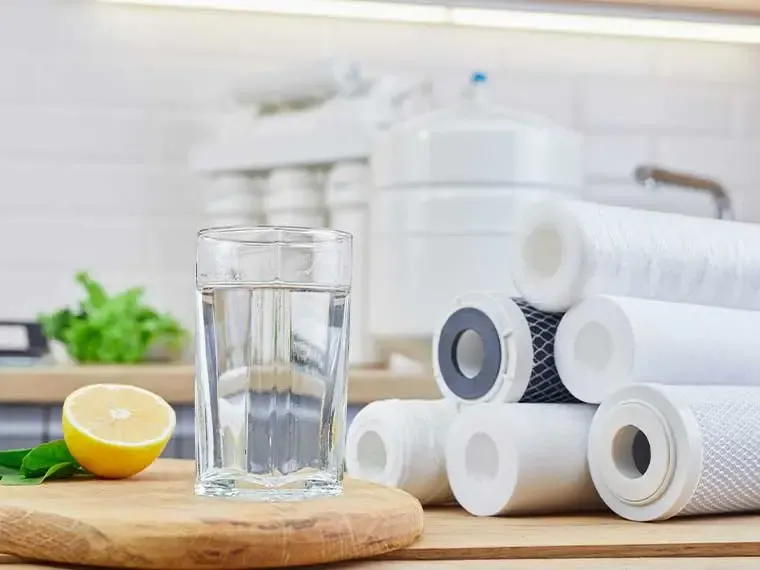
A sediment filter is a physical screen, usually a pleated or spun cartridge, that traps sand, silt, rust flakes and other particles. It doesn't change the water's chemistry. Its main value is protecting the equipment downstream, since particles can clog carbon beds, softener resin and reverse osmosis membranes. Sediment filters are often the first stage in a larger setup.
Activated carbon
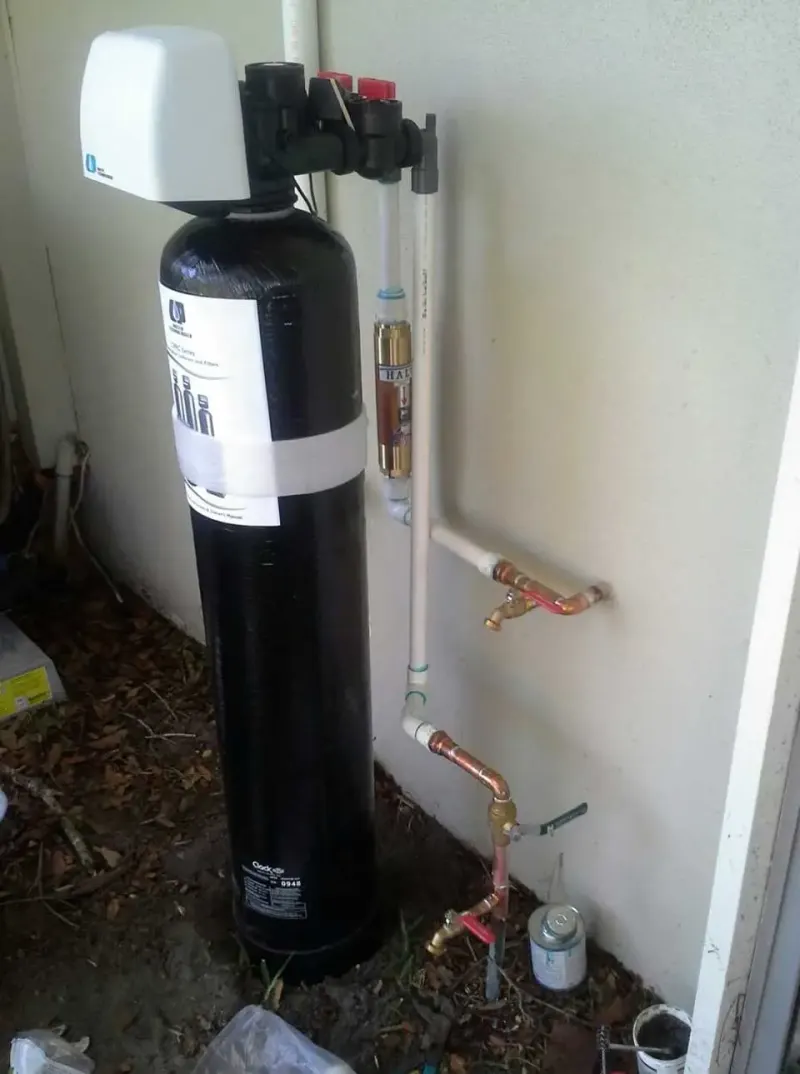
Carbon has an enormous internal surface area that attracts and holds many organic compounds through a process called adsorption. That makes it the go-to choice for reducing chlorine taste and odor and many other taste and smell complaints. Carbon is available as small cartridges for a single faucet or as large tanks that treat the whole house. It does not remove hardness minerals.
Reverse osmosis
A reverse osmosis (RO) system uses household water pressure to push water through a semipermeable membrane. The membrane lets water molecules through while holding back a wide range of dissolved solids, which are flushed to the drain. RO is typically installed at one location, usually under the kitchen sink, with a small storage tank and its own faucet for drinking and cooking water. It works best when sediment and carbon prefilters protect the membrane.
Water softeners (ion exchange)
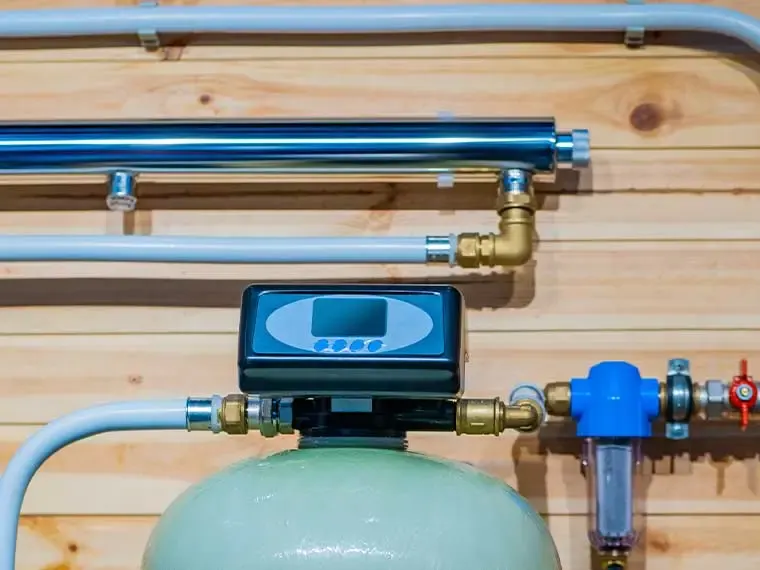
Hard water is caused mainly by dissolved calcium and magnesium. A softener passes water through a bed of resin beads that swap those hardness minerals for sodium or potassium ions. When the resin is saturated, the unit regenerates by rinsing it with salt brine from a separate tank. Softening is the standard fix for scale on fixtures and glass, and it usually treats the whole house. That scale is what dulls faucets and etches shower glass over time (why hard water damages bathroom fixtures). If those symptoms sound familiar, our post on the warning signs of hard water is a good next read.
Ultraviolet (UV) disinfection
A UV system runs water past a lamp inside a chamber, and the ultraviolet light disrupts microorganisms so they can't reproduce. It adds nothing to the water and removes no chemicals or minerals, so it's paired with filtration. UV is most often considered for well water. The water must be clear for UV to work properly, which is another reason sediment filters come first.
Quick Comparison
| Technology | What it mainly addresses | Typical location |
|---|---|---|
| Sediment filter | Sand, silt, rust particles | Whole house, first stage |
| Activated carbon | Chlorine taste and odor, many organic compounds | Whole house or single tap |
| Reverse osmosis | Broad range of dissolved solids | Kitchen sink (single tap) |
| Softener (ion exchange) | Calcium and magnesium hardness | Whole house |
| UV disinfection | Microorganisms | Whole house, after filtration |
Point-of-Entry vs. Point-of-Use
Treatment equipment is installed in one of two places. Point-of-entry systems sit where the main line enters the house, often in the garage, so every faucet, shower and appliance receives treated water. Point-of-use systems treat water at a single tap. Many homes combine both: a softener and carbon tank at the main line, plus RO at the kitchen sink. We cover the first approach in detail in what a whole-house water filter is.
What About Maintenance?
Every system needs some attention, and none of it is difficult. Cartridges get swapped, softener salt gets topped off, RO membranes and UV lamps are replaced on the maker's schedule. Some newer units display reminders. The bigger risk is forgetting, since a neglected filter can stop doing its job. If you've heard that upkeep is a burden, our article on common water purification myths puts that in perspective.
Putting It Together
The right setup is the one that matches your test results, your household's water use and the space you have available. A home with hard city water might need only a softener and a drinking-water RO unit. A well home with sediment and odor may need several stages. If you'd like a second set of eyes on your water, our team designs and installs home water purification systems across Bradenton and Sarasota, and we're happy to walk through your options during a free consultation.
Frequently Asked Questions
Is a water filter the same thing as a water purifier?
Do I need a water test before choosing a system?
Will one system handle everything in my water?
How much upkeep does a home purification setup need?
Keep Exploring
-
Water Purification Systems
Scale on your shower glass, spots on your dishes and water that tastes of chlorine all have fixes. We help you understand what's in your water,…
-
 Blog
What Is a Whole House Water Filter?
A whole house water filter treats water once, where it enters your home, so every faucet, shower and appliance gets the benefit. Here's how these point-of-entry…
-
 Blog
Signs of Hard Water Issues
Crusty faucets and cloudy glasses are classic clues, but not every water problem is hardness. Use this checklist to recognize true hard water symptoms, rule out…
-
 Blog
Myths on Water Purification
A lot of what people "know" about home water treatment comes from marketing or hearsay. We sort fact from fiction on eight common beliefs so you…
-
Water Purification Systems in Sarasota, FL
Tired of hauling cases of bottled water, or of scrubbing scale off the shower glass? Here's how Sarasota homeowners choose between under-sink and whole-house water treatment,…