


Grout is the softest part of a tiled surface, and the part most easily hurt by home cleaning. These are the common ways DIY efforts erode, stain or seal in problems.
Key takeaways
- Wire brushes and stiff drill attachments erode grout below the tile edge, where it collects more dirt and water.
- Bleach can fade colored grout unevenly, and acids slowly dissolve cement grout with repeated use.
- Sealer locks in whatever is in the grout, so it only goes on grout that's clean and fully dry.
- Grout pens and color sealants hide stains for a while but won't bond well over dirty or failing grout.
Plenty of homeowners treat DIY grout cleaning as just another chore, like wiping a counter. But grout holds tiles in place and slows water on its way to what's underneath. It's also the softest, most porous part of the surface, so it's the easiest thing to damage while cleaning. Here's what can go wrong. (For damage to the tile faces themselves, see risk factors in DIY tile cleaning.)
Why Grout Is So Easy to Hurt
Most grout in Gulf Coast homes is cement-based, a mix of cement, fine aggregate and pigment. It's hard, but much softer than glazed tile, and it's full of tiny pores. Those pores absorb water, soap and soil, which is why grout darkens. They also mean that aggressive chemicals and tools can eat into it. Epoxy grout behaves differently and resists stains well, but it has its own cleaning needs. Our explainer on grout types covers both.
Risk 1: Wire Brushes and Stiff Drill Attachments
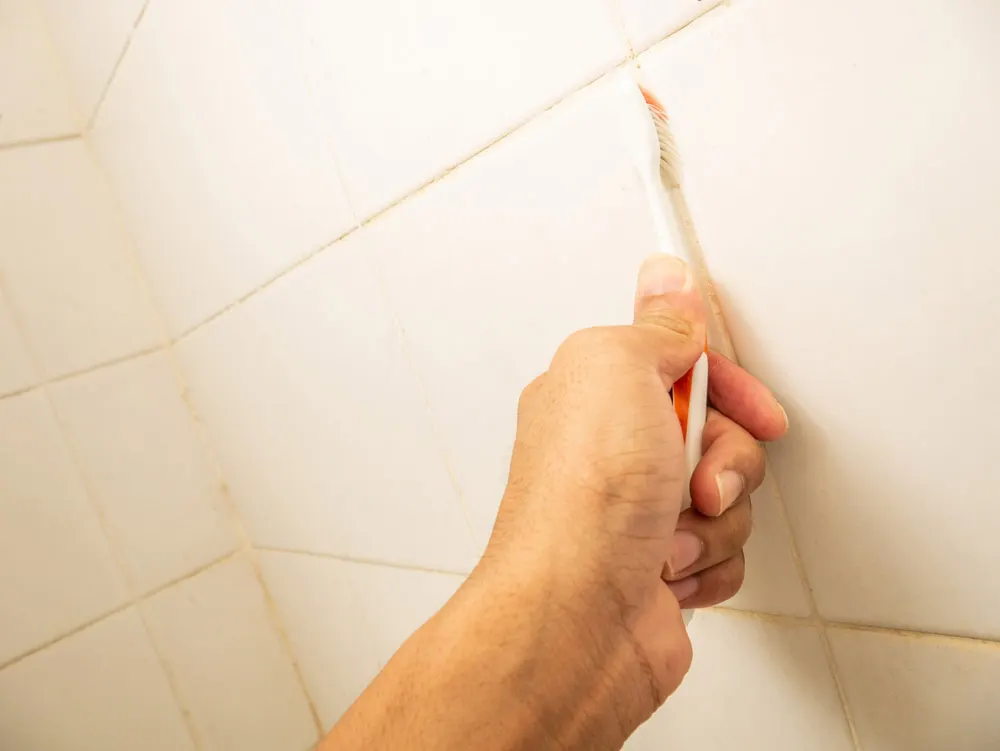
Scrubbing harder feels productive. With grout, it often removes the grout itself. Wire brushes and stiff drill-mounted brushes scour the surface, exposing sand and eroding the joints until they sit below the tile edge. Lower joints collect more dirt, hold more water and look worse than before. On sanded grout, aggressive scrubbing can loosen the aggregate and leave the joint rough and pitted.
Use a nylon grout brush and let the cleaner dwell for a few minutes so it does the work instead of your elbow.
Risk 2: Chlorine Bleach
Bleach is the go-to for black spots in shower grout, and it often does lighten them. But there are trade-offs:
- It can fade colored grout unevenly, leaving blotchy joints.
- It whitens the surface stain without necessarily reaching growth deeper in porous grout, so the spots come back.
- Repeated use can weaken cement grout over time.
- It can spot nearby towels, rugs and painted surfaces.
Risk 3: Acids That Dissolve Cement
Vinegar, citrus cleaners and many hard-water removers are acidic. Cement-based grout is alkaline, and acid slowly dissolves it. One use won't ruin a shower, but routine acid cleaning gradually washes grout out of the joints. Strong products like muriatic acid, sometimes used by DIYers to remove grout haze, can do real damage quickly and are hazardous to handle.
Risk 4: Sealing Over Dirt
This is the quiet mistake. A homeowner scrubs, sees improvement, then rolls on sealer the same afternoon. If any soil remains, the sealer locks it in permanently. If the grout is still damp, the sealer may not bond and can turn cloudy. Sealing also does nothing for cracked or loose grout; it just hides the problem for a while.
Proper sealing needs grout that's thoroughly clean and fully dry, which in a humid Florida bathroom can take longer than people expect.
Risk 5: Pressure Washers and Flooding
On indoor floors and showers, high-pressure water can blast out weak grout and force water into the setting bed through hairline cracks. Even without a pressure washer, leaving puddles in grout lines for long periods feeds the moisture problems you're trying to solve.
Risk 6: Grout Pens and Color Products Over Dirty Grout
Grout pens and DIY color sealants promise a fresh look in an afternoon, and on clean, sound grout they can work. Applied over grout that still holds soil, soap or mildew, the color doesn't bond well. It can peel or wear unevenly in traffic areas and showers, and the stain underneath may bleed back through. Pen lines that wander onto the tile face also leave a haze that's hard to remove from textured or matte tile.
If you want to try color, clean the grout thoroughly, let it dry completely, test a small area and use painter's tape on textured tile. Color won't fix grout that's cracked or crumbling.
Risk 7: Missing the Rinse
Without proper rinsing and recovery, loosened dirt dries back into the joints, and without knowing what's been applied to the grout before, it's easy to pick the wrong chemistry. Our post on the benefits of professional grout cleaning services compares the DIY and professional approaches side by side.
When to Stop and Call for Help
Put the brush down if you notice:
- Grout powdering, crumbling or coming out in pieces.
- Cracks along corners or the tub and shower base.
- Stains that return within days of cleaning.
- Grout that stays dark long after the shower is dry.
These usually point to failing grout or moisture problems, not dirt. Our article on what causes grout to crack explains the common causes.
Tip: Before cleaning, run a fingernail along a grout joint in an out-of-the-way spot. If grains come loose easily, the grout is weak, and gentle cleaning or repair is the only safe approach.
For the bigger picture on why clean grout matters in the first place, read why grout cleaning is necessary. If your grout needs more than a home scrub, our tile and grout cleaning service includes an assessment of whether cleaning, sealing or regrouting is the right fix, and the estimate is free.
Frequently Asked Questions
Is oxygen bleach safe on colored grout?
What brush should I use on grout?
Can I seal my grout myself?
My grout is coming out as I scrub. What should I do?
Keep Exploring
-
Tile and Grout Cleaning
Dingy grout lines make even good tile look tired. We assess your floors, showers and backsplashes, clean them with methods matched to the material, seal what…
-
 Blog
DIY Tile Cleaning Risks: How Tile Gets Damaged
A lot of tile damage isn't caused by neglect. It's caused by enthusiastic cleaning with the wrong product or tool. Here's how that damage happens, and…
-
 Blog
Why Grout Cleaning Is Necessary
Grout is more than the lines between your tiles. It's a porous material that soaks up moisture and soil, and in a Florida home that makes…
-
 Understanding
Grout Types: Choosing the Right Grout for a Bathroom
Grout fills the gaps, locks tile edges together and takes most of the daily abuse in a shower. Choosing the right kind depends on joint width,…
-
 Blog
What Causes Grout to Crack?
Grout cracks for a reason, and the pattern of the cracks often tells you which one. Here's how to read what you're seeing and decide whether…