


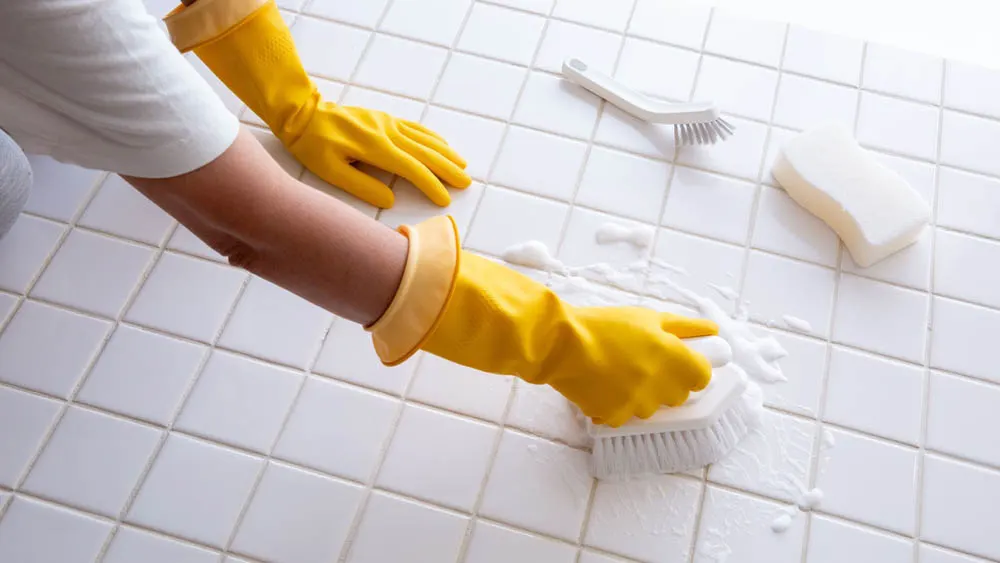
A lot of tile damage isn't caused by neglect. It's caused by enthusiastic cleaning with the wrong product or tool. Here's how that damage happens, and how to recognize it.
Key takeaways
- Acids etch marble, travertine and limestone, leaving dull spots that look like water marks but won't wipe away.
- Steel wool, gritty powders and stiff pads scratch glaze and polished finishes, and steel wool can leave rust specks behind.
- Unglazed and unsealed tile can absorb dyes from colored cleaners and develop efflorescence when it's flooded with water.
- Shine products and oil soaps build a coating that holds dirt and eventually has to be stripped.
DIY tile cleaning seems low-risk. Tile is hard, after all, and it's designed to get wet. But tile surfaces aren't all the same, and the product that brightens one tile can permanently dull the next. Plenty of tile that looks worn wasn't dulled by traffic. It was dulled by cleaning. This post focuses on the tile faces themselves: what damages them and how to avoid it. (Grout has its own list of risks, which we cover in the risks of DIY grout cleaning.)
Know Your Tile Before You Clean It
Every risk below depends on what the tile is made of. In general:
- Glazed ceramic has a fired glass-like top layer. Tough, but scratches through the glaze are permanent.
- Porcelain is dense and absorbs very little water. Polished porcelain has a shiny face that can be dulled by abrasives.
- Natural stone (marble, travertine, limestone) is softer and often reacts with acids.
- Unglazed tile such as terracotta, Saltillo and some quarry tile is porous and absorbs liquid and color.
- Glass tile scratches easily and shows every mark.
If you're unsure, our guide to bathroom tile types can help you identify it.
Risk 1: Acids on Stone
This is a common and permanent DIY mistake. Vinegar, lemon juice, many "lime and scale" removers and some bathroom cleaners are acidic. On marble, travertine and limestone, acid reacts with the stone and leaves etch marks: dull, lighter spots that look like water stains but won't wipe away.
Etching often happens in a pattern that gives it away, such as the path of a shower spray, the area under a soap dish, or a ring where a bottle sat. If you have stone, read every label, and when a label doesn't say "safe for natural stone," leave it on the shelf.
Risk 2: Abrasives on Glazes and Polished Finishes
Avoid steel wool and metal scouring pads. Abrasives cut into glaze, polished porcelain and glass. The damage might not show right away, but scratched surfaces dull over time and hold dirt more readily.
Steel wool has a second problem: tiny metal fragments get left in the texture of the tile and grout, then rust in a humid bathroom, leaving orange specks.
Watch out for:
- Powdered cleansers with grit
- Green scrub pads on polished or glossy tile
- Drill brush attachments with stiff bristles on soft stone
- Pumice stones, which some people use for hard-water rings
Risk 3: Dyes in Colored Cleaners
Colored cleaners are a real risk on porous surfaces. Unglazed tile and unsealed stone can absorb the dye from brightly colored products, leaving a faint tint that's hard to remove. Clear or uncolored products are the safer choice on anything porous.
Risk 4: Too Much Water on Unsealed or Porous Tile
Flooding a floor seems thorough, but on unsealed Saltillo, terracotta or stone, excess water soaks into the tile. As it dries, it can pull minerals to the surface and leave a white haze called efflorescence. Water can also seep through to the setting bed at loose tiles. On these floors, use a damp mop, not a wet one, and dry the surface afterward.
Risk 5: Harsh Chemicals and Mixing
Bleach and strong acids deserve extra caution. Beyond the health hazards, splashes can discolor nearby fixtures, cabinets and metal trim. Never mix cleaning products, especially bleach with ammonia or with acids, because the combinations release dangerous gases. In a small Florida bathroom with the door shut, that risk is real.
Risk 6: Residue From Oil Soaps and "Shine" Products
Some products promise a glossy finish by leaving a coating behind. On tile, that coating builds up, attracts dirt, can make floors slick, and eventually yellows. It isn't damage in the strict sense, but removing it later takes stripping work.
Is It Damage or Dirt?
Before you scrub harder, figure out what you're looking at. Damage won't come off, and more cleaning usually makes it worse.
| What you see | Likely cause | Dirt or damage? |
|---|---|---|
| Dull, lighter spots on stone that stay dull when wet | Acid etching | Damage |
| Fine lines that catch light at a low angle | Scratches from abrasives | Damage |
| Orange or brown specks in tile texture or grout | Rusting steel wool fragments | Stain, often removable with the right product |
| Faint pink, blue or green tint on unglazed tile | Dye from a colored cleaner | Stain, may be permanent if deep |
| White, powdery haze on porous tile | Efflorescence from excess water | Deposit, usually removable |
| Cloudy, slick or yellowed film | Shine product or oil-soap buildup | Residue, removable by stripping |
For the cleaners and tools that avoid these problems day to day, see our tile and grout maintenance tips.
Tip: Keep a short note inside the cleaning cabinet listing your tile type and the one cleaner that's safe on it. It stops well-meaning family members or house sitters from grabbing the wrong bottle.
For more on matching products to surfaces, see our post on choosing tile cleaning products by tile type.
When tile has reached the point where routine cleaning no longer brings it back, our crew starts every tile and grout cleaning job by identifying the surface and choosing products to suit it. We're glad to take a look and give you a free estimate.
Frequently Asked Questions
How can I tell an etch mark from a water spot on marble?
Can a Magic Eraser scratch tile?
How do I know if my tile is sealed?
Can etched or scratched tile be fixed?
Keep Exploring
-
Tile and Grout Cleaning
Dingy grout lines make even good tile look tired. We assess your floors, showers and backsplashes, clean them with methods matched to the material, seal what…
-
 Blog
Risks of DIY Grout Cleaning
Grout is the softest part of a tiled surface, and the part most easily hurt by home cleaning. These are the common ways DIY efforts erode,…
-
 Blog
What to Consider When Choosing a Tile Cleaning Product
The right tile cleaner depends on two things: what your tile is made of and what you're trying to remove. Understanding cleaner chemistry makes the choice…
-
 Understanding
Bathroom Tile Types and Where Each One Belongs
Tile is sold by look, but it should be chosen by behavior. How much water a tile absorbs, how hard its surface is and how it…
-
 Blog
Tile and Grout Maintenance Tips
Good tile care is mostly small habits done consistently. These are the routines and product choices we recommend to homeowners after we finish a cleaning, sorted…