

Reviews and websites only tell you so much. The real proof of a grout cleaning professional is what they do once they're inside your home. Here are the habits worth watching for on job day.
Key takeaways
- A good technician walks the job with you and points out cracked grout or hollow tiles before starting.
- Expect a test spot on stone, colored grout or older installations before the whole room is cleaned.
- Watch for the dirty slurry being rinsed and recovered, not left to dry back into the joints.
- Extra work should be offered and approved, never quietly added.
You can learn a lot about a company from its reviews and estimate. But the moment that matters is when a technician walks through your front door and starts working on your floors and showers. The difference between an average crew and truly indispensable grout cleaning professionals shows up in small, observable habits: what they look at first, what they cover before they start, how they handle the dirty water, and what they leave behind. Here's what to watch for, in the order you'll see it.
Before the Work Starts
They walk the job with you
A good technician doesn't unload equipment and start scrubbing. They walk each area with you, confirm exactly which rooms and surfaces are included, and ask about your concerns: the dark traffic lane in the kitchen, the shower corner that never comes clean, the spot where the dog has an accident now and then.
They identify your tile and grout
Before choosing a cleaner, a professional figures out what they're cleaning. Glazed porcelain can handle chemistry that would etch marble or travertine. Colored grout can lighten with the wrong product. Older grout may already be damaged by years of harsh cleaners. If the technician never asks or checks, they're guessing. Our guide to bathroom tile types shows how much those materials differ.
They point out pre-existing damage
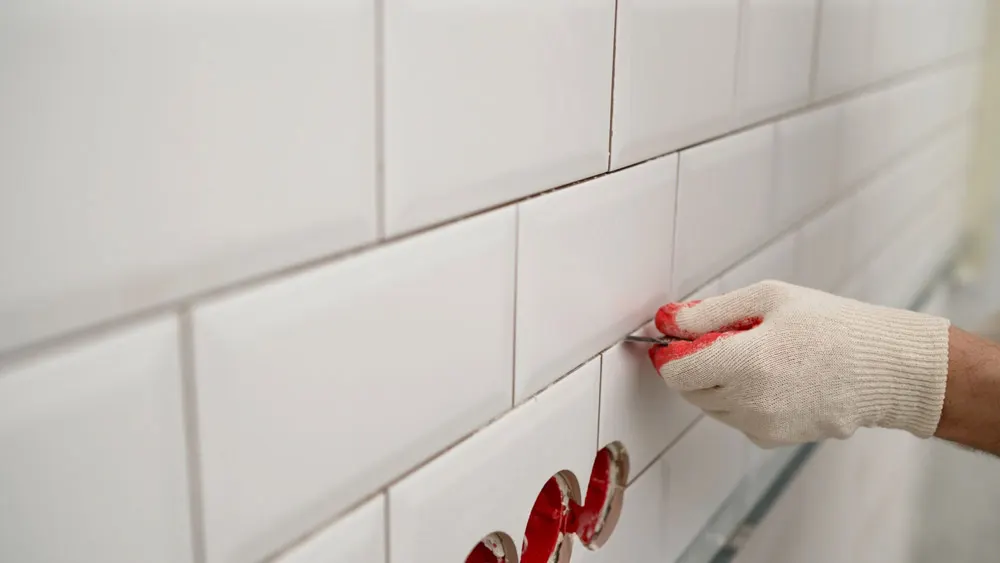
Cracked grout, chipped tile edges, hollow-sounding tiles and failing caulk all exist before cleaning starts. A professional points them out before work begins, both so you know about them and so there's no confusion afterward. If they spot cracking, they may explain the likely cause. Our article on what causes grout to crack covers the usual suspects.
They set realistic expectations
Some stains are permanent. Deep mold staining, rust, dye and acid damage won't always come out. The professionals worth hiring tell you so up front instead of promising miracles and leaving you disappointed.
Protecting Your Home
Everything nearby gets covered
Grout cleaning involves water, cleaning solution and spinning brushes. Watch for:
- Baseboards, cabinet toe-kicks and door casings taped or shielded
- Adjacent carpet, wood or vinyl protected where the tile meets it
- Vanity tops, fixtures and glass doors covered when cleaning bathroom walls
- Hoses and cords routed so they don't scuff walls or prop doors open to bugs
They test a spot first
On anything other than straightforward porcelain, a test area in a low-visibility spot is a hallmark of a careful professional. It shows how the surface responds before the whole room is committed.
During the Cleaning
The right tool for each area
Open floor areas get rotary equipment that cleans consistently across many joints. Corners, edges, around toilets and along cabinet bases get hand brushes. Shower walls get detail work. A crew that uses one tool for everything is cutting corners.
Dirty water gets recovered, not left behind
Watch for the loosened slurry being rinsed and extracted, not left to dry back into the joints; our post on how professional tile cleaning works explains why that step matters.
They stay inside the scope, and ask before going beyond it
If the technician notices something extra, such as a second bathroom that would benefit, or a section that really needs grout replacement rather than cleaning, they mention it and let you decide. They don't add work without asking.
Finishing the Job
A final rinse and neutralizing pass
Cleaner residue left on tile attracts dirt and dulls the surface. A good crew finishes with a clean-water rinse, and after strongly alkaline or acidic products, a neutralizing rinse brings the surface back toward neutral.
Sealing decisions explained
If your cement grout will be sealed, the technician should explain why, how long it needs to dry first, and how long to stay off it afterward. If you have epoxy grout, they should tell you it generally doesn't need sealing at all.
A walkthrough of the results
Before leaving, they walk the areas with you again, point out anything that didn't come fully clean and why, and answer questions.
They clean up after themselves
Equipment is packed up, protective coverings removed, and nothing is left behind: no wet footprints across the living room, no residue on baseboards, no tape on cabinets.
Job-Day Checklist
Keep this handy on the day of the cleaning and check each one off as you see it:
- Walkthrough of every area and concern before work starts
- Tile and grout type identified, with the cleaner chosen to match
- Pre-existing cracks, chips and hollow tiles pointed out
- Baseboards, cabinets, fixtures and adjacent flooring protected
- Test spot cleaned and reviewed with you
- Dirty solution rinsed and recovered, not left in the joints
- Sealing (or why it isn't needed) explained, with dry and cure times
- Final walkthrough in good light, with cleanup complete
Two Traits That Tie It Together
Two traits tie it together: they tell you what they see and what it costs before they start, and they're easy to reach before and after.
If you're still choosing who to call, our guide on how to hire grout cleaning companies walks through the process, and our list of questions to ask your tile cleaning contractor helps you compare answers. When you're ready, a free estimate for tile and grout cleaning shows you how we work.
Frequently Asked Questions
Should a grout cleaner test a small area first?
Is it a bad sign if the technician says some stains won't come out?
What should I do if grout comes loose during cleaning?
What should the floor look like when the crew leaves?
Keep Exploring
-
Tile and Grout Cleaning
Dingy grout lines make even good tile look tired. We assess your floors, showers and backsplashes, clean them with methods matched to the material, seal what…
-
 Blog
How to Hire Grout Cleaning Companies
Hiring a grout cleaner doesn't have to be a guessing game. Follow these steps in order, from sizing up your own project to the final walkthrough,…
-
 Blog
Questions to Ask Your Tile Cleaning Contractor
Asking the right questions before you book is the quickest way to tell an experienced tile cleaning contractor from a general cleaner. Here's a ready-to-use list,…
-
 Blog
Qualities of Great Tile Cleaning Companies
Clean tile is the goal, but how a company runs its business decides how the whole experience feels. These are the communication habits and business practices…